The Magnificent Dahlia: A Complete Guide to History, Varieties, and Cultivation
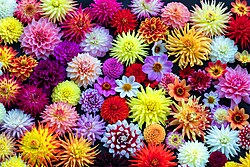
The dahlia is one of the most visually striking flowers in the botanical world, celebrated for its incredible diversity in shape, size, and color. From tiny, delicate blooms to massive "dinner plate" varieties that can reach 30 cm in diameter, these plants offer something for every gardener. However, behind their vibrant petals lies a complex history of scientific discovery, taxonomic debate, and centuries of cultivation.
It is important to note that the dahlia belongs to the Asteraceae family (the daisy or sunflower family) and should not be confused with Dalea, which is a different genus in the Fabaceae (legume) family.
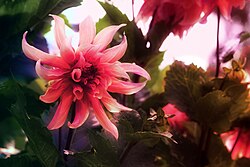
Key Facts
- Origin: Primarily native to Mexico and parts of Central and South America.
- Natural Habitat: High-altitude mountain regions and pine–oak woodlands.
- Size Range: Stems can vary from 30 cm to over 2.4 metres in height.
- Color Palette: Displays almost every hue except for true blue.
- Cultivar Count: There are more than 57,000 registered cultivars worldwide.
- Growth Habit: They grow from tubers (underground storage organs) and prefer sunny, well-drained soil.
Physical Characteristics and Botany
Dahlias are highly variable plants. Their stems are leafy and can range significantly in height. The flowers themselves are produced as a single head per stem. While many people associate dahlias with intense fragrance, the majority of species do not produce scented flowers. Instead, they rely on their brilliant colors to attract pollinators.
The colors of a dahlia are produced by pigments called anthocyanins. While these pigments allow for a vast spectrum of reds, purples, yellows, and pinks, dahlias have never achieved a true blue color. This is because they lack the specific chemical structure—specifically, they only possess five hydroxyl groups rather than the six required to produce the blue pigment delphinidin.
A Rich History: From Mexico to Europe
The story of the dahlia begins in Mexico. Indigenous peoples, including the Aztecs and Toltecs, had long cultivated and gathered wild specimens for food. The Aztecs referred to the plant as Acocotle or Cocoxochitl, while the Toltecs called it Chichipatl. Early Spanish reports date back to 1525, but the first formal scientific descriptions were provided by Francisco Hernández, a physician to Philip II, during his study of Mexican natural products in 1570. The name "dahlia" itself is a translation of various terms referring to the plant's hollow stems, such as "water cane" or "cane flower."
The plant's journey to Europe began in the late 18th century. In 1787, French botanist Nicolas-Joseph Thiéry de Menonville reported seeing beautiful flowers in a garden in Oaxaca, Mexico. By 1789, specimens reached the Royal Gardens of Madrid. It was there that the director, Abbe Antonio José Cavanilles, named the genus Dahlia in honor of the Swedish botanist Anders Dahl. Cavanilles also named the first three species to flower in Europe: Dahlia pinnata, Dahlia rosea, and Dahlia coccinea.
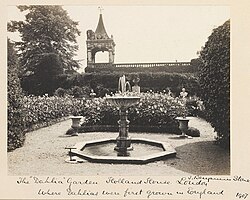
In the early 1800s, the dahlia became a sensation in England. In 1804, the species Dahlia sambucifolia was successfully grown at Holland House in Kensington after seeds or tubers were sent from Madrid by Lady Holland. This period marked the beginning of the intense breeding efforts that would eventually lead to the massive variety of "double" flowers we see today.
Scientific Classification and Sections
Classifying dahlias has historically been a challenge for botanists due to the extreme morphological variation (difations in physical form) seen between plants. While some early taxonomists reported as many as 85 species, many of these were later identified as hybrids. Today, the genus is understood through several distinct sections based on morphological, cytological, and biochemical criteria.
Botanical Sections of Dahlia
| Section | Chromosome Number (2n) | Key Characteristics & Distribution |
|---|---|---|
| Epiphytum | 32 | Climbers up to 10m with aerial roots; found in Oaxaca, Mexico. |
| Entemophyllon | 34 | 6 species found in various Mexican states. |
| Pseudodendron | 32 | 3 species plus D. excelsa; found in Mexico, Central America, and Colombia. |
| Dahlia | 32, 36, or 64 | The largest section, containing 24 species. |
Horticultural Classification and Cultivars
With over 57,000 registered cultivars, the Royal Horticultural Society (RHS) serves as the central authority for registration. Modern classification is primarily based on how the central disc of the flower is visible and how the ray florets (the petal-like structures) are shaped.
Cultivars are categorized into groups such as:
- Single: Displaying a single row of florets.
- Double: Flowers where the central disc is hidden by multiple rows of petals.
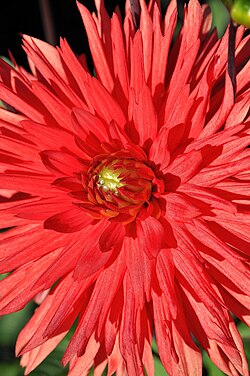
- Cactus: Characterized by narrow, pointed petals.
- Pompon and Ball: Smaller, rounded, highly symmetrical blooms.
- Fimbriated: Featuring split or fringed petal ends.
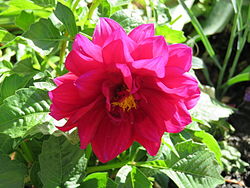
The "double" dahlia became the preferred form for gardeners in the 19th century. While early varieties were often tinged with purple, breeders eventually developed many more color combinations. One famous historical variety was the "Stars of the Devil" (*Dahlia juarezii*), discovered in the Netherlands in 1872 from a seemingly ruined shipment of Mexican roots.
Tips for Growing Dahlias
Dahlias are native to warm, frost-free climates, meaning they are not naturally adapted to sub-zero temperatures. However, they are excellent candidates for gardeners in temperate regions if managed correctly. Because they grow from tubers, they can survive periods of dormancy.
To ensure success, follow these cultivation guidelines:
- Winter Care: In areas with frost, lift the tubers from the ground in autumn and store them in a cool, frost-free environment.
- Planting: Plant tubers deep (10–15 cm) to provide extra protection.
- Soil and Sun: Choose a location with plenty of sunlight and use well-watered, free-draining soil.
- Maintenance: Taller cultivars often require staking (providing support) to prevent them from falling over. Additionally, practice regular deadheading—the removal of spent flowers—to encourage continuous blooming.
Frequently Asked Questions
Why are there no true blue dahlias?
While dahlias contain anthocyanin pigments, they lack the necessary chemical structure to produce a true blue. Specifically, they only have five hydroxyl groups, whereas the blue pigment delphinidin requires six.
How can I protect my dahlias from frost?
Since dahlias are not frost-hardy, you should lift their tubers in the autumn and store them in a cool, frost-free place. Planting them 10–15 cm deep can also offer some protection during the growing season.
What is the difference between a single and a double dahlia?
A "single" dahlia typically displays a single row of petal-like florets around a visible central disc. A "double" dahlia has multiple rows of petals that often hide the central disc entirely.
Where do dahlias grow naturally?
Dahlias are predominantly native to Mexico, with some species extending into Central America and northern South America. They typically thrive in high-altitude mountain regions and pine–oak woodlands.
How many dahlia varieties exist?
There are currently more than 57,000 registered cultivars officially recorded through the Royal Horticultural Society.