Exploring the Genus Senecio: A Diverse Group of Flowering Plants
The genus Senecio represents one of the largest and most complex groups of flowering plants in the world. Belonging to the Asteraceae (daisy) family, this genus includes a wide variety of plants commonly known as groundsels and certain types of ragworts. Because of its massive size and evolutionary complexity, scientists are constantly refining how they classify these plants.
Morphology and Appearance
Plants within the Senecio genus exhibit a wide range of physical characteristics. Their flower heads are often "rayed," meaning they possess ray florets—the colorful, petal-like structures that surround the center of a daisy. While these flowers are most commonly bright yellow, species within the genus can also produce flowers in shades of green, purple, white, and blue. Interestingly, the type species, Senecio vulgaris, does not possess these ray florets.
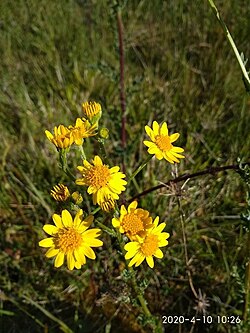
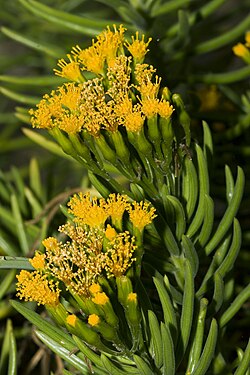
The growth forms of Senecio are remarkably diverse. Depending on the species, a plant might be an annual or perennial herb, a shrub, a small tree, a climber, or even an aquatic plant. This variety allows the genus to occupy many different ecological niches.
Chemical Defenses: Pyrrolizidine Alkaloids
One of the most significant biological features of all Senecio species is the presence of pyrrolizidine alkaloids. These are natural chemical compounds that function as biocides—substances used to deter or even kill other organisms. Because of these alkaloids, livestock generally find these plants unpalatable and avoid eating them. However, some species of Lepidoptera (moths and butterflies) have developed a tolerance to these chemicals and use Senecio plants as food for their larvae.
Taxonomy and Evolutionary Complexity
Classifying the Senecio genus is a significant challenge for botanists. Even with modern genetic data, the genus is considered polyphyletic, meaning the group does not consist of a single evolutionary lineage sharing a common ancestor. Instead, it is a collection of species that have been grouped together, some of which may actually belong to different evolutionary branches.
Because there are no specific morphological synapomorphies (shared derived traits) that can definitively determine which species belong to the genus, the exact number of species is difficult to pin down. However, Plants of the World Online currently recognizes approximately 1,482 species. Due to ongoing taxonomic revisions, many species are frequently moved between Senecio and other related genera.
Global Distribution
The genus Senecio enjoys an almost worldwide distribution. It is one of the rare plant groups found in all five regions that feature a Mediterranean climate. Beyond these regions, Senecio species are highly adaptable, thriving in diverse environments ranging from mountainous regions to tropical alpine-like areas.
Key Facts
- Family: Asteraceae (the daisy family).
- Species Count: Approximately 1,482 recognized species.
- Etymology: The name is derived from the Latin senex, meaning "old man."
- Chemical Defense: All species contain pyrrolizidine alkaloids to deter herbivores.
- Global Presence: Found worldwide, including all Mediterranean climate zones.
| Scientific Name | Common Name(s) |
|---|---|
| Senecio vulgaris | Common groundsel |
| Senecio barbertonicus | Succulent bush senecio |
| Senecio squalidus | Oxford ragwort |
| Senecio ampullaceus | Texas ragwort |
| Senecio elegans | Purple groundsel |
Frequently Asked Questions
What does the name Senecio mean?
The scientific name Senecio is derived from the Latin word senex, which translates to "old man."
Why are Senecio plants often avoided by livestock?
They contain pyrrolizidine alkaloids, which act as natural biocides. These chemicals make the plants unpalatable and can be toxic to many animals.
Are all Senecio plants small herbs?
No. While many are herbs, the genus is highly diverse and includes shrubs, small trees, climbers, and even aquatic plants.
What colors can Senecio flowers be?
While yellow is the most common color for their flower heads, species in this genus can also produce white, blue, purple, and green flowers.
Why is the classification of Senecio so complicated?
The genus is polyphyletic, meaning it is not a single, unified evolutionary group. Because many species share similar traits without sharing a single common ancestor, botanists frequently move species between Senecio and other genera as genetic research evolves.