Woodrow Wilson: The Architect of the New Freedom and Global Diplomacy
Woodrow Wilson served as the 28th President of the United States from 1913 to 1921, a tenure defined by sweeping domestic reforms and the immense challenge of leading the nation through World War I. A scholar by training and a politician by conviction, Wilson transitioned from the presidency of Princeton University to the governorship of New Jersey before ascending to the highest office in the land.
His legacy is a complex tapestry of progressive idealism, pioneering economic structures, and a visionary—though often contested—approach to international relations that sought to end the cycle of global conflict.
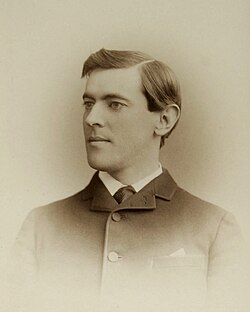
Key Facts
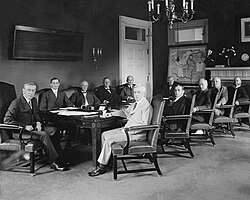
- Presidency: Served two terms as the 28th U.S. President (1913–1921).
- Academic Background: Former President of Princeton University and PhD from Johns Hopkins University.
- Economic Legacy: Oversaw the creation of the Federal Reserve System.
- Global Impact: Authored the Fourteen Points and advocated for the League of Nations.
- Major Award: Recipient of the Nobel Peace Prize in 1919.
- Political Party: Democratic.
Early Life and Academic Ascent
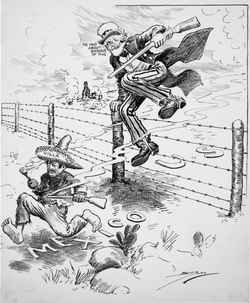
Born Thomas Woodrow Wilson on December 28, 1856, Wilson's early life was rooted in academic excellence. He earned his AB from the College of New Jersey and later a PhD from Johns Hopkins University, where he focused on political science. His scholarly work culminated in his 1886 thesis, Congressional Government: A Study in American Politics.
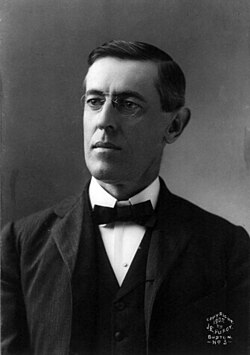
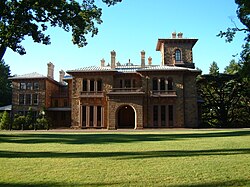
Wilson's career in academia reached its peak when he became the 13th President of Princeton University in 1902. During his tenure, he lived in Prospect House on campus, where he balanced administrative leadership with his passion for political theory.
Family and Personal Life
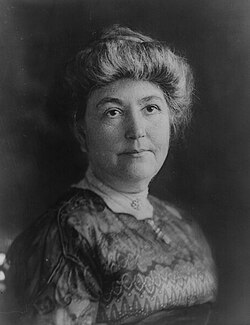
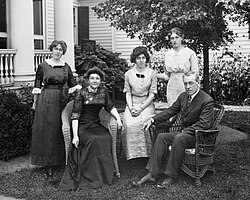
In September 1883, Wilson proposed to Ellen Axson, the daughter of a Presbyterian minister from Savannah, Georgia. Following the loss of his first wife, he later married Edith Bolling.
The Path to the White House
Wilson's transition into politics began in earnest when he was elected as the 34th Governor of New Jersey, serving from 1911 to 1913. His success in state government provided the springboard for his 1912 presidential campaign.
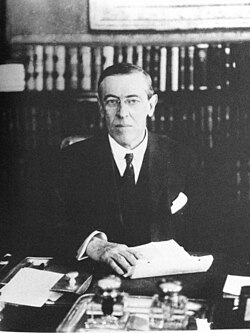
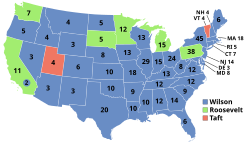
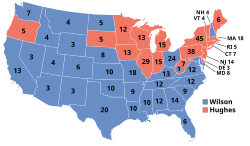
The election of 1912 was a pivotal moment in American politics. After securing the Democratic nomination, Wilson won the general election, benefiting from a split in the Republican vote. His victory established a new era of Democratic leadership focused on progressive reform.
The Presidency: The "New Freedom" Agenda
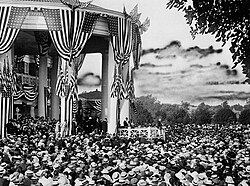
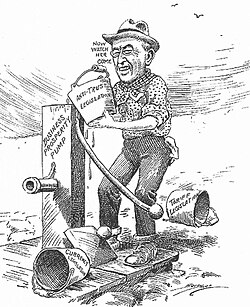
Upon taking office on March 4, 1913, Wilson introduced his New Freedom domestic agenda. This platform aimed to dismantle monopolies and lower tariffs to create a more competitive and fair economic environment.
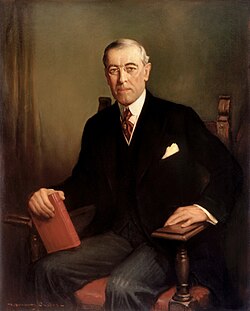
Economic and Legislative Reforms
Wilson's first term was marked by significant structural changes to the American economy. He initiated the modern practice of delivering the State of the Union address in person before a joint session of Congress in 1913.
![Wilson giving his first State of the Union address in 1913 before a joint session of Congress,[122] which initiated the modern practice of the State of the Union being given in person before all members of Congress[123]](/images/8b/bc/8bbcbd94f9a200e44449a471660d4354e9afc7e2043d131c933a836781e79bae.jpg)
Key achievements included:
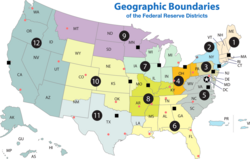
- The Federal Reserve System: The establishment of a central banking system to provide economic stability.
- Tariff and Tax Legislation: Implementing laws to reduce tariffs and reform the tax code.
- Antitrust Laws: Strengthening legislation to prevent unfair business monopolies.
Leading Through World War I
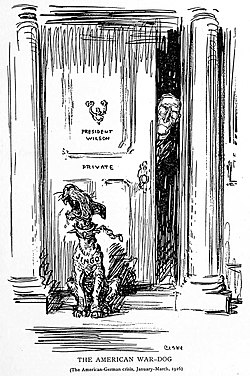
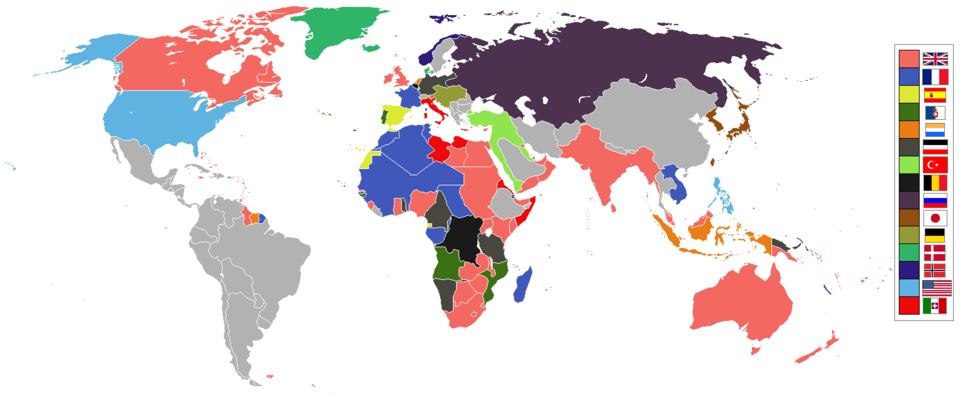
Wilson's second term was dominated by the outbreak of World War I. Initially, he championed a policy of neutrality, attempting to keep the United States out of the European conflict. However, escalating tensions and strategic necessities led the U.S. to enter the war in 1917.
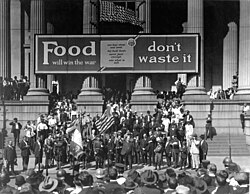
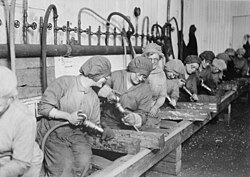
The war effort required a total mobilization of the American home front. This included the implementation of a draft and the entry of women into the industrial workforce, particularly in ordnance shops, to support the military.
The Fourteen Points and the Peace Conference
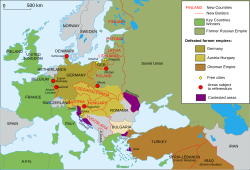
As the war neared its end, Wilson proposed the Fourteen Points, a blueprint for a lasting peace. His vision centered on national self-determination and the creation of the League of Nations, an international organization designed to prevent future wars through diplomacy.
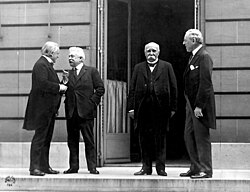
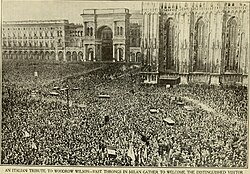
At the Paris Peace Conference in 1919, Wilson joined the "Big Four" to negotiate the Treaty of Versailles. While he succeeded in establishing the League of Nations, he faced significant opposition at home. The U.S. Senate ultimately refused to ratify the treaty, leading to a crushing political defeat for Wilson.
Later Years and Legacy
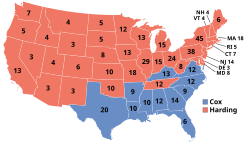
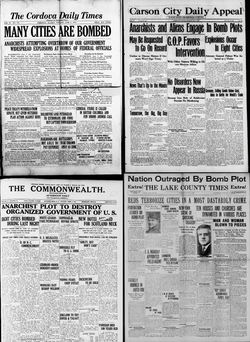
The final years of Wilson's presidency were marred by a severe health collapse and the social unrest of the Red Scare and the Palmer Raids. He left office in March 1921, succeeded by Warren G. Harding.
Race Relations and Criticism
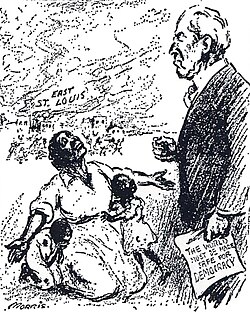
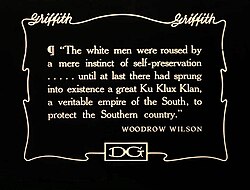
Wilson's historical reputation is complicated by his record on race. He oversaw the segregation of the federal bureaucracy and faced criticism for his response to racial violence and the treatment of African Americans in the armed forces.
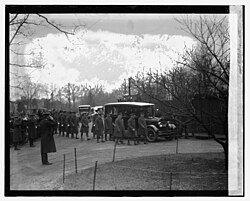
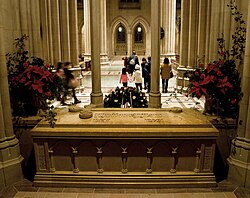
Woodrow Wilson passed away on February 3, 1924, at the age of 67. He is interred at the Washington National Cathedral.
| Role | Period | Key Contribution/Event |
|---|---|---|
| President of Princeton University | 1902–1910 | Academic leadership and political theory |
| Governor of New Jersey | 1911–1913 | State-level progressive reform |
| President of the United States | 1913–1921 | Federal Reserve, WWI leadership, Fourteen Points |
| Nobel Peace Prize Laureate | 1919 | Efforts to establish the League of Nations |
Frequently Asked Questions
![Wilson returning from the Versailles Peace Conference on USS George Washington, as she steamed up New York Harbor on July 8, 1919; the Weimar National Assembly in Germany formally ratified the treaty the following day in a vote of 209 to 116.[252]](/images/0b/72/0b72441d6dbda432dd693ad31450cd2186c494e115fb4be98acdf77cc3a5ec73.jpg)
What was the "New Freedom" agenda?
The New Freedom was Wilson's domestic program aimed at expanding economic opportunity by reducing tariffs, implementing antitrust laws to break up monopolies, and reforming the banking system.
How did Wilson change the State of the Union address?
Wilson initiated the modern tradition of delivering the State of the Union address in person before a joint session of Congress, rather than simply sending a written report.
What were the Fourteen Points?
The Fourteen Points were a set of principles outlined by Wilson in 1918 to guide the peace negotiations after World War I, emphasizing transparency, free trade, and the creation of the League of Nations.
Why did the U.S. not join the League of Nations?
Despite Wilson's advocacy, the U.S. Senate failed to ratify the Treaty of Versailles, largely due to concerns over American sovereignty and a desire to avoid future foreign entanglements.
What is Wilson's legacy regarding civil rights?
Wilson's legacy is viewed critically in this area because he promoted the segregation of federal employees and failed to effectively address racial violence during his presidency.