Winger Roles and Tactics in Modern Football
In the world of football, the winger is a vital offensive player positioned wide near the touchlines. Historically originating from the "outside-forward" position, wingers are primarily tasked with stretching the opposition's defense and creating scoring opportunities. Depending on the region and the formation used, their classification varies; in Latin and Dutch football cultures, they are typically viewed as forwards, whereas in the British game—particularly within the 4–4–2 system—they are often categorized as midfielders.
Key Facts
- Primary Duties: Beating full-backs, delivering crosses or cut-backs, and scoring from close range.
- Core Attributes: High speed and exceptional dribbling skills.
- Regional Differences: British wide-midfielders have heavier defensive tracking duties compared to their Dutch, Spanish, or Portuguese counterparts.
- Tactical Evolution: Many veteran wingers transition into "number 10" playmaking roles as they lose pace.
- Modern Variations: Includes inverted wingers, false wingers, and wide target men.
Traditional Winger Responsibilities
The fundamental goal of a winger is to utilize the flanks to bypass opposing full-backs. By delivering precise crosses into the penalty area or cutting the ball back to teammates, they provide the primary service for strikers. While their main focus is attack, their defensive responsibilities differ by coaching philosophy.
In Southern European and Dutch styles, a winger's defensive work is largely limited to pressing the opposition full-backs. Conversely, Northern European and British styles demand that wide-midfielders track back to their own corner flag to support their full-back or tuck into the center to help pressure the ball. This high physical demand can be challenging for technical players like Ryan Giggs, John Barnes, or Joaquín, who may lack the stamina of a dedicated wing-back.
As these players age, they are often redeployed as "number 10s"—attacking midfielders positioned between the midfield and the forward line. In this role, their technical skill and reading of the game allow them to create chances in tight spaces, as seen with Inter Milan's use of Luís Figo.
The Rise of the Inverted Winger
An inverted winger is a player stationed on the opposite side of their strongest foot. This positioning allows them to cut inside toward the center of the pitch to shoot or provide in-swinging crosses. A landmark example of this tactic was Frank Rijkaard moving Lionel Messi to the right wing at Barcelona, enabling the left-footed player to drive into the center.
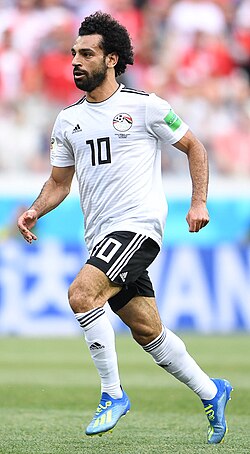
Other successful implementations include Bayern Munich's pairing of Arjen Robben (left-footed on the right) and Franck Ribéry (right-footed on the left).
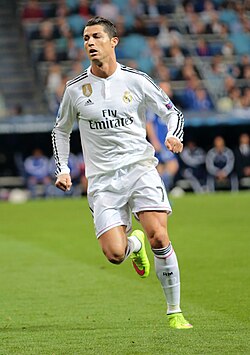
Goalscoring and "False" Wingers
Some players evolve the inverted role into that of a "goalscoring winger." Players like Cristiano Ronaldo and Gareth Bale at Real Madrid operated wide on paper but were given the freedom to make unmarked runs into central penalty areas, effectively acting as strikers. This is similar to the German Raumdeuter (space interpreter) role, exemplified by Thomas Müller, who finds pockets of space to score or assist.
Distinct from the goalscoring winger is the "false winger" (or "seven-and-a-half"). This is a central playmaker deployed wide to drag defenders out of position and create a numerical advantage in the midfield. This tactic, described by Samir Nasri as a "non-axial playmaker," also opens space for full-backs to make overlapping runs.
The Wide Target Man
Occasionally, managers employ a wide target man—a physically imposing player, usually a center-forward, positioned on the wing. Their purpose is to win aerial duels, hold up the ball, or draw full-backs out of position.
This role was epitomized by Jostein Flo under Egil Olsen with the Norway national team, leading to the "Flo Pass" tactic. More recently, Massimiliano Allegri utilized Mario Mandžukić on the left flank at Juventus, adding a pressing requirement to the role. Romelu Lukaku has also occasionally been deployed in this manner.
Winger Role Comparison
| Role | Primary Positioning | Key Objective | Example Player |
|---|---|---|---|
| Traditional Winger | Flank (Strong foot side) | Crosses and cut-backs | Ryan Giggs |
| Inverted Winger | Flank (Opposite foot side) | Cutting inside to shoot/cross | Lionel Messi |
| Goalscoring Winger | Flank to Central | Unmarked runs into the box | Cristiano Ronaldo |
| False Winger | Flank to Midfield | Numerical advantage in center | Samir Nasri |
| Wide Target Man | Flank | Aerial dominance and hold-up play | Jostein Flo |
Frequently Asked Questions
What is the main difference between a winger and a wide midfielder?
The difference is primarily regional and tactical. In Latin and Dutch football, wingers are considered forwards. In British football, they are often wide midfielders with significantly more defensive responsibilities, such as tracking back to their own corner flag.
How does an inverted winger change the game?
By playing on the side opposite their dominant foot, inverted wingers can cut inside toward the goal. This allows them to shoot more easily or deliver in-swinging crosses, making them more unpredictable than traditional wingers who stay wide to cross.
What is a Raumdeuter?
A Raumdeuter, which translates to "space interpreter," is an attacking-minded player (like Thomas Müller) who specializes in finding open spaces in the final third to receive passes and score or assist goals.
Why would a manager use a wide target man?
A wide target man is used to exploit the aerial weaknesses of opposing full-backs. By placing a large, physical striker on the wing, the team can win long balls on the flank and draw defenders out of their central positions.
What happens to wingers as they get older?
As wingers lose the natural pace required to beat full-backs, they are often moved into a "number 10" role. This allows them to use their technical skill, ball control, and experience to create chances from a more central, attacking midfield position.