Association Football Terminology and Evolution
Association football, known globally as either football or soccer, is a sport defined as much by its passion as by its complex language. While games involving kicking a ball existed long before formal rules, the sport was officially codified in 1863 in England. Since then, a vast lexicon has developed to describe the tactical nuances, cultural phenomena, and physical demands of the game.
The terminology of the sport is not static; it evolves alongside the game itself. As tactics shift, so do the names of the positions. For example, the inside forward used in the classic 2–3–5 formation shares many similarities with the modern attacking midfielder, though they remain distinct roles. Similarly, the centre half of the 2–3–5 era performs a role comparable to today's holding midfielder in a 4–1–3–2 system.

Regional Variations in Language
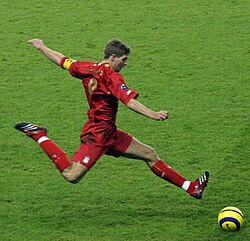
Because football is a global phenomenon, multiple terms often exist for the same concept, frequently driven by regional dialects of English. A primary example is the name of the sport itself: "soccer" is a derivative of "association," used predominantly in North America, while "football" is the standard term in Europe.
This linguistic divide extends to match achievements. In British English, when a team prevents the opponent from scoring for an entire match, it is called a clean sheet. In American and Canadian English, this same feat is referred to as a shutout.
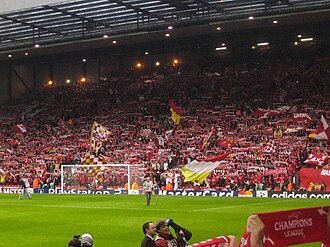
Key Facts
- Codification: The rules of association football were first formalized in England in 1863.
- Global Naming: The term "soccer" is derived from the word "association."
- Tactical Evolution: Modern roles like the holding midfielder evolved from earlier positions such as the centre half.
- Regional Terms: "Clean sheet" (UK) and "shutout" (North America) describe the same achievement of conceding zero goals.
Common Football Terms and Slang

Beyond formal positions, the sport is rich with slang and descriptive terms that capture the drama of the pitch. From the beauty of a goal to the frustration of an injury, the language is diverse.
Scoring and Performance
- Golazo: A term used to describe a spectacular or particularly impressive goal.
- Silverware: A slang term referring to the trophies teams win during competitions.

Tactics and Gameplay
- Compact Defending: A defensive strategy focused on maintaining "compactness" to limit the opponent's space.
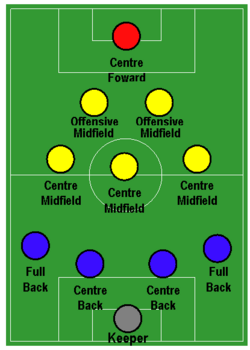
- Christmas Tree: A nickname for the 4–3–2–1 formation, which is a variant of the 4–5–1.
Player Status and Incidents
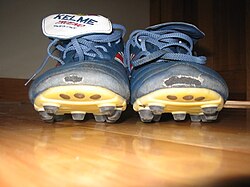
- Hang up one's boots: An idiomatic expression meaning to retire from professional football.
- Knock: A term for a minor injury sustained during a match.

Terminology Summary Table

| Term | Meaning | Context |
|---|---|---|
| Golazo | A spectacular goal | Performance |
| Clean Sheet / Shutout | Zero goals conceded | Defensive Achievement |
| Silverware | Trophies/Awards | Competition |
| Christmas Tree | 4–3–2–1 Formation | Tactics |
| Hang up boots | Retire from the sport | Career |
Frequently Asked Questions




What is the difference between football and soccer?
They are different names for the same sport, association football. "Soccer" is derived from "association" and is more common in North America, while "football" is the standard term in most other parts of the world.
What does "clean sheet" mean in football?
A clean sheet occurs when a goalkeeper and their defense successfully prevent the opposing team from scoring any goals during a match.
What is a "Christmas Tree" formation?
The Christmas Tree is a tactical formation (4–3–2–1) that is a variation of the 4–5–1, characterized by its narrow midfield shape.
What is a "golazo"?
A golazo is a term used to describe a goal that is exceptionally impressive, often due to the distance, technique, or beauty of the strike.
What does it mean to "hang up one's boots"?
This is a common football idiom that means a player has decided to retire from the sport.