Williamsbridge Reservoir: A History of Transformation in the West Bronx
The landscape of the West Bronx has undergone significant changes over the last century, evolving from essential utility sites to vibrant community spaces. Central to this evolution is the area surrounding the Williamsbridge Reservoir, a site that has witnessed the growth of healthcare institutions, the development of public recreation, and the preservation of architectural history.
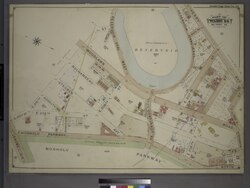
In the early 20th century, the land between Columbia Oval and the reservoir became a focal point for community development. In January 1910, a site was acquired for the Montefiore Home, an organization first established in 1884. This move allowed for the creation of a hospital dedicated to treating various diseases, replacing the organization's previous location on Broadway in Manhattan, situated between 137th and 138th Streets.
Safety and Transition of Control
Despite the presence of protective measures, the reservoir site was not without tragedy. In June 1928, a four-year-old boy named Frederic Fleishaus, residing at 3315 Rochambeau Avenue in the Bronx, drowned in the reservoir. The child had managed to enter the water through a small opening in an eight-foot safety fence designed to protect the public.
Following years of utility use, the management of the property shifted. On June 27, 1934, the Williamsbridge Reservoir property was placed under the control of the New York State Office of Parks, Recreation and Historic Preservation.
The Rise of Williamsbridge Oval Park
The transition to state control paved the way for a massive public works project. On September 11, 1937, the Williamsbridge Oval Park and Williamsbridge Playground and Recreation Center officially opened. This 20-acre (8.1 ha) sport and play area was funded as a Works Progress Administration (WPA) project—a New Deal agency designed to provide employment during the Great Depression.
The project cost $1,500,000 to complete and is noted for its distinct architectural styles. The park features a Beaux Arts landscape, characterized by formal symmetry and classical elements, and an Art Moderne recreation center, a streamlined style of architecture that emphasized curving forms and modernity.
Historical Recognition and Preservation
The architectural and cultural significance of the site has been formally recognized through the National Register of Historic Places. The Keeper's House at Williamsbridge Reservoir was the first to be honored, receiving its listing in 1999. This recognition was expanded sixteen years later when the entire park was added to the Register.
Key Facts
- Acquisition: The Montefiore Home site was acquired in January 1910.
- Park Opening: Williamsbridge Oval Park opened on September 1937.
- Investment: The WPA spent $1,500,000 to build the recreation facilities.
- Size: The sport and play area covers 20 acres (8.1 ha).
- Architecture: The site blends Beaux Arts landscaping with an Art Moderne center.
- Historic Status: The Keeper's House was listed in 1999; the full park followed in 2015.
| Year | Event/Milestone | Details |
|---|---|---|
| 1910 | Montefiore Home Acquisition | Site acquired in West Bronx for a hospital. |
| 1928 | Safety Incident | Drowning of Frederic Fleishaus. |
| 1934 | Change of Control | Transferred to NY State Office of Parks. |
| 1937 | Park Opening | Williamsbridge Oval Park opens via WPA. |
| 1999 | Historic Listing | Keeper's House added to National Register. |
| 2015 | Full Park Listing | Entire park added to National Register. |
Frequently Asked Questions
What was the original purpose of the Montefiore Home site in the Bronx?
The site acquired in January 1910 was used to establish a hospital for treating various diseases, replacing the home's original Manhattan location.
How was the Williamsbridge Oval Park funded?
The park was a Works Progress Administration (WPA) project with a total construction cost of $1,500,000.
What architectural styles are present in the park?
The park features a Beaux Arts landscape and an Art Moderne recreation center.
When did the park receive official historic status?
The Keeper's House was listed on the National Register of Historic Places in 1999, and the entire park was listed in 2015.
Who managed the reservoir property starting in 1934?
Control of the property was transferred to the New York State Office of Parks, Recreation and Historic Preservation on June 27, 1934.