William I of Württemberg: The Reformer King of a Changing State
William I (born Friedrich Wilhelm Karl) served as the King of Württemberg from 1816 until his death in 1864. His 47-year reign marked a pivotal transition for the kingdom, evolving from a fragmented collection of denominational principalities and a struggling agricultural society into a structured, constitutional state with a unified identity.
Taking the throne during a period of immense hardship, William I navigated the complexities of post-Napoleonic Europe, balancing the interests of great powers like Prussia and Austria while implementing domestic reforms that modernized his realm.
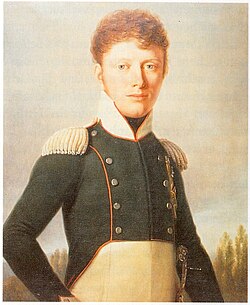
Key Facts

- Reign: October 30, 1816 – June 25, 1864.
- Major Achievement: Oversaw the approval of the Württemberg constitution on September 25, 1819.
- Military Career: The only German royal to actively serve as a military commander during the wars of 1814 and 1815.
- Political Shift: Initially a liberal reformer, he later adopted reactionary policies following the 1848 March Revolution.
- Economic Integration: Facilitated Württemberg's entry into the Zollverein (German Customs Union) between 1828 and 1834.
Early Life and Turbulent Youth
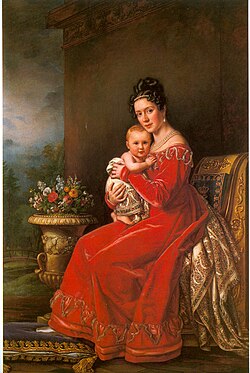
Born on September 27, 1781, in Lüben (now Lubin, Poland), the young Frederick William grew up in a household defined by strife. His father, Duke Frederick William Charles, served the Russian Empress Catherine the Great, while his mother, Augusta of Brunswick-Wolfenbüttel, suffered in an abusive marriage. Following his mother's death in 1788, William was raised under a strict educational regime in Ludwigsburg Palace.
As a young man, William frequently rebelled against his father's authority. After a failed escape attempt in 1799, he studied at the University of Tübingen. His desire for independence led him to volunteer for the Austrian army during the War of the Second Coalition, where he displayed significant bravery at the Battle of Hohenlinden in 1800, eventually attaining the rank of Imperial Major General by 1803.
The Napoleonic Era and Rise to Power
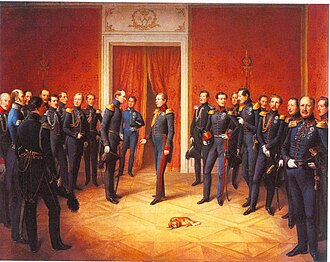
William's early adulthood was deeply entwined with the rise of Napoleon Bonaparte. After a period of exile in Paris and Vienna—during which he had a romantic liaison with Therese von Abel—William returned to a Württemberg that was expanding through German mediatization (the process of annexing smaller ecclesiastical and secular territories). In 1806, the Electorate of Württemberg was elevated to a kingdom.
To secure political alliances, William entered a marriage of convenience with Caroline Augusta of Bavaria in 1808. However, the union was unhappy and remained unconsummated. During this era, William commanded troops for Napoleon in both the war against Austria and the devastating Russian campaign, though he eventually shifted his allegiance to the coalition against Napoleon after the Battle of Leipzig in 1813.
Reign and Constitutional Reform
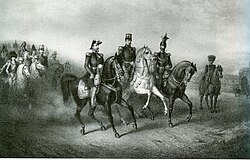
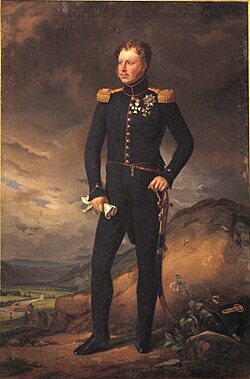
William I ascended the throne on October 30, 1816, during the "Year Without a Summer," a period characterized by crop failures and famine. In response to these crises, he initiated sweeping reforms to stabilize the economy and govern more effectively. This culminated in the approval of a constitution in 1819, transforming Württemberg into a constitutional state.
Throughout his reign, William sought to balance the influence of the neighboring giants, Prussia and Austria. While he occasionally explored the idea of a "Third Germany"—a coalition of smaller states to maintain independence—he ultimately fostered closer ties with Prussia. This cooperation was most evident in the Zollverein, a customs union that reduced trade barriers and acted as a precursor to German unification.

The Revolution of 1848 and Later Years
The mid-19th century brought political upheaval. During the March Revolution of 1848, William I became the only German monarch forced to recognize the Frankfurt Constitution. However, once the revolution failed, he pivoted toward reactionary policies, distancing himself from his earlier liberal reputation.
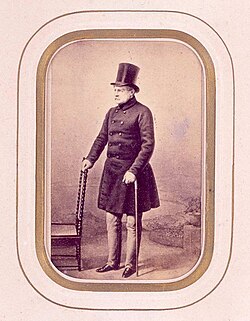
In his final years, William remained a respected figure in European diplomacy, hosting leaders such as Napoleon III and Tsar Alexander II. He died at Rosenstein Palace on June 25, 1864, at the age of 82.
Family and Legacy
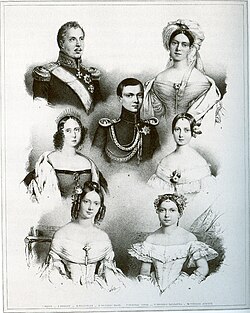
William's personal life was marked by three marriages. After divorcing Caroline Augusta, he married Grand Duchess Catherine Pavlovna of Russia in 1816, and later Duchess Pauline Therese of Württemberg in 1820. Together, these unions produced several children, including his successor, King Charles I.
William I is buried in the Württemberg Mausoleum, where he rests alongside his second wife, Catherine.

| Category | Details |
|---|---|
| Full Name | Friedrich Wilhelm Karl |
| Reign Period | 1816–1864 |
| Predecessor | Frederick I |
| Successor | Charles I |
| Key Legislation | Constitution of 1819 |
| Burial Site | Württemberg Mausoleum |
Frequently Asked Questions
How did William I handle the economic crisis of 1816?
Upon his accession, William I faced severe famine and crop failures. He responded by initiating sweeping administrative and economic reforms, which helped stabilize the kingdom and led to the creation of a formal constitution in 1819.
What was William I's role in the Napoleonic Wars?
William I had a complex relationship with Napoleon, initially commanding troops for the French Empire in the Russian campaign. However, he later switched sides to the coalition against Napoleon, leading the Army of Württemberg in the final stages of the conflict.
Why is the Zollverein significant to his reign?
The Zollverein was a customs union that integrated Württemberg's economy with other German states, particularly Prussia. While intended to preserve the independence of smaller states through economic strength, it ultimately paved the way for German unification in 1871.
How did his political stance change after 1848?
Although he was forced to recognize the liberal Frankfurt Constitution during the 1848 revolution, William I shifted toward reactionary policies once the revolution failed, counteracting his previous image as a liberal reformer.
Who succeeded William I as King of Württemberg?
He was succeeded by his son, King Charles I, who reigned until 1891.