William Henry Bartlett: Master of 19th Century Topographical Engraving
William Henry Bartlett (1809–1854) was a distinguished British artist who captured the landscapes and architecture of the 19th century with precision and grace. He is most celebrated for his steel engravings—a process of engraving on steel plates that allowed for finer detail and larger print runs than traditional copper plates—which brought the vistas of North America, the Middle East, and Britain to a global audience.
Born in Kentish Town, London, on March 26, 1809, Bartlett began his professional journey as an apprentice to John Britton. Under Britton's guidance, he developed a mastery of topography, the detailed mapping and artistic representation of the physical features of a place. This foundation propelled him to become one of the most influential illustrators of his era.
Key Facts
- Specialization: Renowned for topographical drawings rendered into steel engravings.
- Global Reach: Traveled extensively through Britain, North America, the Balkans, and the Middle East.
- Major Work: Illustrated American Scenery, published in 30 installments between 1837 and 1839.
- Artistic Method: Created sepia wash drawings at the exact size intended for engraving.
- Legacy: Focused on "lively impressions of actual sights," often highlighting historical ruins and cathedrals.
Artistic Journey and North American Expeditions
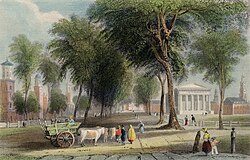
In 1835, Bartlett embarked on his first visit to the United States, focusing his attention on the towns, buildings, and natural scenery of the northeastern states. These observations culminated in the publication of American Scenery; or Land, Lake, and River: Illustrations of Transatlantic Nature. Published by George Virtue in London, the work featured text by Nathaniel Parker Willis and was released in monthly installments from 1837 to 1839 before being released in bound editions starting in 1840.
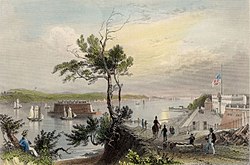
Bartlett's exploration of the continent continued with four visits to North America between 1836 and 1852. In 1838, he traveled through the Canadas to produce sketches for Canadian Scenery Illustrated, which was published in 1842. His ability to frame a scene was highly praised; Willis noted that Bartlett possessed a unique talent for selecting viewpoints that prominently featured the historical or antique elements of a landscape, such as castles or cathedrals.
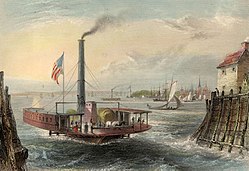
Beyond his American works, Bartlett contributed to other significant publications, including The Poems, Letters and Land of Robert Burns (1838) and the posthumously published History of the United States of North America (c. 1856), the latter of which was continued by Bernard Bolingbroke Woodward.
Global Travels and Final Years
Bartlett's curiosity extended far beyond the Atlantic. In the mid to late 1840s, he traveled extensively through the Balkans and the Middle East. These journeys resulted in works such as Walks About the City and Environs of Jerusalem (1840) and The Nile Boat (1849). His portfolio from this period includes detailed depictions of the Great Temple at Balbec, the residence of Lady Hester Stanhope in Djouni, and various scenes in Lebanon and Damascus.
Tragically, Bartlett's life was cut short during his final expedition to the Near East. While returning home on the French steamer Egyptus, he fell ill with a fever and passed away off the coast of Malta on September 13, 1854, at the age of 45. He was survived by his wife, Susanna, who lived until 1902.
Summary of Major Works and Contributions
| Work Title | Region/Subject | Publication Date | Key Collaborator/Publisher |
|---|---|---|---|
| American Scenery | Northeastern USA | 1837–1839 | Nathaniel Parker Willis / George Virtue |
| Canadian Scenery Illustrated | Canada | 1842 | Nathaniel Parker Willis |
| Walks About the City and Environs of Jerusalem | Middle East | 1840 | Self-published/Various |
| The Nile Boat | Egypt/Nile | 1849 | London Publication |
| History of the United States of North America | USA | c. 1856 | Bernard Bolingbroke Woodward |
Frequently Asked Questions
What was William Henry Bartlett's primary artistic medium?
Bartlett is best known for his steel engravings. He typically created detailed sepia wash drawings at the exact size required for the final engraving, which were then rendered into prints.
Did William Henry Bartlett paint in oils?
While his engraved views were widely copied by other artists, there are no known signed oil paintings attributed to his hand.
Which regions did Bartlett travel to for his work?
Bartlett traveled extensively throughout Britain, the northeastern United States, Canada, the Balkans, and the Middle East, including Egypt and Jerusalem.
How did William Henry Bartlett die?
Bartlett died of a fever on September 13, 1854, while traveling on the French steamer Egyptus off the coast of Malta.
Who was Nathaniel Parker Willis?
Nathaniel Parker Willis was a writer who provided the accompanying text for Bartlett's major works, including American Scenery and Canadian Scenery Illustrated.