The Life and Legacy of Cornelius Krieghoff: Capturing the Spirit of 19th-Century Canada
Cornelius Krieghoff was a Dutch-born painter whose work became synonymous with the visual identity of 19th-century Canada. Through his meticulous genre scenes—paintings that depict everyday life and ordinary people—he captured the rugged beauty of the Canadian landscape and the daily struggles and triumphs of those living on its frontiers.
From the frozen vistas of winter landscapes to the bustling activity of trading and industry, Krieghoff’s naturalistic style brought the essence of Quebec to life. His ability to interpret the splendor of waterfalls and the hardships of frontier life earned him a permanent place in the history of North American art.
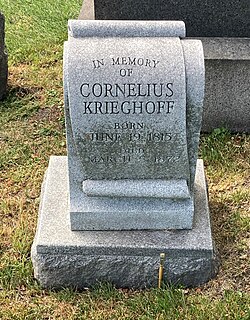
Key Facts
- Born: June 19, 1815, in Amsterdam, Kingdom of the Netherlands.
- Died: March 5, 1872, in Chicago, Illinois.
- Specialization: Landscape and genre paintings of 19th-century Canadian life.
- Notable Works: The Toll Gate (1859/1861) and The Blacksmith's Shop (1871).
- Highest Auction Record: $570,000 CAD for Mail boat landing at Quebec.
Early Life and Artistic Training
Born in Amsterdam, Krieghoff’s early years were shaped by his family's move to Germany. His father, Johann Ernst Krieghoff, worked to establish a wallpaper factory, and the family resided in Schloss Mainberg, a 12th-century castle. Cornelius received his initial artistic instruction from his father before enrolling in the Academy of Fine Arts in Germany around 1830.
His journey was marked by significant transitions. In 1836, he moved to New York and subsequently enlisted in the United States Army's First Regiment of Artillery in 1837. During his military service, he produced sketches of the Second Seminole War, eventually being discharged as a Corporal in 1840. To refine his craft, he traveled to Paris in 1844, where he studied under Michel Martin Drolling, copying masterpieces at the Louvre to master the techniques of the old masters.
A Prolific Career in Canada
Krieghoff’s most influential period began around 1846 when he moved to Montreal with his wife, Émilie Gauthier. He was a foundational figure in the local art scene, helping to establish the Montreal Society of Artists in 1847. During his time in Montreal, he developed a deep connection with the Mohawks of the Kahnawake Indian Reservation, creating numerous sketches that would later be transformed into oil paintings.
Between 1853 and 1872, Krieghoff spent significant time in Quebec City. His portfolio from this era is vast, featuring detailed depictions of:
- Natural Wonders: Landscapes such as Montmorency Falls and Lake St. Charles.
- Daily Life: Scenes of trading, traveling, and urban industry.
- Winter Scenes: Various iterations of snowy landscapes, including works like The Blizzard.
His work was not merely decorative; as noted by Charles C. Hill, former Curator of Canadian Art at the National Gallery of Canada, Krieghoff was the first artist to truly interpret the "splendour" and "hardships" of the Canadian frontier in oils.
Later Years and Final Resting Place
After a period of living in Europe between 1863 and 1868, Krieghoff moved to Chicago to retire. He passed away in Chicago on March 5, 1872, at the age of 56. He is buried in Graceland Cemetery.
Tragedy struck his legacy a decade after his death. In 1881, the Great Quebec Fire destroyed many of his original sketches from his time in the U.S. Army in Florida, which had been held by his longtime companion, John S. Budden.
The Krieghoff Collection and Art Forgery Scandals
Today, Krieghoff's works are held in prestigious institutions worldwide, including the National Gallery of Canada, the Montreal Museum of Fine Arts, and the Brooklyn Museum. One of the most significant collections was once held by billionaire Ken Thomson, now part of the Thomson Collection at the Art Gallery of Ontario (AGO).
The prestige of Krieghoff's work also made it a target for deception. In 1977, the notorious English art forger Tom Keating was invited to inspect the Thomson collection to check for fakes. While Keating had been under investigation for selling fake Krieghoffs in the UK, he claimed he found no forgeries within the Thomson or AGO collections, much to the relief of museum curators.
Summary of Notable Works and Collections
| Title | Year | Current Collection |
|---|---|---|
| The Blacksmith's Shop | 1871 | Art Gallery of Ontario |
| The Toll Gate | 1859/1861 | National Gallery of Canada |
| The Blizzard | 1857 | National Gallery of Canada |
| The Habitant Farm | 1856 | National Gallery of Canada |
| The Artist at Niagara | 1858 | Art Gallery of Ontario |
| Mail boat landing at Quebec | Unknown | Sold at Sotheby's & Ritchies |
Frequently Asked Questions
What was Cornelius Krieghoff's painting style?
Krieghoff was known for a naturalistic style characterized by immense detail. He specialized in genre scenes—depicting the daily lives of people—and landscapes that captured the specific atmosphere of the Canadian wilderness and frontier settlements.
Where can I see Cornelius Krieghoff's paintings today?
His works are held in numerous major collections, including the National Gallery of Canada (Ottawa), the Art Gallery of Ontario (Toronto), the Montreal Museum of Fine Arts, and the Brooklyn Museum (New York).
What is the most expensive Krieghoff painting ever sold?
The auction record for a Krieghoff painting is $570,000 Canadian, set in 2006 at Sotheby's & Ritchies in Toronto for the painting Mail boat landing at Quebec.
How is Krieghoff recognized in Canadian culture?
Beyond his art, his legacy is recognized through Canadian postage stamps issued in 1972 and 2000, and through the National Film Board of Canada's 1955 documentary, The Jolifou Inn, which uses his work to illustrate 19th-century Quebec life.