Impressionism: The Art Movement That Redefined Modern Vision
Impressionism emerged in 19th-century France as a bold rebellion against the rigid standards of academic painting. Characterized by a desire to capture the fleeting essence of a moment—specifically the shifting effects of light and color—the movement shifted the focus of art from precise detail to sensory perception. What began as a disparaged style of "sketches" eventually evolved into one of the most beloved eras in art history, paving the way for Post-Impressionism, Neo-Impressionism, and Expressionism.
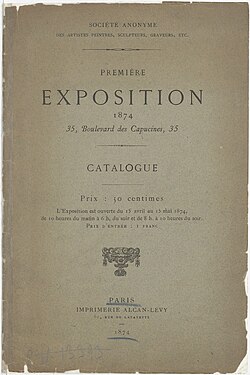
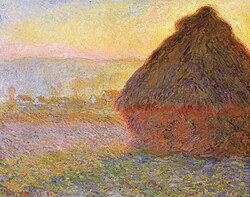
The movement takes its name from Claude Monet's 1872 painting, Impression, Sunrise. When exhibited in 1874, critic Louis Leroy used the term "Impressionist" satirically in his article "The Exhibition of the Impressionists," suggesting the work was unfinished. However, the artists embraced the label, finding it a fitting description for their pursuit of spontaneity and light.
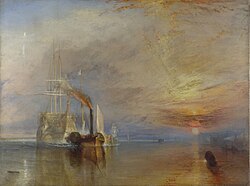
Key Facts
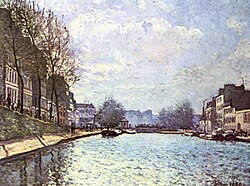
- Origin: France, mid-to-late 19th century.
- Core Philosophy: Capturing the immediate "impression" of a scene, emphasizing sunlight and color over line and detail.
- Defining Technique: Use of loose, spontaneous brushstrokes and a rejection of black paint in favor of mixed darker tones.
- Key Figures: Claude Monet, Pierre-Auguste Renoir, Camille Pissarro, Berthe Morisot, and Edgar Degas.
- Major Influence: Heavily influenced by Realism, the Barbizon School, and Japanese prints.
The First Impressionist Exhibition and Group Dynamics
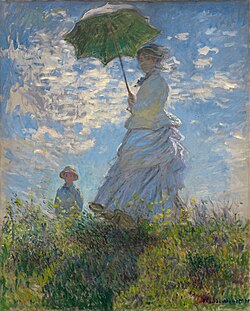
Between 1874 and 1886, a diverse group of independent artists organized eight joint exhibitions. They were unified not by a single style, but by a shared spirit of rebellion against the official Salon—the state-sponsored exhibition where reputations were traditionally made.
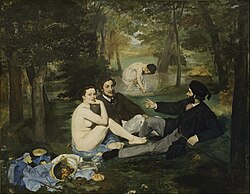
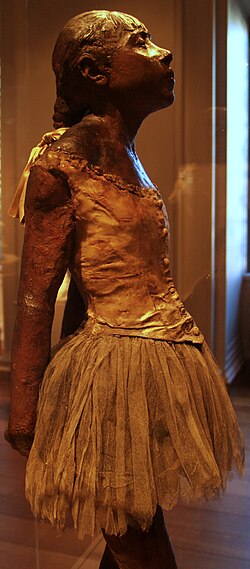
While the group shared a general direction, internal tensions were common. Claude Monet, Alfred Sisley, Berthe Morisot, and Camille Pissarro are often viewed as the "purest" Impressionists due to their consistent focus on sunlight and outdoor painting. In contrast, Edgar Degas prioritized drawing over color and often belittled the practice of painting outdoors. Édouard Manet, though seen as a leader by the group, never participated in their exhibitions, preferring to battle for recognition within the official Salon.
Evolution and Fragmentation
The core group eventually dwindled due to tragedy and professional disagreements. Frédéric Bazille died in the Franco-Prussian War in 1870. Others, including Cézanne and Monet, occasionally abstained from group shows to submit works to the Salon. Disputes also arose over membership, such as the inclusion of realists who did not adhere to Impressionist practices, leading Monet to complain that the group was opening its doors to "first-come daubers."
Impressionist Techniques and Innovation
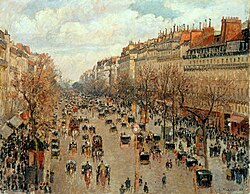
The movement was fueled by technological advancements in chemistry. The 19th century saw the commercial availability of synthetic pigments—man-made colors that were more vivid than traditional minerals. By the 1840s, artists had access to cobalt blue, viridian, cadmium yellow, and synthetic ultramarine blue. The introduction of cerulean blue in the 1860s further expanded their palette.
![Claude Monet – Jardin à Sainte-Adresse (1867), Metropolitan Museum of Art.[47] A work showing the influence of Japanese prints](/images/2e/d5/2ed577f3837399e3fcac3420634a412d2947334dd10bfb76ab47b2b4308e26c2.jpg)
These colors were applied with loose brushwork to simulate the vibration of light. Unlike previous generations, Impressionists avoided using black paint, instead creating dark tones by mixing complementary colors. This approach allowed their canvases to maintain a luminosity that mirrored the natural world.
Prominent Artists of the Movement
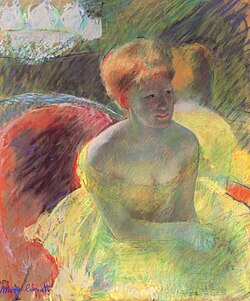
Impressionism was not limited to a few men; it included a significant number of women and international associates who expanded the movement's reach.
The Central Figures
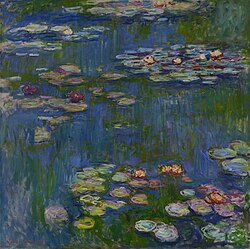
- Claude Monet: The most prolific figure, known for his series paintings and focus on nature.
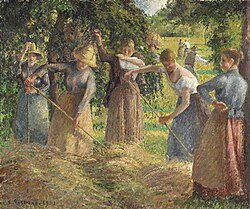
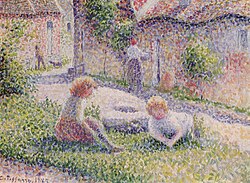
- Camille Pissarro: The only artist to exhibit in all eight Impressionist exhibitions.
- Pierre-Auguste Renoir: Celebrated for his depictions of Parisian social life.
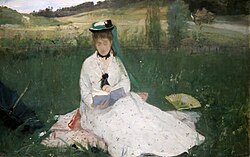
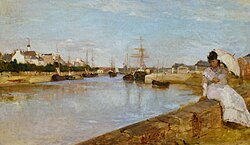
- Berthe Morisot: A key female figure who participated in nearly all exhibitions.
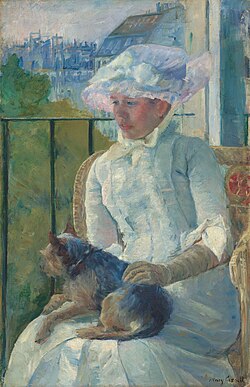
- Mary Cassatt: An American-born artist who lived in Paris and focused on the private lives of women.
![Pierre-Auguste Renoir – Dance at Le Moulin de la Galette[c] (1876), Musée d'Orsay, one of Impressionism's most celebrated masterpieces.[3]](/images/7b/b9/7bb996c91df9fc86784b2540f9e6cf9eef7b471c24598bc75af86ae4a992c43e.jpg)
Global Reach
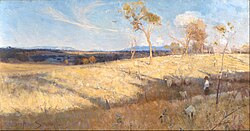
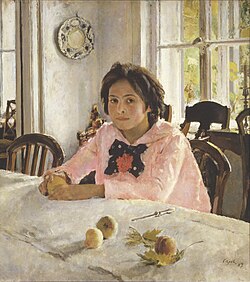
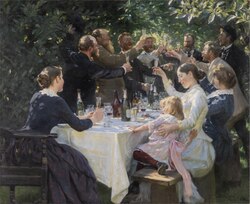
The style spread far beyond France, influencing artists in Canada (Maurice Cullen), Russia (Valentin Serov), Japan (Fujishima Takeji), and Brazil (Eliseu Visconti), among others. In Scandinavia, the Skagen Painters applied these methods to the landscapes of a small Danish fishing village.
Commercial Success and Legacy
Initially, the Impressionists struggled financially. However, the art dealer Paul Durand-Ruel played a pivotal role in their eventual success. By organizing exhibitions in London and New York and keeping their works accessible to the public, he helped the movement gain international acceptance.
While some, like Alfred Sisley, died in poverty, others like Monet and Pissarro achieved financial security by the late 19th century. By the turn of the century, the once-radical techniques of Impressionism had become commonplace in mainstream Salon art.
| Artist | Key Characteristic | Notable Detail |
|---|---|---|
| Claude Monet | Purest pursuit of light/color | Source of the movement's name |
| Camille Pissarro | Consistent group loyalty | Participated in all 8 exhibitions |
| Edgar Degas | Primacy of drawing | Rejected the term "Impressionist" |
| Berthe Morisot | Spontaneity and domesticity | Core female member |
| Édouard Manet | Liberal use of black | Never exhibited with the group |
Frequently Asked Questions
![Eva Gonzalès – Box at the Italian Opera[d] (c. 1874), oil on canvas, Musée d'Orsay](/images/07/8a/078a6762ef49b11ba31468026c6ca3ec0c89956a7271ee7dd36b6c535202911b.jpg)

How did Impressionism get its name?
The name came from a satirical review by Louis Leroy, who mocked Claude Monet's painting Impression, Sunrise, suggesting it was merely a sketch or an "impression" rather than a finished work.
Did all Impressionists paint outdoors?
No. While many practiced en plein air (painting outdoors) to capture sunlight, Edgar Degas famously belittled the practice and preferred the controlled environment of a studio, focusing more on drawing and composition.
Why did Impressionists avoid using black paint?
They believed that black did not exist in nature's shadows. Instead, they preferred to create darker tones by mixing various colors, which helped maintain the overall luminosity and vibrancy of the painting.
Who was the most influential art dealer for the movement?
Paul Durand-Ruel was essential to their success. He promoted their work in France and arranged critical exhibitions in New York and London, helping the artists transition from critical outcasts to commercial successes.
Which artists are considered the "purest" Impressionists?
Claude Monet, Alfred Sisley, Berthe Morisot, and Camille Pissarro are generally regarded as the purest practitioners due to their unwavering commitment to spontaneity, color, and the effects of sunlight.