William Frantz Elementary School: A Landmark of American Desegregation
Located at 3811 North Galvez Street in New Orleans, Louisiana, William Frantz Elementary School stands as more than just an educational institution; it is a powerful symbol of the American Civil Rights Movement. Built in 1937, this Art Deco structure became the center of a national conversation on racial equality when it became one of the first all-white elementary schools in the Deep South to be integrated.
Key Facts
- Location: New Orleans, Louisiana.
- Historic Significance: Site of the 1960 integration featuring Ruby Bridges.
- Architectural Style: Understated Art Deco, designed by E.A. Christy.
- NRHP Status: Added to the National Register of Historic Places on June 8, 2005.
- Current Use: High school campus for Morris Jeff Community School.
The Integration of 1960
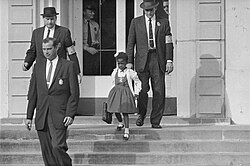
The school's place in history was cemented during the New Orleans school desegregation crisis of 1960. Following a request from the National Association for the Advancement of Colored People (NAACP), the parents of six-year-old Ruby Bridges volunteered her to participate in the integration of the city's school system.
After passing a qualifying test, Ruby was the only one of six African-American children assigned to William Frantz Elementary, while three others were transferred to McDonogh No. 19. Despite initial reluctance from her father, Ruby's mother pushed for the move, believing it was a necessary step forward for all African-American children to receive a better education.
On November 14, 1960, the court-ordered integration began. Ruby Bridges arrived at the school escorted by U.S. Marshals, facing a large, shouting crowd that threw objects at her. Ruby later recalled that, as a resident of New Orleans, she initially mistook the commotion for Mardi Gras. Former U.S. Deputy Marshal Charles Burks praised her courage, noting that she marched "like a little soldier" without crying or whimpering.
Cultural Legacy and Art
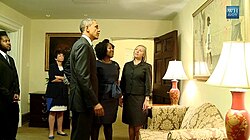
The events of that day were immortalized by artist Norman Rockwell in his painting The Problem We All Live With. This poignant work, which depicts the young Ruby Bridges being escorted to school, was later displayed in the White House during the presidency of Barack Obama.
Architecture and Preservation
Designed by the school board's architect E.A. Christy and built by Herman T. Makofsky, the school is an example of the Art Deco style—a design movement characterized by geometric shapes and streamlined forms. The building occupies less than one acre of land.
In 2005, the school was officially listed on the National Register of Historic Places. That same year, the building suffered extensive damage during Hurricane Katrina, with five feet of water flooding the ground floor. This disaster coincided with a period when New Orleans Public Schools were considering closing the facility.
Fortunately, the school underwent a $23.5 million rehabilitation project. A key part of this restoration was the preservation of room 2306, the first-grade classroom Ruby Bridges attended, which was restored to its original 1960s appearance to honor her legacy. In 2014, the school further commemorated this history by unveiling a statue of Ruby Bridges in the courtyard.
Current Status and Usage
Following its restoration, the building served as the home for the Akili Academy charter school. After a merger with another charter school, the facility transitioned to its current role as the high school campus for Morris Jeff Community School, which is Louisiana’s only PK-12 International Baccalaureate World School.
| Category | Details |
|---|---|
| Address | 3811 North Galvez Street, New Orleans, LA 70117 |
| Year Built | 1937 |
| Architect | E.A. Christy |
| NRHP Reference No. | 05000557 |
| Rehabilitation Cost | $23.5 million |
Frequently Asked Questions
Who was the first African-American student to attend William Frantz Elementary?
Ruby Bridges was the first African-American student to attend the school in 1960 at the age of six.
What is the architectural style of the school?
The school was designed in an understated Art Deco style by architect E.A. Christy.
How was the school affected by Hurricane Katrina?
The building suffered extensive damage in 2005, including five feet of flooding on the ground floor, which led to a $23.5 million rehabilitation project.
What is the significance of room 2306?
Room 2306 was the first-grade classroom attended by Ruby Bridges; it was restored to its original 1960s appearance to honor her story.
What is the school building used for today?
It currently serves as the high school campus for Morris Jeff Community School, a PK-12 International Baccalaureate World School.