William Bruce: Early Polar Expeditions and Scientific Voyages
Before becoming a renowned figure in polar research, William Bruce spent the late 19th century honing his skills through a series of challenging voyages to the Earth's extremes. From the commercial pressures of Antarctic whaling to the desolate wastes of the Arctic, Bruce's early career was defined by a relentless pursuit of scientific data, often in the face of professional friction and extreme environmental hardship.
The Dundee Whaling Expedition (1892–1893)
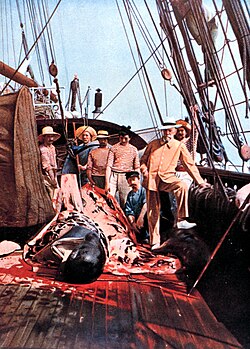
In September 1892, Bruce embarked on the Dundee Whaling Expedition, a venture designed to investigate the commercial viability of whaling in Antarctic waters. The primary goal was to locate right whales—large baleen whales historically targeted for their oil and blubber. The expedition consisted of four ships: the Balaena, Active, Diana, and Polar Star.
Bruce served on the Balaena under Captain Alexander Fairweather, accompanied by assistant William Gordon Burn Murdoch. While the voyage was intended to include scientific and oceanographic research, the mission was largely a failure. No right whales were discovered, leading the expedition to pivot toward a mass slaughter of seals to recover financial losses.

Bruce found the seal hunting distasteful and struggled with Captain Fairweather, who was openly hostile toward scientific pursuits. Bruce was denied access to essential charts and forced to perform manual labor in the boats instead of conducting meteorological observations. Despite these setbacks and the loss of specimens due to crew negligence, Bruce remained eager for more, later describing the experience as "instructive and delightful" and claiming it left him "ravenous" to return south.
The Jackson–Harmsworth Expedition
Following a period of meteorological work at the Ben Nevis summit station, Bruce joined the Jackson–Harmsworth Expedition in June 1896. Led by Frederick George Jackson and funded by Alfred Harmsworth, the mission aimed to conduct a detailed survey of the Franz Josef archipelago, a remote group of islands in the Arctic.
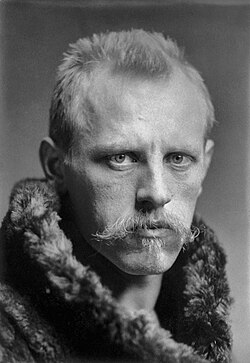
Based at Cape Flora on Northbrook Island, Bruce arrived via the ship Windward to find that the party had been joined by the famous Norwegian explorer Fridtjof Nansen and Hjalmar Johansen. Nansen and Johansen had survived over a year on the ice after their attempt to reach the North Pole via the ship Fram. This meeting provided Bruce with a lifelong source of professional encouragement.
During his year at Cape Flora, Bruce demonstrated immense resilience, collecting approximately 700 zoological specimens while working in sub-zero temperatures and slush. In recognition of his efforts, Jackson named Cape Bruce (80°55′N) after him. However, Bruce's refusal to hand over his personal specimens to the British Museum created tension, revealing a streak of scientific possessiveness and a lack of tact that would follow him throughout his career.
Arctic Voyages and Oceanographic Research
In 1898, Bruce joined Major Andrew Coats on the private yacht Blencathra for a hunting and exploration voyage around Novaya Zemlya and Spitsbergen. While the cruise was luxurious, Bruce maintained a rigorous scientific schedule, conducting four-hourly meteorological observations, measuring sea surface temperatures, and testing salinity using a hydrometer (an instrument used to measure the specific gravity of liquids).
While in Tromsø, Norway, Bruce was invited by Prince Albert I of Monaco—a pioneering oceanographer—to join the research vessel Princesse Alice. This opportunity allowed Bruce to engage in professional hydrographic surveys around Spitsbergen, visiting Smeerenburg and Adventfjorden. Bruce eventually rose to lead the voyage's scientific observations.
Bruce returned with Prince Albert in 1899 for another cruise. During this trip, he climbed the highest peak in the Red Bay area (80°N), which the Prince named "Ben Nevis" in his honor. The voyage nearly ended in disaster when the Princesse Alice ran aground; Bruce began preparing a winter camp for the crew, believing they were stranded, before the ship fortunately floated free and returned to Tromsø for repairs.
Key Facts
- Dundee Expedition: Failed to find right whales; pivoted to seal hunting.
- Franz Josef Land: Bruce collected 700 zoological specimens at Cape Flora.
- Notable Contacts: Formed a pivotal relationship with explorer Fridtjof Nansen.
- Scientific Contributions: Specialized in meteorology, hydrography, and zoology.
- Honors: Had both a cape (Cape Bruce) and a mountain (Ben Nevis in Spitsbergen) named after him.
| Expedition/Voyage | Year(s) | Primary Region | Key Outcome |
|---|---|---|---|
| Dundee Whaling Expedition | 1892–1893 | Antarctic | Commercial failure; limited scientific data. |
| Jackson–Harmsworth | 1896–1897 | Franz Josef Land | 700 zoological specimens collected. |
| Blencathra Cruise | 1898 | Barents Sea / Spitsbergen | Meteorological and salinity studies. |
| Princesse Alice | 1898–1899 | Spitsbergen | Professional hydrographic surveys. |
Frequently Asked Questions
Why was the Dundee Whaling Expedition considered a failure?
The expedition failed its primary commercial objective of locating right whales in Antarctic waters. To offset financial losses, the crew turned to the mass slaughter of seals, a practice that William Bruce found distasteful.
Who was Fridtjof Nansen and how did he influence Bruce?
Fridtjof Nansen was a celebrated Norwegian explorer whom Bruce met at Cape Flora during the Jackson–Harmsworth Expedition. Nansen became a significant source of advice and encouragement for Bruce's future scientific endeavors.
What scientific instruments did Bruce use during his Arctic voyages?
Bruce utilized tow-nets for biological sampling and Buchanan's hydrometer to test the salinity of the sea surface, alongside various meteorological instruments for temperature and weather observations.
What caused friction between Bruce and Frederick George Jackson?
While Jackson admired Bruce's hard work in extreme conditions, he was displeased by Bruce's "scientific conceit" and his refusal to entrust personal specimens to the British Museum.
How did Prince Albert I of Monaco contribute to Bruce's career?
Prince Albert provided Bruce with a professional platform aboard the Princesse Alice, allowing him to lead scientific observations and conduct high-level hydrographic surveys in the Arctic.