Arctic Exploration: A History of Polar Conquest and Discovery
The quest to map the frozen reaches of the North has been one of the most grueling chapters in human history. From the early days of wooden ships and dog sleds to the modern era of nuclear submarines and satellites, the Arctic has challenged the limits of human endurance and scientific ingenuity. This journey of discovery evolved from a race for national prestige into a sophisticated scientific endeavor to understand our planet's climate and geography.
Key Facts
- Roald Amundsen achieved the first traversal of the Northwest Passage (1903–1906).
- The airship Norge provided the first verified trip to the North Pole in 1926.
- Knud Rasmussen led multiple Thule expeditions, significantly mapping North Greenland and documenting Inuit culture.
- The USS Nautilus became the first vessel to cross the Arctic Ocean beneath the ice in 1958.
- The Arktika nuclear-powered icebreaker reached the North Pole in 1977.
The Heroic Age of Polar Exploration (1900–1925)
The turn of the 20th century marked the "Heroic Age," characterized by daring overland journeys and the search for navigable sea routes. During this period, explorers relied heavily on indigenous knowledge and animal power to survive the extreme cold.
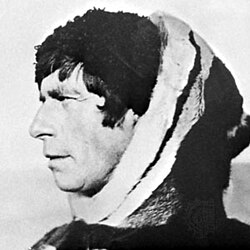
One of the most significant achievements was Roald Amundsen's Gjøa expedition (1903–1906), which resulted in the first successful traversal of the Northwest Passage. Simultaneously, the Danish explorer Knud Rasmussen began a series of influential Thule expeditions. These journeys not only explored North Greenland but also demonstrated the rapid spread of Inuit culture across the Arctic.
Disputed Claims and Fatal Journeys
The race to the North Pole was marred by controversy. Between 1907 and 1909, both Frederick Cook and Robert Peary claimed to be the first to reach the pole, leading to decades of debate. Other expeditions faced tragic ends, such as the Danmark Expedition (1906–1908), which mapped Northeast Greenland but resulted in the death of the main exploring team.
Other notable efforts included the 1913 Crocker Land Expedition, which sought a landmass reported by Peary that later proved to be a hoax, and the ill-fated Wrangel Island Expedition (1921–1923), where only an Iñupiat seamstress and cook, Ada Blackjack, survived.
The Aircraft Age and Polar Conquest (1925–1958)
The introduction of aviation revolutionized Arctic travel, shifting the focus from slow overland treks to rapid aerial surveys. In 1926, the airship Norge, crewed by Roald Amundsen, Umberto Nobile, and Lincoln Ellsworth, completed the first verified trip to the North Pole.
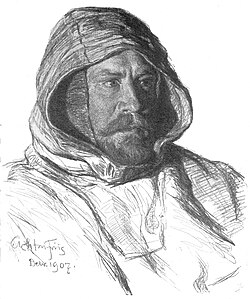
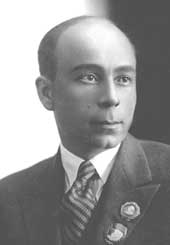
Despite these advances, the Arctic remained deadly. Alfred Wegener, a pioneer in the theory of continental drift, perished during a 1930–1931 German expedition on the Greenland ice sheet. However, the era also saw the discovery of the last unknown Soviet Arctic territory, Ushakov Island, found by Georgy Ushakov in 1935.
The Second International Polar Year and Post-War Science
By the 1930s, exploration became more systematic. The Soviet Union established manned drifting ice stations in 1937, a scientific practice that continued for decades. Following World War II, the focus shifted toward cartography and strategic installations, such as the US Operation Nanook in 1946, which established a radio and weather station at Thule.
The Era of Satellites, Submarines, and Icebreakers (1958–Present)
Modern polar exploration is defined by high technology. In 1958, the USS Nautilus (SSN-571) achieved a historic milestone by crossing the Arctic Ocean beneath the ice from the Pacific to the Atlantic.
The space age further expanded our view. Discoverer 1 (1959) became the first satellite in polar orbit, followed by TIROS-1 (1960), the first weather satellite, which provided thousands of cloud cover photographs of the region.
Modern Human Feats
While technology dominated, individual endurance remained a draw. In 1968, Ralph Plaisted became the first to reach the pole via snowmobile, and Wally Herbert reached it on foot shortly after. Later, David Scott Cowper became the first person to complete the Northwest Passage single-handedly as part of a global circumnavigation.
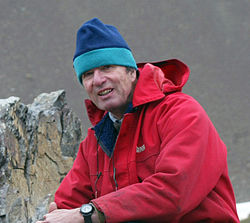
The late 20th century saw a blend of extreme athletics and science, including the 1988 Polar Bridge Expedition, where Russian and Canadian skiers crossed from Siberia to Canada via the North Pole, guided by satellites.
Summary of Major Arctic Milestones
| Year | Achievement/Expedition | Key Figure(s) | Significance |
|---|---|---|---|
| 1903–1906 | Gjøa Expedition | Roald Amundsen | First Northwest Passage traversal |
| 1926 | Norge Airship | Amundsen, Nobile, Ellsworth | First verified North Pole trip |
| 1958 | USS Nautilus | US Navy | First underwater Arctic crossing |
| 1960 | TIROS-1 | NASA/US | First polar orbit weather satellite |
| 1977 | Arktika | Soviet Union | Nuclear icebreaker reaches North Pole |
Frequently Asked Questions
Who was the first person to successfully navigate the Northwest Passage?
Roald Amundsen led the Gjøa expedition from 1903 to 1906, becoming the first to traverse the Northwest Passage.
What was the significance of the Thule expeditions?
Led by Knud Rasmussen, these expeditions explored North Greenland, proved that Peary Land was not an island, and documented the spread of Inuit culture.
Which vessel first reached the North Pole underwater?
The USS Nautilus (SSN-571) reached the North Pole on August 3, 1958, during its crossing from the Pacific to the Atlantic Ocean.
Why were the claims of Robert Peary and Frederick Cook disputed?
Both explorers claimed to have reached the North Pole first between 1907 and 1909, but their accounts and evidence were contested, leading to long-standing disputes over who truly achieved the feat.
What was the first verified trip to the North Pole?
The 1926 flight of the airship Norge, crewed by Roald Amundsen, Umberto Nobile, and Lincoln Ellsworth, is recognized as the first verified trip.