Wilfrid Israel: The Secret Ambassador Who Saved Thousands During the Holocaust
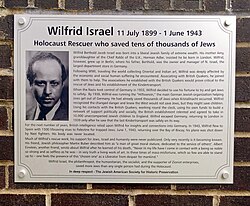
Wilfrid Berthold Jacob Israel (1899–1943) was an Anglo-German businessman and philanthropist whose quiet courage and vast network of influence saved countless lives during one of history's darkest eras. Born into a wealthy Jewish family, Israel operated in the shadows of Nazi Germany, using his financial resources and diplomatic tact to engineer the escape of thousands of Jews from persecution.
Described by his biographer Naomi Shepherd as "intensely secretive" and by philosopher Martin Buber as a man of "great moral stature," Israel shunned the spotlight. Instead, he leveraged his high-society connections and business acumen to create clandestine rescue pipelines that operated right under the noses of the Third Reich.
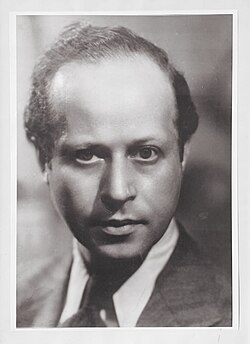
Key Facts
- Rescue Impact: Played a pivotal role in saving approximately 10,000 Jews through secret networks and helped facilitate the Kindertransport, which rescued 10,000 children.
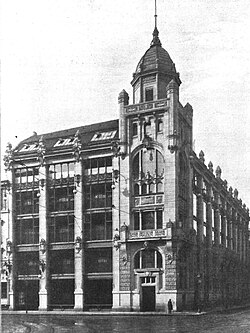
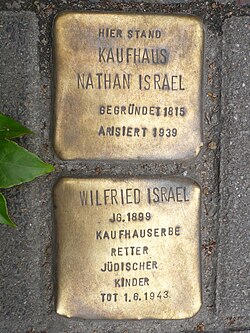
- Strategic Base: Used the family-owned Nathan Israel Department Store in Berlin as a hub for rescue operations.
- Key Collaborations: Worked with Hubert Pollack and visa official Foley to secure the release of concentration camp prisoners.
- Philanthropy: Provided the seed funding for Youth Aliyah, an organization dedicated to saving Jewish youth by relocating them to Palestine.
- Tragic End: Died in 1943 when his plane was shot down by the Luftwaffe over the Bay of Biscay.
Early Life and Intellectual Connections
Educated at the Mommsen-Gymnasium in Berlin and the Hochalpines Lyceum in Switzerland, Wilfrid Israel developed a cosmopolitan worldview early in life. He maintained deep friendships with some of the 20th century's most influential thinkers, including Albert Einstein and Martin Buber.
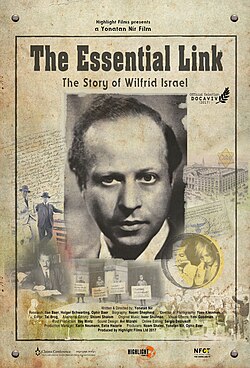
Israel served as a vital human bridge between global leaders. In 1931, he facilitated a written exchange between Albert Einstein and Mahatma Gandhi by introducing Gandhi's envoy, V. A. Sundaram, to Einstein at his summer home in Caputh. This connection exemplified Israel's lifelong role as an "essential link" between disparate worlds.
The Secret War Against the Third Reich
As the Nazi regime tightened its grip, Israel transformed his family's business, the Nathan Israel Department Store—one of Germany's largest—into a sanctuary and operational base. Because many Nazi leaders held accounts at the store, Israel was able to operate with a degree of protection that he used to fund the emigration of roughly one-third of his staff, paying them two years' salary upon their departure.
The Pollack-Foley Network
Israel formed a secretive triad with Hubert Pollack, a statistician with Gestapo contacts, and Foley, an official capable of issuing visas. In a dangerous game of bribery and bureaucracy, Pollack acted as the intermediary, meeting contacts in small cafes to exchange funds provided by Israel for the documents needed to secure Foley's visas. Together, they managed to save roughly 10,000 Jews from concentration camps prior to the 1938 pogroms.
Youth Aliyah and Early Rescue
Israel's commitment to the next generation began in 1932 when he provided the initial funding for Recha Freier's vision of Youth Aliyah. This initiative focused on rescuing Jewish children and transporting them to the Ben Shemen Youth Village in Palestine, establishing a precedent for the larger-scale rescues that would follow.
The Kindertransport and Kristallnacht
The Kristallnacht (Night of Broken Glass) pogrom of November 1938 marked a turning point. With much of the Jewish leadership arrested, Israel took over the Hilfsverein, the central German Jewish welfare and emigration organization.
Israel recognized that the only hope for many children was escape to England. He lobbied the British Anglo-Jewish leadership and the government to relax immigration laws. When the British government expressed skepticism about whether parents would willingly part with their children, Israel utilized his long-standing relationship with the British Quakers. A Quaker delegation visited Germany under Israel's guidance, providing the necessary reassurance to the British government that parents were desperate to save their children.
This effort culminated in the Kindertransport, which saw 10,000 children evacuated to the UK. Israel remained in Berlin until mid-1939, working with the Frauenbund (women's organization) to organize the final groups of children before finally escaping Germany himself.
Final Missions and Legacy
After settling in London, Israel continued his work with Bloomsbury House and advised the Foreign Office on refugee movements in Europe. In March 1943, he embarked on a mission to Lisbon, Portugal, where he distributed entry certificates for Palestine and developed plans to rescue children from Vichy France.
On June 1, 1943, Wilfrid Israel was killed at age 43 when BOAC Flight 777 was shot down by German Junkers Ju 88s over the Bay of Biscay.
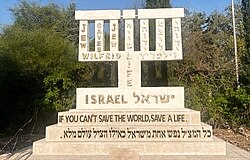
Commemoration and Art
Today, Israel's legacy is preserved through several memorials and institutions:
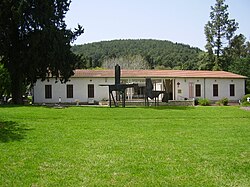
- The Wilfrid Israel Museum: Located in Kibbutz HaZore'a, Israel, this museum houses his extensive collection of Asian and Near Eastern art.
- Tel Yokneam Memorial: A 14-foot sculpture dedicated to Israel and all those who risked their lives to save others during the Holocaust.
- The Essential Link: A 2017 documentary film detailing his life-saving activities.
| Initiative | Role | Estimated Impact |
|---|---|---|
| Secret Network (Pollack/Foley) | Funding and Coordination | ~10,000 Jews saved from camps |
| Kindertransport | Strategic Planning & Quaker Liaison | 10,000 children rescued |
| Youth Aliyah | Seed Funding | Initial rescue of Jewish youth to Palestine |
| Family Firm Emigration | Financial Sponsorship | ~33% of store staff emigrated |
Frequently Asked Questions
How did Wilfrid Israel use his business to save people?
Israel used the Nathan Israel Department Store as a base for rescue operations. Because high-ranking Nazi officials were customers at the store, he could operate with less scrutiny while using the business's wealth to fund bribes for prisoners' release and pay the salaries of Jewish employees who emigrated.
What was Wilfrid Israel's specific role in the Kindertransport?
He was the primary catalyst who urged the British government to accept children. He acted as the bridge between the German Jewish community and the British Quakers, who provided the first-hand evidence to the UK government that parents were willing to send their children away for their own safety.
Who were some of Wilfrid Israel's most notable associates?
He was close friends with Albert Einstein, Martin Buber, and Chaim Weizmann. In his rescue work, he collaborated closely with Hubert Pollack and the British Quaker community.
How did Wilfrid Israel die?
He died on June 1, 1943, when his civilian passenger plane (BOAC Flight 777), traveling from Lisbon to Bristol, was shot down by a Luftwaffe fighter patrol over the Bay of Biscay.
What is the Wilfrid Israel Museum?
Located in Kibbutz HaZore'a, Israel, it is an archaeology and art museum that houses Israel's unique collection of art from India, China, Thailand, Cambodia, and the ancient Near East.