White Argentines: History, Demographics, and Immigration Patterns
Argentina is a nation defined by its diverse ancestral roots, with a significant portion of its population tracing their lineage to Europe and West Asia. This demographic composition is the result of deliberate state policies and global migration trends that transformed the country from a colonial outpost into a cosmopolitan hub of the Southern Cone.
Current estimates suggest that white ancestry predominates in approximately 79.4% of the population, totaling roughly 37,109,200 people. This group encompasses descendants of Europeans, Arabs, Armenians, Turks, and Boers.
Key Facts
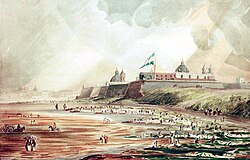
- Predominant Ancestry: Approximately 79.4% of the population has white ancestry.
- Primary Origins: Italy and Spain provided the largest numbers of immigrants.
- Regional Concentration: White populations are the majority in the Pampas, Cuyo, Littoral, and Patagonia regions.
- Historical Growth: Between 1869 and World War I, the population quadrupled due to mass European immigration.
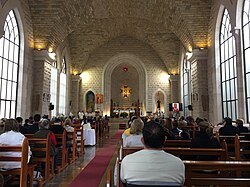
- Religious Diversity: While Catholicism is the majority, there are significant Protestant, Jewish, Eastern Orthodox, and Muslim communities.
The History of Mass Immigration
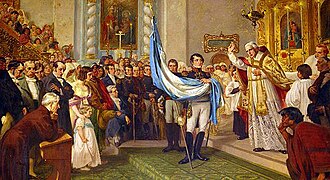
The formalization of Argentine immigration policy began in 1880 following the Argentine Civil Wars. Influenced by Juan Bautista Alberdi, who proposed European immigration in 1852 as a catalyst for economic and social development, the state actively promoted the arrival of foreigners to populate the territory.
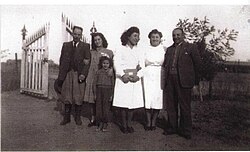
This led to the Great European immigration wave, bringing millions of people from across the globe. While Spaniards and Italians were the most numerous, the country also welcomed French, German, Polish, Irish, Russian, and Armenian immigrants, among others.
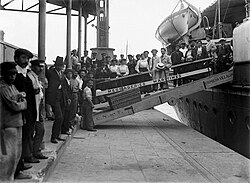
A unique addition to this demographic occurred between 1899 and 1902, when a small wave of white immigrants from Africa arrived. These were Boers (Dutch-descended settlers) fleeing the Second Boer War in South Africa, many of whom settled in the Chubut Province.
Major Ethnic Contributions
Italian Immigration
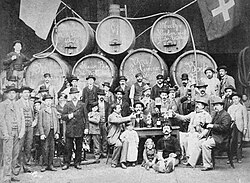
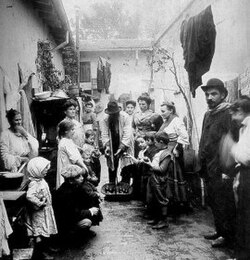
Italian immigration became a mass phenomenon between 1880 and 1920. Approximately two million Italians settled in Argentina, with a massive surge between 1900 and 1914. The province of Santa Fe received a high percentage of these arrivals. By 1914, Italian-born residents made up 25% of the population of Buenos Aires alone.
Spanish Immigration
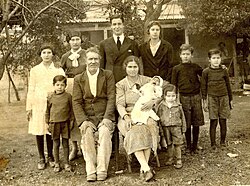
Spanish influence dates back to the 16th century, with the establishment of a permanent colony in Buenos Aires in 1580. The relationship deepened with the creation of the Vice Royalty of Rio de la Plata in 1776. In the post-colonial era (1832–1950), another 2.2 million Spaniards arrived, primarily from northern regions such as Galicia, the Basque Country, Asturias, Cantabria, and Catalonia.
French and German Influence
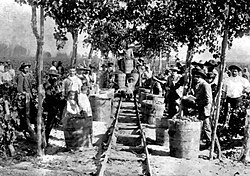
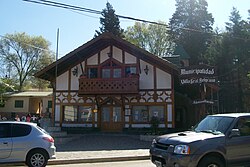
Argentina received the second-largest group of French immigrants globally, trailing only the United States. Between 1857 and 1946, nearly 240,000 French citizens arrived, many from the Basque Country and Southwestern France. German immigrants also established significant communities, particularly in agricultural sectors like vineyards in Mendoza.
Arab and Polish Communities
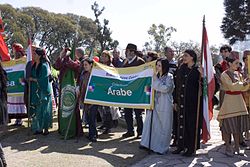
In the 19th century, a wave of Arab Christians, primarily from Ottoman-era Lebanon and Syria, began settling in Argentina. Today, millions of Argentines claim Lebanese and Syrian descent, and Argentina hosts one of the largest Muslim populations in Hispanic America.
Polish immigration was centered largely in the Misiones Province. It is estimated that around one million Argentines have partial Polish ancestry, with a significant portion of these being of Jewish descent, especially after 1933.
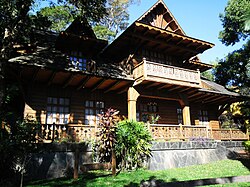
Demographic Distribution and Recent Trends
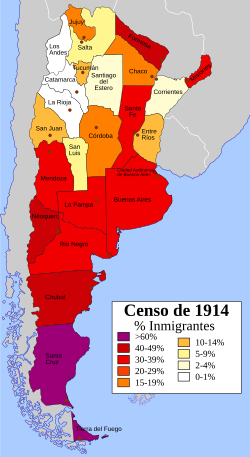
Historically, the white population has been concentrated in the Pampas, Cuyo, Littoral, and Patagonia, while remaining a minority in the Northwest. A 1778 census showed that only 37.54% of the population in the Viceroyalty of the Río de la Plata was white; however, by 1914, white Argentines had become the majority.
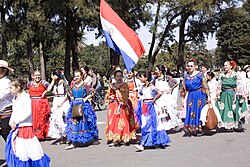
Since 1980, the primary source of immigration has shifted from Europe to neighboring South American countries like Bolivia, Paraguay, and Peru. While many of these immigrants are Mestizo, white immigrants from Paraguay also continue to arrive.
Immigration Statistics (1857–1940)
The following table summarizes the primary immigrant groups that shaped the white Argentine population during the peak migration era.
| Nationality | Main Groups | Amount | Percentage |
|---|---|---|---|
| Italian | Sicilians, Northern Italians | 2,970,000 | 44.9% |
| Spanish | Galicians, Basques | 2,080,000 | 31.5% |
| French | Basques, French | 239,000 | 3.6% |
| Polish | Poles, Ashkenazi Jews | 180,000 | 2.7% |
| Russian | Volga Germans, Ukrainians | 177,000 | 2.7% |
| Ottoman | Arab Christians, Armenians | 174,000 | 2.6% |
| German | Germans | 152,000 | 2.3% |
Frequently Asked Questions




What percentage of Argentines have white ancestry?
It is estimated that approximately 79.4% of the Argentine population has white ancestry, which includes descendants of Europeans, West Asians, and Boers.
Which European countries contributed the most to Argentina's population?
Italy and Spain were the primary sources of immigration. Between 1857 and 1940, Italians accounted for 44.9% and Spaniards for 31.5% of the total immigrant influx.
Why did Boers migrate to Argentina?
Between 1899 and 1902, Boers from South Africa emigrated to Argentina, primarily settling in Chubut Province, because they had lost their farms or refused to live under British government rule after the Second Boer War.
Where is the Polish community most concentrated in Argentina?
The highest concentration of Polish-Argentines is in the Misiones Province, where more than a quarter of the population has Polish roots.
How has immigration changed since 1980?
Since 1980, the main source of immigration has shifted from Europe to neighboring South American countries, specifically Bolivia, Paraguay, and Peru.