Argentina Immigration History: From Colonial Roots to Modern Diversity
Argentina's identity is a complex tapestry woven from centuries of global movement. From the early days of Spanish conquest to the massive waves of European migration in the 19th century and the modern influx of South American neighbors, the country has been shaped by a continuous flow of people seeking opportunity, refuge, and a new beginning.
Key Facts
- Massive Scale: Between 1857 and 1940, Argentina received approximately 8 million immigrants, second only to the United States.
- Primary Origins: Italy and Spain were the dominant sources of migration, providing over 70% of arrivals between 1857 and 1920.
- Legal Framework: The Constitution of 1852 actively promoted European immigration to develop the land and industry.
- Modern Shift: Recent decades have seen a transition toward regional migration, with Paraguay and Bolivia now among the top countries of birth for foreign residents.
- Diverse Enclaves: Argentina hosts unique communities, including the highest Jewish population in Latin America and a distinct Boer community in Patagonia.
The Colonial Era and Early Foundations
The first major wave of immigration occurred during the Spanish colonization between the 16th and 18th centuries. This movement was predominantly male and characterized by miscegenation—the biological mixing of different racial groups—between Spaniards and indigenous peoples.
However, Spanish control was not absolute. Large regions remained under indigenous dominance for centuries, including the Chaco region (Guaycurúes and Wichís), the Pampean and Patagonian regions (Tehuelches and Mapuches), and Tierra del Fuego (Selknam and Yámanas). These territories were eventually incorporated into the Argentine State following independence.
Parallel to Spanish settlement, a significant African population was forcibly brought from sub-Saharan Africa, primarily of Bantu origin, to work as slaves between the 17th and 19th centuries.
The Great European Wave (19th and 20th Centuries)
Following independence, the Argentine government viewed population growth as a tool for national development. The Constitution of 1852 prohibited restrictions on foreigners who intended to work the land, improve industry, or teach arts and sciences. This was reinforced by the Alberdian philosophy that "to govern is to populate."
This policy triggered a massive influx of immigrants, primarily from Italy and Spain, but also from France, Germany, Russia, and the Ottoman Empire. These migrants were essential in establishing the rural social fabric of the Pampean, Patagonian, and Chaco territories.
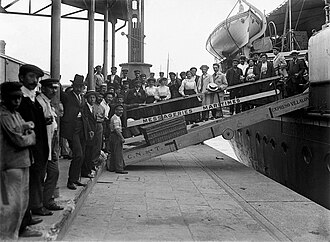
Infrastructure and Support
To manage this growth, the government enacted Law 817 of Immigration and Colonization in 1876. In 1898, the General Immigration Office was established alongside the Hotel de Inmigrantes in Buenos Aires, a facility built in 1906 that could house up to 4,000 newcomers.
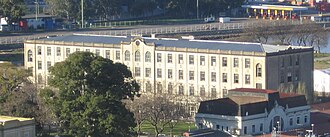
Many immigrants arrived under colonization contracts, which provided a legal framework for settling the interior of the country.

Demographic Impact and Diversity
The population surge was staggering: Argentina grew from 4 million people in 1895 to 15.8 million by 1947. While Italians and Spaniards were the most numerous, the country also became a haven for Jewish people escaping persecution, resulting in the largest Jewish community in Latin America.
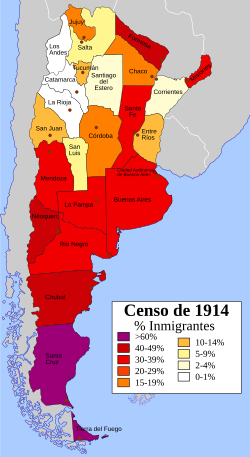
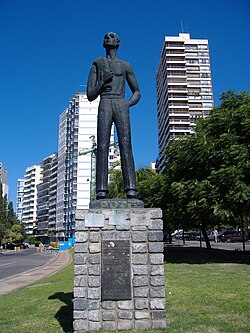
Other notable groups included Poles, Russians, French, Germans, and people from the Levant, including Syria, Lebanon, and Palestine. A unique historical footnote is the settlement of South African Boers in Patagonia between 1903 and 1909, following the Second Boer War.
Mapping the Migration Flow
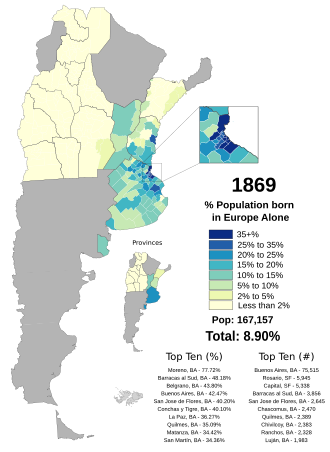
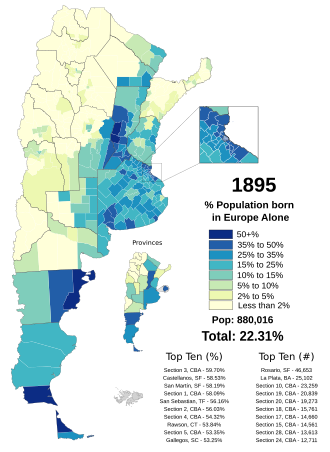
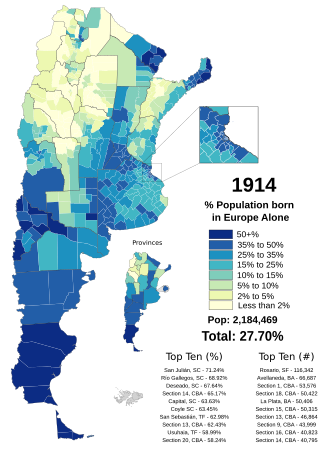
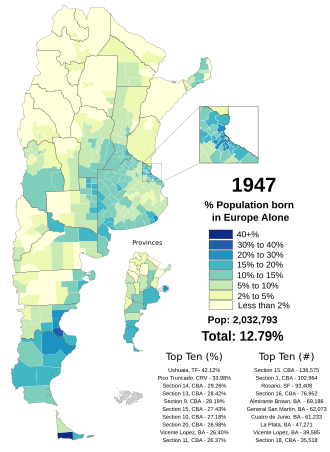
The distribution of immigrants shifted over time, as seen in census data from the late 19th to the mid-20th century. Initially, European settlement was concentrated in specific departments before spreading across the territory.
Modern Migration Trends
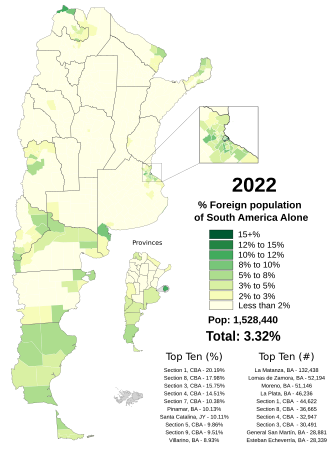
In the late 20th and early 21st centuries, the nature of immigration shifted from intercontinental to regional. Law 25871 of 2004 marked a significant change, making the state responsible for guaranteeing health and education access for all immigrants regardless of status.
Recent data shows a strong presence of migrants from neighboring South American countries. For example, the 2022 census highlights Paraguay and Bolivia as the primary countries of birth for foreign residents.
Summary of Historical Immigration (1857–1940)
| Nationality | Estimated Number | Percentage of Total |
|---|---|---|
| Italy | 3,500,000 | 43.22% |
| Spain | 2,200,000 | 27.17% |
| France | 400,000 | 4.94% |
| Poland | 220,000 | 2.72% |
| Russia | 200,000 | 2.47% |
| Ottoman Empire | 200,000 | 2.47% |
Frequently Asked Questions
Which countries provided the most immigrants to Argentina historically?
Italy and Spain were the primary sources of immigration, particularly between 1857 and 1940, accounting for the vast majority of European arrivals.
What was the purpose of the Hotel de Inmigrantes?
Built in 1906 in Buenos Aires, the hotel served as a reception and temporary housing center for newcomers, with a capacity of up to 4,000 people.
Who are the Boers in Patagonia?
The Boers are a community of South African farmers who settled in Patagonia between 1903 and 1909 after the Second Boer War, granted land by General Julio Roca.
How has immigration changed in recent years?
Modern immigration has shifted toward regional movement, with a significant increase in residents from Paraguay, Bolivia, Venezuela, and Peru, as well as a recent influx of Senegalese nationals.
What is the current status of foreign-born residents in Argentina?
According to the 2022 census, approximately 1,933,463 residents were born outside of Argentina, representing about 4.24% of the total resident population.