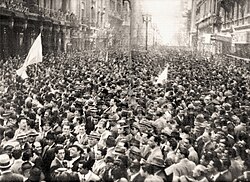
Argentina's Great European Immigration Wave: Shaping a Nation
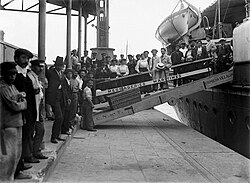
Between the 1860s and the 1960s, Argentina experienced the most significant migratory influx in its history. Known as the Great European Immigration Wave, this period saw more than six million Europeans cross the Atlantic to settle in South America. This massive movement was second only to the United States in scale and fundamentally transformed Argentina's demographic, economic, and cultural landscape.
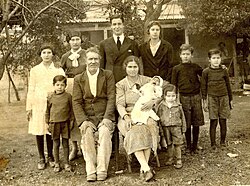
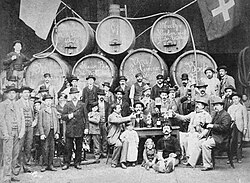
The influx was dominated by Italian and Spanish immigrants, though it included substantial numbers of French, ethnic Germans, Arabs, Basques, Poles, Ukrainians, Irish, and Jews. Smaller communities from Russia, Yugoslavia, Armenia, Wales, Turkey, Hungary, England, Czechoslovakia, Switzerland, and Portugal also contributed to the nation's growing diversity.
Key Facts

- Total Migrants: Over 6 million Europeans arrived between the 1860s and 1960s.
- Primary Origins: Italy and Spain were the largest source countries.
- Population Growth: The national population grew from 1.74 million in 1869 to nearly 8 million by 1914.
- Urbanization: The urban population percentage rose from 28% in 1869 to 57% by 1930.
- Genetic Impact: European genetic contribution to the modern population is estimated between 60% and 80%.
The Drivers of Migration

Technological Advancements in Travel
The primary catalyst for this wave was the rise of steamship technology. This innovation made inter-oceanic travel faster and more affordable. In the 1830s, a sailboat journey from Italian ports like Genoa or Livorno to Buenos Aires took over fifty days; steamships reduced this travel time to between 18 and 24 days.
Economic Instability in Europe
Europe faced severe economic turmoil during the Long Depression (1873–1899). In Spain, a commercial break with France in the 1890s ruined much of the peasantry. Italy faced similar struggles; the unification of Italy (1861–1870) dismantled feudal land systems, leaving many landless. Additionally, a trade war with France (1888–1898) and competition from cheap U.S. wheat led to economic stagnation and social conflict, forcing millions to seek opportunities abroad.

Argentina's Strategy for Growth

Pro-Immigration Policies
From the 1850s to the early 1900s, the Argentine government actively sought to maximize immigration to "civilize" and industrialize the country. The 1853 Constitution explicitly encouraged European settlement. This was further solidified by the Immigration and Colonization Act of 1876, which provided state-funded housing and maintenance for five days upon arrival, assistance in finding employment through Labor Offices, and up to ten days of food and lodging for those moving to the interior.
Demographic Transformation
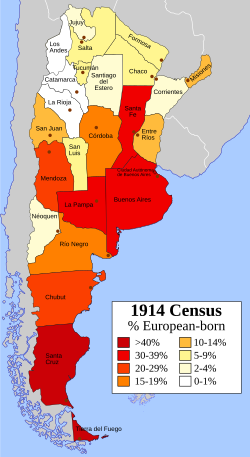
The impact was most visible in Buenos Aires. In the early 1800s, the city's population was under 40,000, and much of the Pampas and Patagonia regions were virtually unpeopled. By 1895, foreigners outnumbered natives in the capital. In Santa Fe province, nearly 42% of the population was foreign-born.
Socio-Economic Impacts
The Rise of a New Middle Class
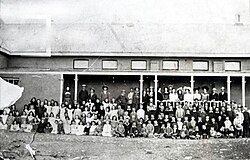
The immigration wave shifted Argentina from a three-tiered class structure (elite, ruling class, and peasants) to one with a burgeoning middle class. Between 1870 and 1914, the middle class grew by 30%, with 46% of this group being European-born immigrants. While the immigrants themselves often did not obtain legal citizenship, their children did, cementing the status of this new socio-economic layer.
Industrialization and Infrastructure
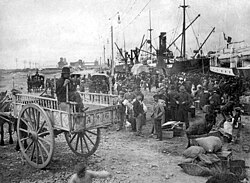
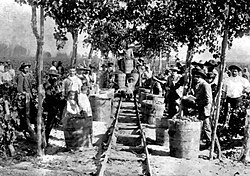
Immigrants provided the essential labor for Argentina's industrialization and the expansion of its transportation networks. For example, in 1905 alone, Argentine railroad companies sponsored the migration of over 20,000 Italians to build the country's rail infrastructure.
Urban Challenges and Social Unrest
Rapid growth led to severe urban overcrowding. In Buenos Aires, it was common for a family of five to live in a single 12x12 foot room. This congestion, combined with rising unemployment and poverty, led to a spike in crime. Between 1887 and 1912, while the city's population tripled, reported crimes increased sevenfold. Furthermore, European migrants introduced new political ideologies to the Argentine zeitgeist, including socialism, anarchism, and radicalism, as well as the concept of labor unions.
![Italian immigrants in a conventillo in Buenos Aires. Italian is the largest single ethnic origin of European immigrants in the country, and became a major part of modern Argentine society.[27][28]](/images/3c/ed/3ced0b645936598aa5ac07d55ecffb4a02cf0c0a4128af5a3f7489c32bced68b.jpg)
Summary of Immigration Impact

| Category | Pre-Immigration / Early Period | Post-Immigration / Peak Period |
|---|---|---|
| Total Population | ~1.74 Million (1869) | ~8 Million (1914) |
| Urban Population % | 28% (1869) | 57% (1930) |
| Primary Origins | Spanish Colonial | Italy, Spain, France |
| Social Structure | Elite, Ruling, Peasant | Emergence of a strong Middle Class |
| Travel Time (EU to BA) | 50+ Days (Sailboat) | 18-24 Days (Steamship) |
Frequently Asked Questions
Which European countries provided the most immigrants to Argentina?
Italy and Spain were the largest contributors, followed by France. Together, these three nations accounted for over 5 million of the total immigrants.
How did the 1876 Immigration and Colonization Act help newcomers?
The act provided immigrants with five days of free housing and maintenance upon arrival, assistance in finding jobs via the Labor Office, and up to ten days of food and lodging if they moved to the interior of the country.
What political ideas did European immigrants bring to Argentina?
Migrants introduced several influential political concepts, most notably socialism, anarchism, and radicalism, as well as the establishment of labor unions.
How did the immigration wave affect the genetic makeup of Argentina?
The influx drastically changed the ethnic structure of the country; current genetic studies estimate that the European contribution to the Argentine population ranges between 60% and 80%.
Why did so many Italians leave for Argentina in the late 19th century?
Economic stagnation, the breakdown of the feudal land system after unification, a trade war with France, and competition from cheap American wheat made agricultural life unsustainable for many Italians.