Arab Argentines: History, Culture, and Influence in South America
The Arab Argentine community represents one of the largest and most influential Arab diaspora groups in the world. Comprising Argentine citizens and residents with ancestral roots in the Middle East—primarily from modern-day Lebanon, Syria, and Palestine—this diverse group has become an integral part of the nation's cultural and social fabric.
While the community is varied in terms of religion and ancestral origin, they are collectively known in the Argentine consciousness as turcos (Turks). This term, while technically inaccurate, is a common demonym used across Latin America to describe people of Levantine descent.

Key Facts
- Primary Origins: Lebanon, Syria, and Palestine.
- Population Hubs: Greater Buenos Aires, Córdoba, and the Argentine Northwest.
- Common Demonym: Known as turcos due to their arrival from the Ottoman Empire.
- Language: Predominantly Spanish, with a gradual shift away from Levantine Arabic.
- Religious Diversity: Majority Christian (Catholic, Eastern Orthodox, Syriac Orthodox) with minorities of Muslims (Sunni and Shia) and Druze.
The History of Arab Immigration to Argentina
Early Presence and the Moorish Influence
Evidence suggests that Arab Muslim presence in Argentina may date back to the era of Spanish exploration. During the 15th century, Moriscos (Muslims of Arab North African descent from the Iberian Peninsula) accompanied Spanish explorers to the Americas. Many of these individuals settled in Argentina to escape religious persecution, such as the Spanish Inquisition.
The Great 19th Century Wave
The first significant wave of systematic immigration occurred in the 19th century. Driven by the 1860 Mount Lebanon civil war, demographic pressures, and the Italo-Turkish War, thousands of people from Lebanon and Syria—then provinces of the Ottoman Empire—migrated to Argentina.
Between 1891 and 1920 alone, approximately 367,348 people of Arabic heritage immigrated to the country. Because they traveled under the jurisdiction of the Ottoman Empire, port officials classified them as Turks, cementing the term turco in the local lexicon, similar to how tano refers to Italians or gallego to Spaniards.
Settlement and Regional Distribution
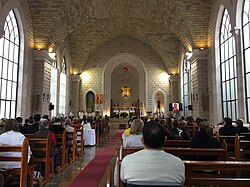
Immigrants settled across various provinces, including Buenos Aires, Córdoba, Salta, Jujuy, Tucumán, La Rioja, San Juan, Mendoza, Santiago del Estero, Misiones, Chaco, and Patagonia. A notable concentration formed in the Cuyo region (San Juan, San Luis, Mendoza, and La Rioja), where the landscape and agricultural crops, such as vineyards and olives, mirrored the environments of the Middle East.
Cultural Integration and Identity
Arab Argentines have thoroughly assimilated into the local culture, contributing to the country's "melting pot" identity. A high rate of interethnic marriage, regardless of religious affiliation, has led to a significant language shift. While some older generations maintain knowledge of Levantine Arabic, the majority of younger Arab Argentines speak Spanish as their first language.
Despite this assimilation, the community maintains a strong presence in national life, excelling in politics, arts, sports, and business.
Summary of Arab Argentine Demographics
| Category | Details |
|---|---|
| Main Ancestries | Lebanese, Syrian, Palestinian |
| Primary Religions | Catholicism, Eastern Orthodoxy, Syriac Orthodoxy, Islam, Druze |
| Key Regions | Greater Buenos Aires, Córdoba, Northwest Argentina, Cuyo Region |
| Languages | Spanish (Primary), Levantine Arabic (Minority) |
Notable Figures of Arab Descent
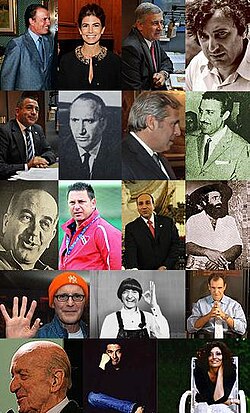
The influence of the Arab community is evident in the list of prominent Argentines who have shaped the nation's history and culture. This includes political leaders like Carlos Menem and Eduardo Menem, as well as figures in the arts and sports such as Javier Muñoz and Jorge Cafrune.
Frequently Asked Questions
Why are Arab Argentines called "Turcos"?
They are called turcos because the majority of immigrants arrived from Lebanon and Syria when those regions were provinces of the Turkish Ottoman Empire. Port officials classified them by their nationality of origin rather than their ethnicity.
What are the primary religions within the Arab Argentine community?
The majority are Christians, specifically within the Catholic, Eastern Orthodox, and Syriac Orthodox faiths. There are also minority populations of Muslims (both Sunni and Shia) and Druze.
Do most Arab Argentines still speak Arabic?
No. Due to high rates of interethnic marriage and cultural assimilation, there has been a marked language shift. Most Arab Argentines, especially younger generations, speak Spanish as their first language.
Which regions of Argentina have the highest Arab populations?
Significant populations are found in Greater Buenos Aires, Córdoba, and the Argentine Northwest. The Cuyo region is also notable due to its similar climate and crops to the Middle East.
Who were the first Arabs to arrive in Argentina?
The earliest arrivals were likely 15th-century Moriscos—Muslims of Arab North African descent from the Iberian Peninsula—who traveled with Spanish explorers to escape the Spanish Inquisition.