Levantine Arabic: The Vibrant Dialects of the Levant
Levantine Arabic, also known as Shami or Syro-Palestinian Arabic, is a group of Arabic dialects spoken across the Levant region. It serves as a primary means of communication for millions of people, blending deep historical roots with a modern, evolving identity. From the bustling streets of Damascus to the coasts of Beirut and the hills of Jerusalem, this linguistic variety reflects the rich cultural tapestry of the Eastern Mediterranean.
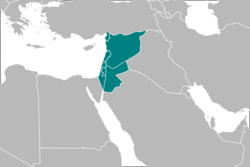
Key Facts
- Total Speakers: Approximately 60 million (2008–2024), with 58 million native speakers.
- Primary Regions: Syria, Jordan, Lebanon, Palestine, Israel, and parts of Turkey.
- Language Family: Afro-Asiatic > Semitic > West Semitic > Central Semitic > Arabic.
- Writing Systems: Primarily the Arabic alphabet, but also Latin script (Arabizi) and the Hebrew alphabet in Israel.
- Major Dialects: Includes Lebanese, Syrian (Damascene and Aleppine), Palestinian, Jordanian, and Cilician.
Geographical Distribution and Varieties
Levantine Arabic is predominantly spoken in the Levant, a region encompassing several modern nations. While it shares a common foundation, it is divided into several distinct varieties based on geography and urban-rural divides.
Regional Dialects
- Syrian: Includes the urban Damascene and Aleppine varieties.
- Lebanese: Known for its distinct melodic intonation.
- Palestinian and Jordanian: Often grouped together due to close linguistic similarities.
- Cilician: Spoken in parts of Turkey.
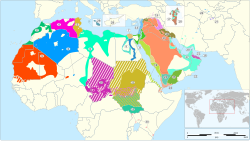
Speaker Population by Country
The distribution of speakers extends beyond the Levant due to migration, with significant communities in Europe and the Americas.
| Country | Number of Speakers |
|---|---|
| Syria | 21 million |
| Jordan | 12 million |
| Lebanon | 5.4 million |
| Palestine | 5.0 million |
| Turkey | 4.3 million |
| Egypt | 2.1 million |
| Israel | 2.1 million |
| Germany | 1.4 million |
Linguistic Characteristics
Levantine Arabic is characterized by diglossia, a situation where two distinct varieties of a language are used by a single community: Modern Standard Arabic (MSA) for formal writing and education, and the spoken dialect (Shami) for daily conversation.
Phonology and Pronunciation
One of the most striking differences between MSA and Levantine Arabic is the pronunciation of certain consonants. For example, the letter Qaf (ق), which is a deep uvular stop in MSA, is often pronounced as a glottal stop (like the 'uh-oh' sound) in urban Levantine varieties, or as a 'g' in rural areas.

Writing Systems and Arabizi
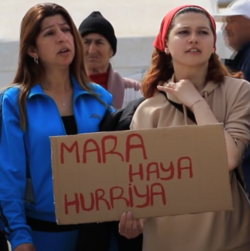
While the Arabic alphabet is the standard, many speakers use Arabizi—a Latin-based script that employs numbers to represent Arabic sounds that don't exist in English (e.g., using '3' for the letter Ain). This is particularly common in digital communication and social media.
Grammar and Structure
The grammar of Levantine Arabic simplifies some of the complexities of MSA. For instance, the use of the shadda (a mark indicating consonant doubling) remains important, but verb conjugations and noun phrases have evolved for conversational ease.
Pronouns and Negation
Pronouns vary slightly by region; for example, the first-person plural "we" is ihna in the south and nihna in the north. Negation is typically achieved using ma, sometimes paired with a suffix -sh (e.g., ma b-ahki-sh for "I don't speak").
Verb Qualities
Verbs are categorized by their "quality":
- Sound: Regular verbs with three distinct radicals.
- Weak: Verbs containing 'w' or 'y'. These are further split into Hollow (weak second radical) and Defective (weak third radical).
Frequently Asked Questions
What is the difference between Shami and Modern Standard Arabic?
Modern Standard Arabic (MSA) is the formal version used in news, law, and literature across the Arab world. Shami is the spoken dialect used in daily life in the Levant. They differ in pronunciation, vocabulary, and grammar.
What is Arabizi?
Arabizi is a system of writing Arabic using the Latin alphabet and numbers. It is widely used by youth and in informal digital messaging to represent sounds that the Latin alphabet cannot capture.
Which countries speak Levantine Arabic?
It is primarily spoken in Syria, Lebanon, Jordan, and Palestine, as well as by populations in Israel and Turkey.
Is Levantine Arabic the same as Lebanese or Syrian Arabic?
Levantine Arabic is the umbrella term for the group of dialects. Lebanese and Syrian are specific regional varieties within that group, each with its own unique nuances and accents.