Arabic Language: History, Structure, and Global Significance
Arabic is a major macrolanguage belonging to the Afro-Asiatic family, specifically within the Semitic branch. With approximately 411 million native speakers and an additional 70 million second-language users, it serves as a vital linguistic pillar across the Arab world and surrounding regions. From its ancient roots to its role as a modern lingua franca, Arabic continues to shape culture, religion, and international diplomacy.
Key Facts
- Language Family: Afro-Asiatic > Semitic > West Semitic > Central Semitic.
- Native Speakers: Approximately 411 million (2020–2024 data).
- Official Status: Official language in 24 states and territories.
- Writing System: The Arabic alphabet.
- Core Varieties: Modern Standard Arabic (MSA) and various regional dialects.
Historical Evolution
The lineage of Arabic can be traced through several stages, beginning with Proto-Afroasiatic and Proto-Semitic. As the language evolved, it passed through stages of Old Arabic and Pre-classical Arabic before reaching its classical forms.
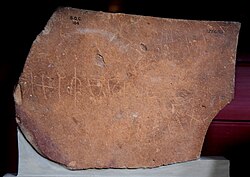
![The Namara inscription of the Lakhmid king Imru al-Qays I ibn Amr, a sample of Nabataean script, considered a direct precursor of Arabic script[46][67]](/images/40/dc/40dc8e496c3b96123ab6f4fd22782ba7661f943a10edb15fdbef080f054bf937.jpg)
The development of the script is closely linked to the history of the language. Early inscriptions, such as the Safaitic and Nabataean scripts, provided the foundation for what would eventually become the modern Arabic alphabet. The Nabataean script, seen in the Namara inscription, is considered a direct precursor to the Arabic script used today.
The Role of the Qur'an in Standardization
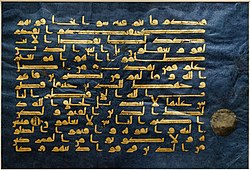
The Qur'an has played a monumental role in the preservation and standardization of the Arabic language. Early Hijazi scripts used in the 7th century AD laid the groundwork for the sophisticated calligraphic traditions that followed. Over centuries, the script evolved from simple forms to the highly decorative Kufic and Naskh styles.
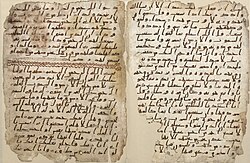
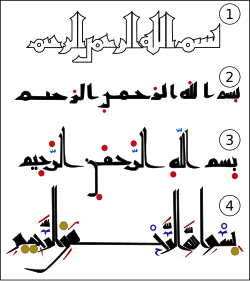
The evolution of the writing system also included the development of diacritics (marks used to indicate vowels and consonant distinctions). Early manuscripts often lacked these marks, but systems established by scholars like Abu al-Aswad and later refined by al-Farāhidi introduced dots and shapes to ensure precise pronunciation and reading.
Linguistic Structure and the Root System
One of the most distinctive features of Arabic is its root and pattern system. Most words are derived from a three-letter consonantal root that carries a core semantic meaning. By applying different morphological patterns to this root, speakers can derive nouns, verbs, and adjectives.
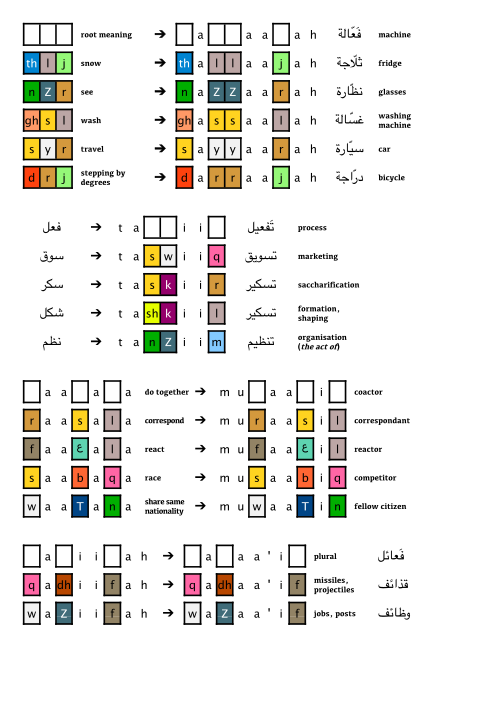
For example, the root k-t-b (relating to writing) can generate a vast array of words:
- Kitāb (book)
- Kātib (writer)
- Maktab (desk/office)
- Maktūb (written)
This system allows for a highly logical and expansive vocabulary, where a single root can express a wide spectrum of related concepts.
Modern Usage and Diglossia
In the modern era, Arabic exists in a state of diglossia. This means that two distinct varieties of the language are used in different social contexts: Modern Standard Arabic (MSA) is used for formal writing, news, and official speeches, while various spoken dialects are used for daily conversation.
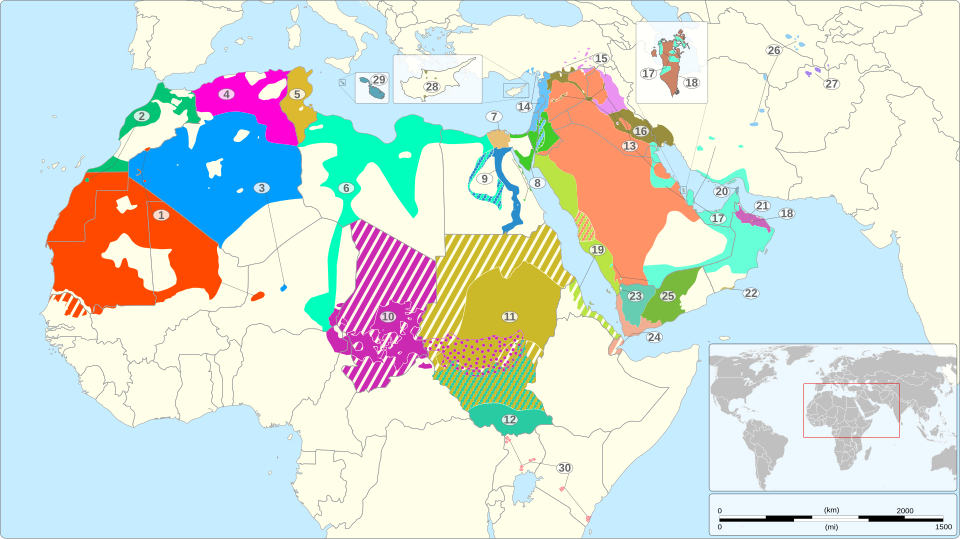
Dialect Groups
Arabic dialects vary significantly by geography. Major dialect groups include:
- Levantine: Spoken in the Levant region.
- Egyptian: Widely understood due to media influence.
- Maghrebi: Spoken in North Africa.
- Peninsular: Spoken in the Arabian Peninsula.
- Mesopotamian, Sudanese, and Chadian varieties.
The Art of Arabic Calligraphy
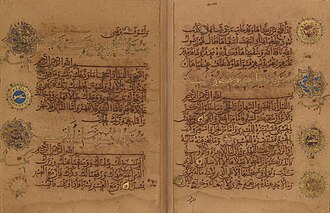
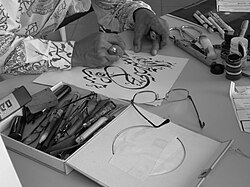
Beyond its functional use, Arabic is celebrated for its aesthetic beauty through calligraphy. The script's fluid, cursive nature allows artists to create intricate designs that are used in religious texts, architecture, and fine art.
| Category | Details |
|---|---|
| Language Family | Afro-Asiatic / Semitic |
| Primary Script | Arabic Alphabet |
| Standard Form | Modern Standard Arabic (MSA) |
| Global Reach | Official in 24 states; used in UN, AU, and Arab League |
| Key Feature | Root and pattern morphology |
Frequently Asked Questions
What is the difference between Classical Arabic and Modern Standard Arabic?
Classical Arabic is the form of the language used in ancient texts and the Qur'an, while Modern Standard Arabic (MSA) is the contemporary version used in modern media, literature, and formal education.
How many people speak Arabic?
Recent estimates suggest there are approximately 411 million native speakers and about 70 million people who use Arabic as a second language.
What is the Arabic root system?
It is a morphological system where words are built from a core set of consonants (usually three) called a root. Different vowel patterns and prefixes/suffixes are added to the root to change its meaning or grammatical function.
Is there one single Arabic language?
Arabic is considered a macrolanguage. While Modern Standard Arabic provides a common formal ground, the spoken varieties (dialects) can vary significantly from one region to another.
What script is used for Arabic?
The Arabic alphabet is used, which is an abjad—a writing system where each symbol primarily represents a consonant, with vowel sounds often indicated by diacritical marks.