Western Sahara: History, Geography, and the Struggle for Sovereignty
Western Sahara is a region in North Africa characterized by its vast desert landscapes and a complex, ongoing political struggle. Defined as a non-self-governing territory, it remains one of the most contested areas in the world, often described in scholarly literature as Africa's last colony. The region is currently under partial Moroccan military occupation, while the Polisario Front serves as its legitimate representative.
The territory's status is a point of significant international friction, involving claims from Morocco and the Sahrawi Republic, with the United Nations attempting to mediate a resolution through various peace plans and missions.
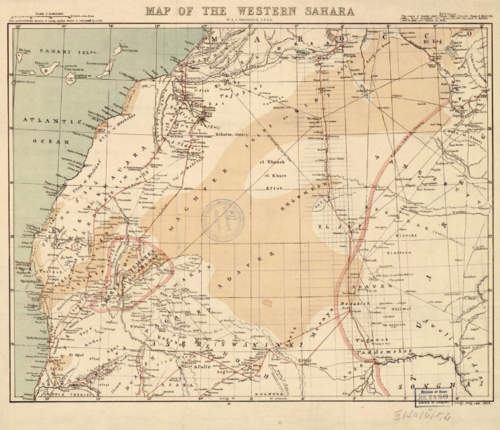
Key Facts
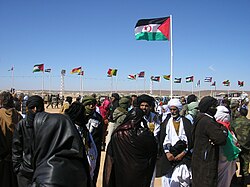
- Status: Non-self-governing territory under partial Moroccan military occupation.
- Total Area: 272,000 km².
- Population: 565,581 (as of 2021).
- Largest City: Laayoune.
- Administering Power: Spain (de jure).
- Primary Claimants: Morocco and the Sahrawi Republic.
Historical Evolution
From Spanish Province to Independence Movements
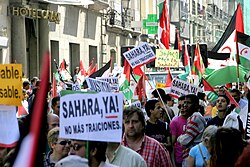
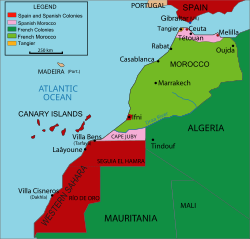
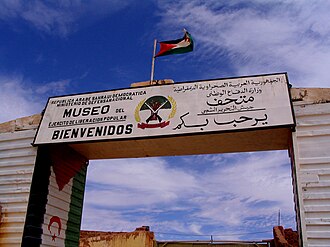
Historically known as Spanish Sahara, the region was a province of Spain until demands for independence grew. Following the end of Spanish rule, the territory became a flashpoint for conflict between Morocco and the Polisario Front, a liberation movement seeking self-determination for the Sahrawi people.
The Path to Conflict and the Moroccan Wall
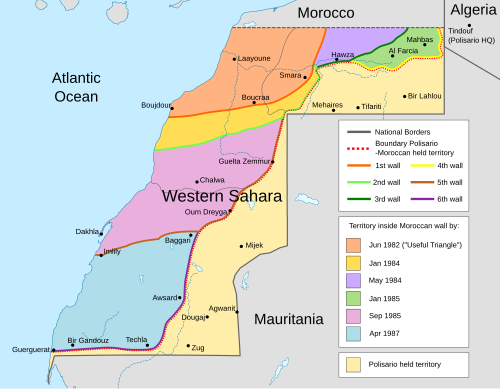
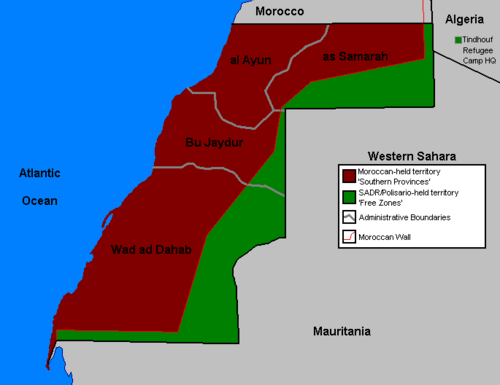
The dispute escalated into a military conflict, leading to the construction of the Moroccan Walls in the 1980s. This system of fortifications was designed to separate the Moroccan-held areas from the zones controlled by the Polisario Front.
Diplomatic Efforts and the Baker Plan
Over the decades, the United Nations has proposed several frameworks to resolve the conflict, including the Settlement Plan and the Baker Plan. Despite these efforts, a definitive referendum on the territory's future has been stalled. The UN mission, known as MINURSO (United Nations Mission for the Referendum in Western Sahara), continues to operate in the region to monitor the situation.
Modern Political Landscape
International Recognition and Shifts
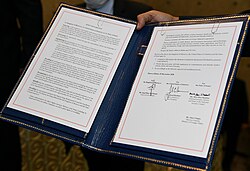
The international community is divided on the sovereignty of Western Sahara. In 2016, the European Union declared that Western Sahara is not part of Moroccan territory. However, a significant shift occurred on December 10, 2020, when the United States recognized full Moroccan sovereignty over the region in exchange for Morocco normalizing relations with Israel. Israel followed suit with official recognition in July 2023.
Administrative Divisions
The region is managed differently by the competing claimants:
- Sahrawi Arab Democratic Republic (SADR): Operates on a notional basis with 4 provinces (wilayat)—Aousserd, Dakhla, Laayoune, and Smara—and 25 districts (daerah).
- Morocco: Administers the territory through three regions: Guelmim-Oued Noun, Laâyoune-Sakia El Hamra, and Dakhla-Oued Ed-Dahab.
Geography and Demographics
Topography and Environment
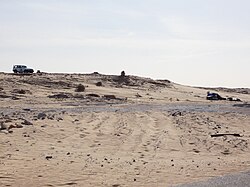
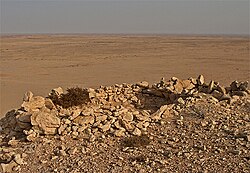
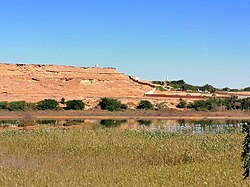
The landscape is dominated by the Sahara Desert, featuring intermittent water sources such as lake Dait Um Saad. The population density is very low, averaging approximately 2.03 people per square kilometer.
The Sahrawi People
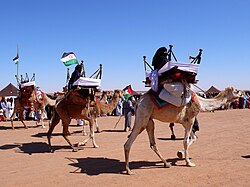
The indigenous Sahrawi people maintain a distinct cultural identity. Due to the conflict, many have lived in refugee camps, particularly around Tindouf, while others remain in the territory under Moroccan administration.
Human Rights and Economy
Human Rights Concerns
Numerous international organizations, including Amnesty International, Human Rights Watch, and the International Committee of the Red Cross, have monitored the region. Reports often highlight issues regarding political prisoners, freedom of the press, and the treatment of Sahrawi activists.
![Sahrawi human rights defender Ali Salem Tamek in Ait Meloul Prison, Morocco[62]](/images/44/56/44561fc3fe7bec66b5497f0803673dff28e2c2ecb9541605e5d839c5ab02c937.jpg)
Natural Resources and Economy
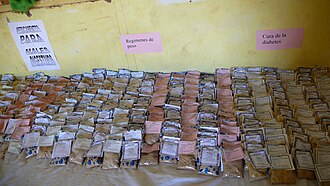
The economy of Western Sahara is heavily influenced by its natural resources, most notably the Bou Craa phosphate mines. The exploitation of these resources remains a point of contention between the claimants and international trade bodies.
Summary of Regional Status
| Feature | Moroccan Administration | SADR / Polisario Front |
|---|---|---|
| Claim | Full Sovereignty | Independence / Self-Determination |
| Administrative Units | 3 Regions (e.g., Dakhla-Oued Ed-Dahab) | 4 Provinces (wilayat) |
| Key City | Laayoune (Administered) | Laayoune (Claimed Capital) |
| International Support | USA, Israel | Legitimate representative (UN) |
Frequently Asked Questions
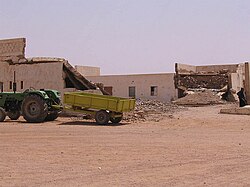
![Morocco built several empty towns in Western Sahara, ready for refugees returning from Tindouf.[119]](/images/62/bf/62bf58b3b39da25ca44a96aa4029f5647c9b9e7e7d09d64dbdfa1f3b85945580.jpg)
What is the current legal status of Western Sahara?
Western Sahara is officially designated by the United Nations as a non-self-governing territory. While Spain is the de jure administering power, it is under partial Moroccan military occupation.
Who is the Polisario Front?
The Polisario Front is the political and military organization that represents the Sahrawi people and claims sovereignty over the territory through the Sahrawi Arab Democratic Republic (SADR).
Why is the region economically significant?
The region is highly valued for its natural resources, particularly its large deposits of phosphates, which drive significant investment and international dispute.
What is the role of MINURSO?
MINURSO is the United Nations mission established to monitor the ceasefire and organize a referendum that would allow the people of Western Sahara to decide their own future.
Which countries recognize Moroccan sovereignty over the region?
The United States recognized Moroccan sovereignty in 2020, and Israel followed with official recognition in July 2023.