Western Front: The Brutal Stalemate of World War I
The Western Front was one of the primary theaters of war during World War I, characterized by a grueling war of attrition that spanned from August 2, 1914, to November 11, 1918. Stretching across Western Europe—including Belgium, North-Eastern France, Alsace-Lorraine, Luxembourg, and western Germany—this front became the definitive symbol of the Great War's industrial-scale slaughter.
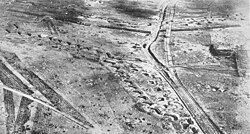
The conflict began when the German Army invaded Luxembourg and Belgium to gain control of France's industrial heartlands. However, this rapid advance was halted at the Battle of the Marne. What followed was the "Race to the Sea," a series of maneuvers that ended with both sides digging into a meandering line of fortified trenches. This line extended from the North Sea to the Swiss frontier, creating a static environment where positions changed very little for years.
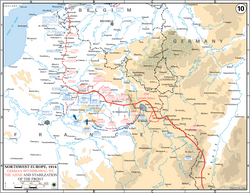
Key Facts
- Duration: August 2, 1914 – November 11, 1918.
- Primary Combatants: Allied Powers (France, UK, USA, Belgium, etc.) vs. Central Powers (Germany).
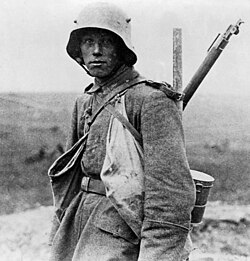
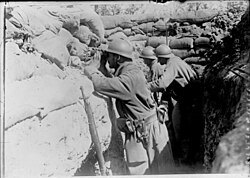
- Defining Feature: Trench warfare, where soldiers lived and fought in deep, fortified ditches.
- Outcome: Allied victory, finalized by the Armistice of November 11, 1918.
- Total Military Casualties: Over 13 million combined casualties across both sides.
The Evolution of Trench Warfare (1914–1916)
By 1915, the conflict had evolved into a deadlock. To break the stalemate, both sides introduced devastating new technologies. Gas warfare (the use of chemical agents) and air warfare became integral to the struggle for a few yards of territory.
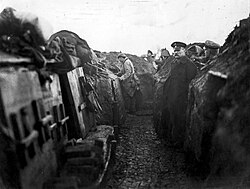
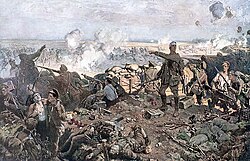
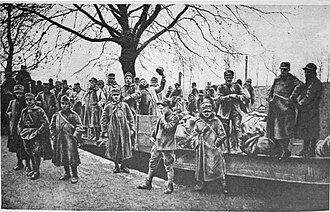
The year 1916 saw some of the bloodiest encounters in human history. The Battle of Verdun and the Battle of the Somme became synonymous with the horror of the front, as millions of shells were fired and hundreds of thousands of soldiers fell in attempts to breach enemy lines.
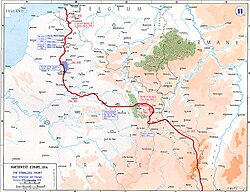
Strategic Shifts and the Hindenburg Line
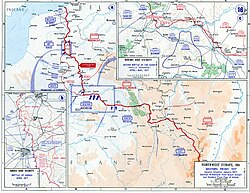
In early 1917, the German Army executed a strategic withdrawal known as Operation Alberich. They retreated to the Hindenburg Line, a heavily fortified defensive system built between 2 and 30 miles behind the original front line. This move created a "supply desert" of scorched earth, forcing the Allies to advance through devastated landscapes.
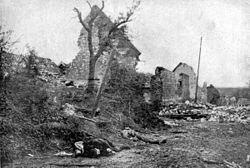
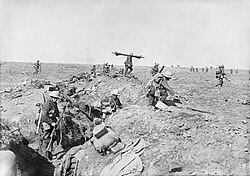
Despite the withdrawal, the British Army continued offensive operations. By 1917, the British force had grown to two-thirds the size of the French army. Significant engagements occurred during the Battle of Arras, including the capture of Vimy Ridge by the Canadian Corps. However, many of these attacks were eventually contained by German reinforcements using defensive lessons learned from 1916.
The Final Push: 1917–1918
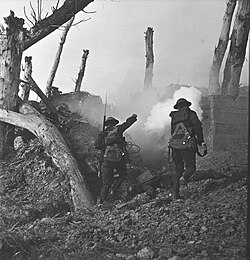
The entry of the United States in 1917 brought the American Expeditionary Force to Europe, providing a critical surge of manpower and resources for the Allies. This period also saw the Flanders offensive and the Battle of Cambrai.
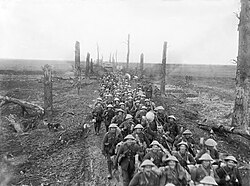
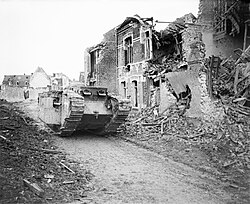
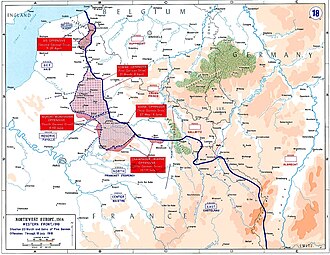
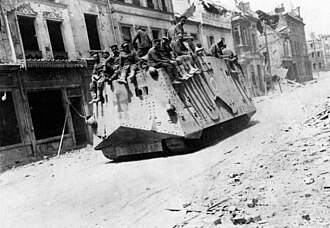
In 1918, Germany launched a series of final spring offensives in a desperate attempt to win the war before American strength could be fully deployed. These were eventually repelled by Entente counter-offensives. The subsequent Hundred Days Offensive saw the Allied armies advance unstoppably, leading to the collapse of the German military.
The war on the Western Front officially ended with the Armistice on November 11, 1918, with peace terms later established by the Treaty of Versailles in 1919.
Summary of Casualties and Strength
The scale of loss on the Western Front was unprecedented. The following table outlines the military casualties by nationality.
| Nationality | Killed | Wounded | POW |
|---|---|---|---|
| France | 1,395,000 | c. 6,000,000 | 508,000 |
| United Kingdom | 700,600 | c. 3,000,500 | 223,600 |
| United States | 117,000 | 330,100 | 4,430 |
| Belgium | 80,200 | 144,700 | 10,200 |
| Germany | 1,593,000 | 5,116,000 | 774,000 |
Frequently Asked Questions
What was the "Race to the Sea"?
The Race to the Sea was a series of military maneuvers following the Battle of the Marne in 1914, where both the Allied and German armies attempted to outflank each other to the north, eventually resulting in a continuous line of trenches from the North Sea to Switzerland.
What was the Hindenburg Line?
The Hindenburg Line was a massive German defensive system built behind the front lines. In early 1917, German forces withdrew to this line (Operation Alberich), leaving behind a scorched-earth zone to hinder the Allied advance.
How did the United States impact the Western Front?
The United States joined the conflict in 1917. The arrival of the American Expeditionary Force provided essential fresh manpower and resources that helped the Allies sustain their counter-offensives and eventually break the German army in 1918.
What ended the fighting on the Western Front?
The fighting ended with the Armistice of November 11, 1918, following the success of the Allied Hundred Days Offensive, which convinced German commanders that defeat was inevitable.
Which battles were the most significant on the Western Front?
Some of the most pivotal engagements included the Battle of the Marne (which stopped the initial German advance), the Battle of Verdun and the Battle of the Somme (noted for their extreme casualties), and the Hundred Days Offensive (which led to the war's end).