West Coast of the United States
The West Coast of the United States is a vast and diverse region stretching from the Arctic reaches of Alaska to the tropical shores of Hawaii, and along the contiguous coastline of California, Oregon, and Washington. Defined by its dramatic landscapes—ranging from the highest peak in North America to deep basins—the region serves as the primary gateway to the Pacific Rim and is a powerhouse of economic, political, and cultural influence.
From the bustling metropolis of Greater Los Angeles to the serene forests of the Pacific Northwest, the West Coast is characterized by its unique relationship with the Pacific Ocean, which shapes everything from its mild coastal climates to its progressive political leanings.
Key Facts
- Total Area: Approximately 1,009,688 square miles.
- Population: Estimated at 53,848,093 as of 2024.
- Highest Point: Denali (20,310 ft).
- Lowest Point: Badwater Basin (−282 ft).
- Largest City: Los Angeles.
- Political Trend: Predominantly Democratic, with the exception of Alaska.
Geography and Climate
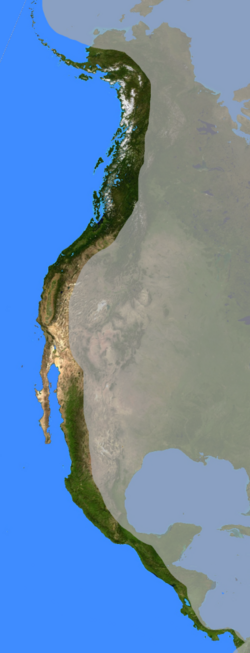
The region's geography is defined by extreme contrasts. It contains both the highest elevation in North America, Denali, and the lowest, Badwater Basin. The coastline experiences significantly milder temperatures than inland areas during the summer. This moderation is caused by cold Pacific Ocean currents and mountain ranges that block maritime air from penetrating deep inland.
For example, in Northern California, a distance of only 25 miles separates Eureka from Willow Creek, yet there is a temperature difference of 17 °C (30 °F), partly due to Willow Creek's higher elevation of 500 meters.
History and Expansion
The human history of the West Coast began with Paleo-Indians, who crossed the Beringia land bridge from Eurasia between 45,000 BCE and 12,000 BCE. These hunter-gatherers migrated into Alaska, later moving south through ice-free corridors along the coast and valleys between 16,500 BCE and 13,500 BCE.
The region's integration into the United States occurred in stages during the mid-19th century:
- 1848: The Oregon Territory was established, and California was ceded by Mexico following the Treaty of Guadalupe Hidalgo.
- 1850: California was admitted as the 31st state (a free state).
- 1859 & 1889: Oregon and Washington were admitted as states after the Washington Territory split from the Oregon Territory in 1853.
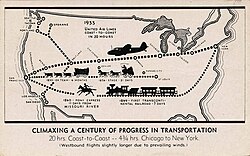
A pivotal moment in regional connectivity occurred on May 10, 1869, with the completion of the first transcontinental railroad, physically linking the West Coast to the East.
Government and Politics
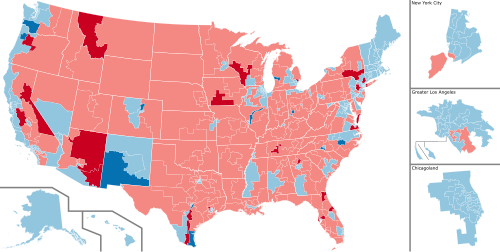
In contemporary politics, the "West Coast" often refers specifically to the contiguous states of California, Oregon, and Washington due to their shared political ideologies. This alignment has been described as a "blue wall," characterized by shared values regarding civil liberties, climate change, abortion, and immigration.
Since 1992, California, Oregon, and Washington have voted for Democratic presidential candidates without interruption. Hawaii is also a Democratic stronghold, though it is not always included in the political definition of the West Coast. Conversely, Alaska has been a reliable Republican state, voting for the Democratic candidate only once since achieving statehood (in 1964).
Current State Leadership
| State | Governor | Party | Term End |
|---|---|---|---|
| Alaska | Mike Dunleavy | Republican | 2026 |
| California | Gavin Newsom | Democratic | 2027 |
| Hawaii | Josh Green | Democratic | 2026 |
| Oregon | Tina Kotek | Democratic | 2027 |
| Washington | Bob Ferguson | Democratic | 2029 |
Demographics and Urban Centers
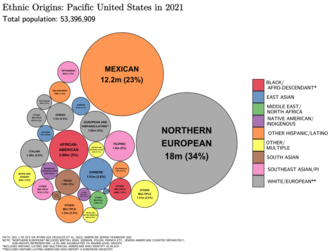
The population of the West Coast has grown steadily, from roughly 2.6 million in 1900 to over 53 million by 2024. California dominates the region's urban landscape; 16 of the 20 largest West Coast cities are located within the state.
Los Angeles is the largest city, followed by San Diego and San Jose, all of which have populations exceeding one million. Other major hubs include San Francisco, Seattle, and Portland. Outside the contiguous states, Honolulu (Hawaii) and Anchorage (Alaska) serve as the primary urban centers for their respective states.
Culture and Transportation
The West Coast is known for its "green" culture, with a high prevalence of organic gardening and bicycling. This environmental consciousness extends to transportation; cities like San Jose, San Francisco, Los Angeles, Seattle, San Diego, and Portland are ranked among the top U.S. metropolitan areas for low carbon emissions due to the high adoption of electric vehicles and mass transit.
Travel across the region is facilitated by several key arteries:
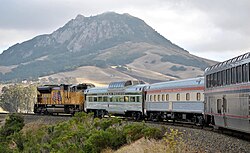
- Rail: The Coast Starlight (Amtrak) is the primary interstate passenger route.
- Roads: Interstate 5 is the main north-south freeway, while California State Route 1 and U.S. Route 101 provide scenic coastal access.
- Air: Los Angeles (LAX), San Francisco (SFO), and Seattle-Tacoma (SEA) international airports serve as critical gateways to the Pacific Rim.
Frequently Asked Questions
Which states are considered part of the West Coast?
Geographically, the West Coast includes Alaska, California, Hawaii, Oregon, and Washington. Politically, the term often refers specifically to the contiguous states of California, Oregon, and Washington.
How does the coastal climate differ from the inland climate?
The coastline experiences much milder temperatures during the summer. This is due to the moderating effect of cold Pacific Ocean currents and mountain ranges that prevent maritime air from moving far inland.
What is the "blue wall" in West Coast politics?
The "blue wall" refers to the consistent support for the Democratic Party in California, Oregon, and Washington, particularly regarding issues like climate change, immigration, and civil liberties.
Which is the largest city on the West Coast?
Los Angeles is the largest city in the region, with a population significantly larger than other major hubs like San Diego and San Jose.
How was the West Coast incorporated into the United States?
The region was incorporated through the establishment of the Oregon Territory in 1848 and the admission of California in 1850. Oregon and Washington were later admitted as states in 1859 and 1889, respectively.