Oregon: The Beaver State
Known as The Beaver State, Oregon is a diverse region of the Pacific Northwest characterized by its rugged coastline, towering peaks, and rich cultural heritage. With the motto Alis volat propriis ("She flies with her own wings"), Oregon balances a deep respect for its natural wilderness with a thriving modern economy.
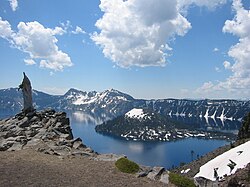
From the bustling urban center of Portland to the serene depths of Crater Lake, the state offers a unique blend of environmental beauty and industrial innovation. Admitted to the Union on February 14, 1859, as the 33rd state, Oregon has evolved from a pioneer territory into a hub for technology, athletics, and sustainable forestry.
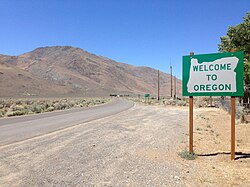
Key Facts
- Capital: Salem
- Largest City: Portland
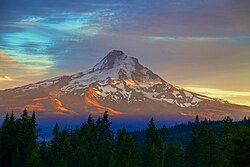
- Highest Point: Mount Hood (11,249 ft)
- Total Area: 98,381 sq mi (9th largest in the U.S.)
- Estimated Population (2025): 4,273,586
- State Bird: Western meadowlark
- State Mammal: American beaver
Geography and Natural Wonders
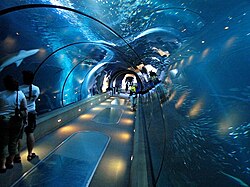
Oregon's terrain is remarkably varied, stretching 360 miles in length and 400 miles in width. The state's elevation ranges from the sea-level shores of the Pacific Ocean to the snow-capped summit of Mount Hood, the state's highest peak.
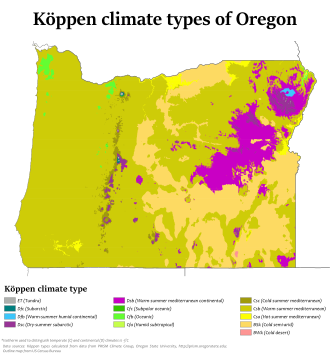
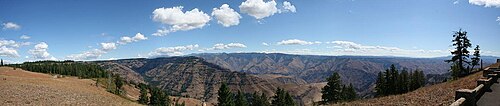
The state is home to iconic landmarks such as Crater Lake and Hells Canyon, one of the largest canyons in the United States. Its climate is categorized by various Köppen climate types, which influence the lush forests of the west and the arid plateaus of the east.
Flora and Fauna
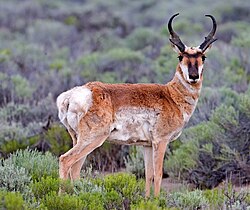
The natural landscape is dominated by the Douglas-fir, the official state tree. Oregon's wildlife is equally diverse, featuring the pronghorn (Antilocapra americana) and the Chinook salmon, a vital species for the region's river ecosystems.
History and Demographics
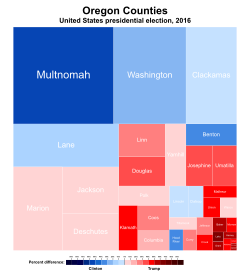
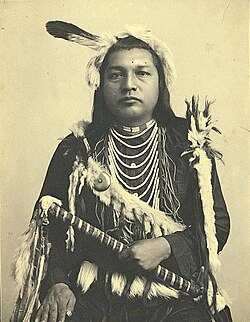
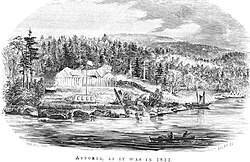
Long before statehood, the region was inhabited by various indigenous peoples, including the Umatilla, Warm Springs, and Siletz tribes. European settlement began in the early 19th century, highlighted by the establishment of Fort Astoria by John Jacob Astor in 1813.
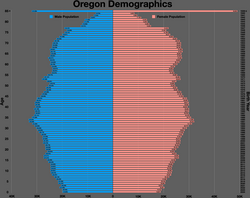
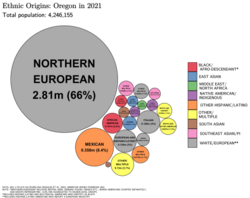
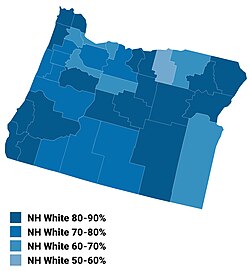
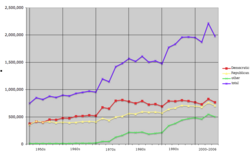
Since 1850, Oregon's population has grown steadily, from roughly 12,000 residents to over 4.2 million by 2025. The demographic landscape has shifted over time, with a growing percentage of residents identifying as Hispanic or Latino (13.9% in 2020) and an increase in Asian populations (4.6% in 2020).
![Graph of Oregon's population growth from 1850 to 2010[100]](/images/99/d9/99d9a41a004564ce77e3c6667dc59e05bc06c3aa90ec5cf20be37fd14ed80337.png)
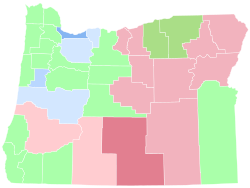
![Oregon population by county using 2012 estimates[102]](/images/d5/62/d562e90058fbc2121917df8bf2622e21f1ea732bbb78c15b272531542fdc5d7c.jpg)
Economy and Infrastructure
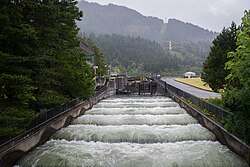
Oregon's economy is a mix of traditional resource extraction and high-tech industry. Agriculture and forestry remain pillars of the state, with hazelnuts and pears being prominent crops. The state's fisheries, particularly salmon, continue to be economically and culturally significant.

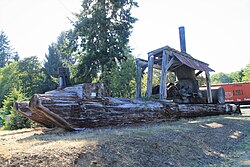
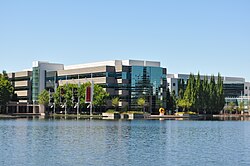
In the modern era, Oregon has become a center for global corporations. Nike, headquartered near Beaverton, is the state's most prominent corporate entity by market capitalization.
Major Cities and Education
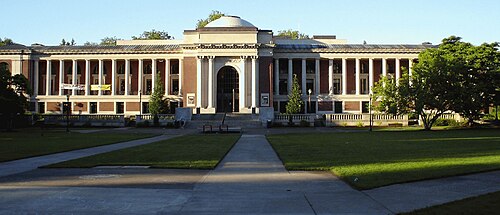
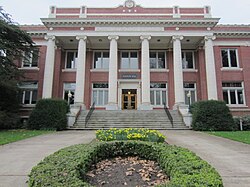
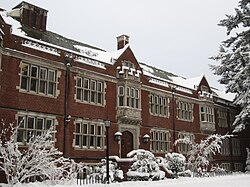
Portland serves as the primary economic and cultural hub, while Salem handles the state's administrative functions. Education is supported by prestigious institutions including Oregon State University, the University of Oregon, and Reed College.
Culture and Governance
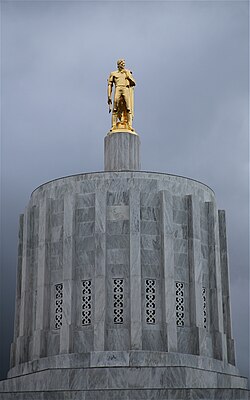
Oregon's government is structured with a separation of powers consisting of a bicameral Legislative Assembly, an executive branch led by the Governor, and the Oregon Supreme Court.
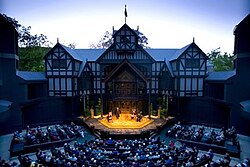
The state is also known for its vibrant arts scene, exemplified by the Oregon Shakespeare Festival in Ashland, and its passion for sports, seen in the crowds at the Moda Center and Providence Park.


| Category | Detail |
|---|---|
| Official Nickname | The Beaver State |
| State Motto | Alis volat propriis |
| Largest Metro Area | Portland |
| Median Household Income (2023) | $80,200 |
| State Flower | Oregon grape |
| State Gemstone | Oregon sunstone |
Frequently Asked Questions
What is the highest point in Oregon?
The highest point in Oregon is Mount Hood, which reaches an elevation of 11,249 feet.
Which city is the largest in Oregon?
Portland is the largest city in the state, with a population of 635,067.
What are the primary corporate headquarters located in Oregon?
The most notable headquarters include Nike in Beaverton, as well as Columbia Sportswear, FLIR Systems, and Portland General Electric.
When did Oregon become a state?
Oregon was admitted to the Union on February 14, 1859, becoming the 33rd state.
What is the official state mammal of Oregon?
The official state mammal is the American beaver (Castor canadensis), which also gives the state its nickname.