Alaska: The Last Frontier
Known as The Last Frontier, Alaska is the largest state in the United States by land area, offering a vast landscape of rugged mountains, frozen tundras, and dense forests. From its motto, "North to the Future," to its unique position spanning the 180th meridian, Alaska represents a blend of indigenous heritage, colonial history, and modern industrial ambition.
The state is characterized by its immense scale and sparse population, with a total area of 665,384 square miles. This vastness creates a diverse range of environments, from the tropical-leaning rainforests of the Southeast to the arctic conditions of the North Slope.
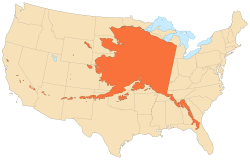
Key Facts
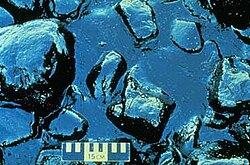
- Largest State: Ranks 1st in total area but 48th in population.
- Highest Point: Denali, the highest peak in North America at 20,310 feet.
- Statehood: Admitted as the 49th U.S. state on January 3, 1959.
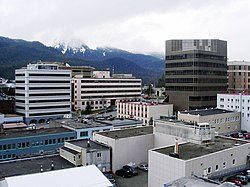
- Capital and Largest City: Juneau is the capital, while Anchorage is the most populous city.
- Economic Driver: Oil is the most financially important export, transported via the Trans-Alaska Pipeline.
Geography and Climate
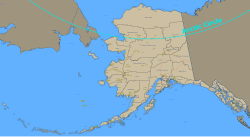
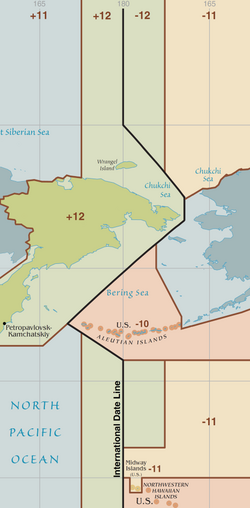
Alaska's geography is divided into several distinct regions: the Southcentral, Southeast, Interior, North Slope, Southwest, and the Aleutian Islands. The Aleutian Islands are particularly notable for crossing the 180th meridian, meaning they contain both the westernmost (Amatignak) and easternmost (Semisopochnoi) points in the United States.
The climate varies drastically by region. While coastal areas like Juneau and Ketchikan experience milder, wetter conditions, the Interior—including Fairbanks—sees extreme temperature swings. For example, Fairbanks can reach 72°F in July but plummet to -17°F in January.
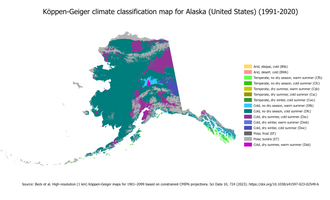
Major Peaks and Landforms
The state is home to Denali, the highest mountain in North America. Much of the land is public, with Alaska possessing more federal government-owned acreage than any other state.
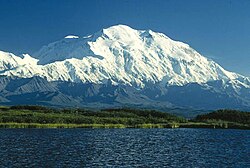
History and Statehood
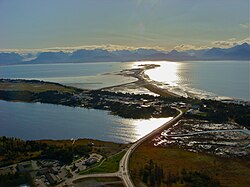
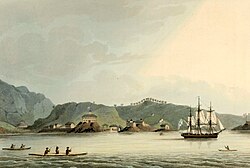
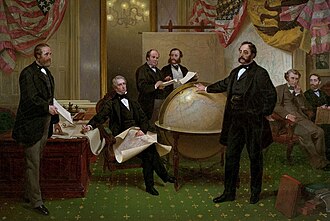
Before U.S. incorporation, Alaska was a Russian settlement, exemplified by St. Paul's Harbor (modern-day Kodiak). The transition to American control occurred with the signing of the Alaska Treaty in 1867.
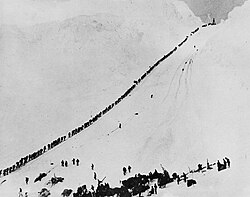
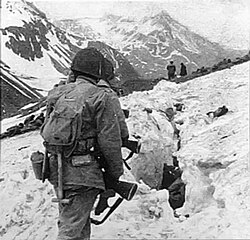
The late 19th century saw a surge in population during the Klondike Gold Rush of 1898, as prospectors braved the Chilkoot Trail in search of fortune. Later, the state played a strategic role in World War II, notably during the Battle of Attu in 1943.
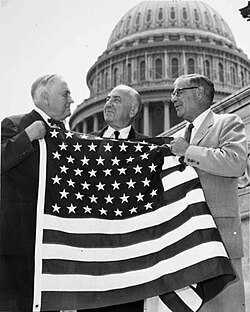
Alaska officially joined the Union in 1959. This milestone was celebrated by the state's inaugural U.S. Senators, Bob Bartlett and Ernest Gruening, who presented the 49-star U.S. flag.
Demographics and Culture
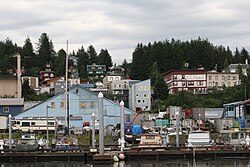
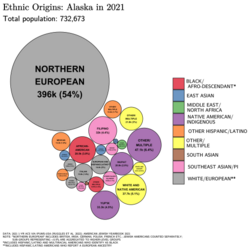
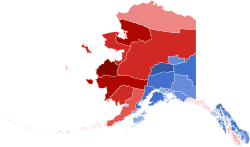
As of 2025, Alaska's estimated population is 737,270. The state is a melting pot of ethnic origins, with a significant population of Alaska Natives. English is the primary spoken language (86.3%), followed by various Alaska Native languages (5.2%).
Urban Centers
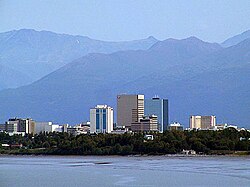
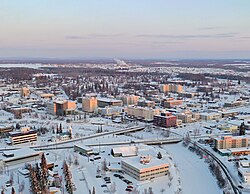
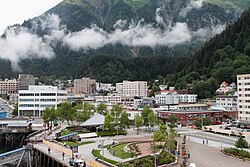
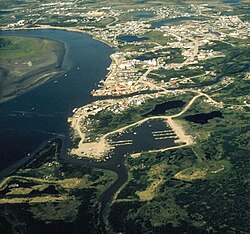
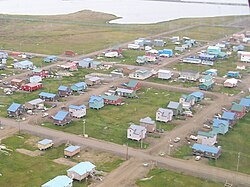
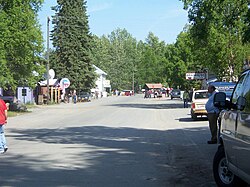
The population is concentrated in a few key hubs. Anchorage serves as the largest city and economic center, followed by Fairbanks in the interior and Juneau on the coast. Other significant communities include Bethel, the largest city in rural Alaska, and Utqiaġvik, the northernmost city in the U.S.
Cultural Traditions and Sports
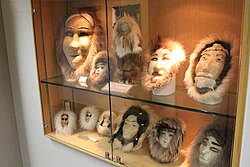
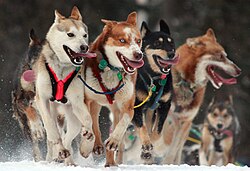
Alaska's culture is deeply tied to its environment. Dog sledding is a prominent sport, with the Iditarod Trail Sled Dog Race being one of the state's most popular winter events. The state also celebrates its indigenous roots through the World Eskimo Indian Olympics.
Economy and Infrastructure
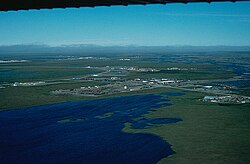
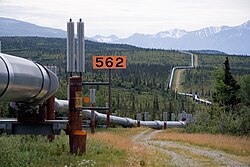
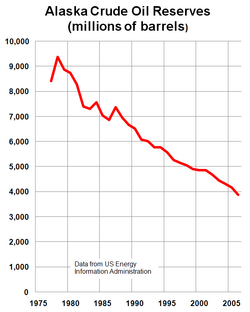
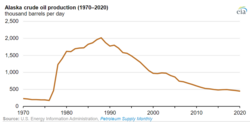
The Alaskan economy relies heavily on natural resources. Oil production, centered at the Prudhoe Bay Oil Field, is critical. The Trans-Alaska Pipeline is a feat of engineering that uses heat pipes to prevent the melting of permafrost while transporting oil to Valdez.
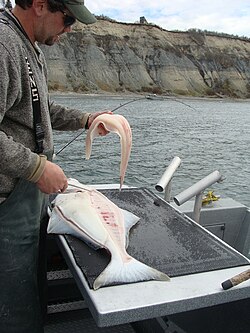
While oil remains vital, reserves have declined by over 60% since their peak in 1973. Consequently, fishing—particularly for halibut and king salmon—remains a cornerstone of the state's commercial economy.
Transportation
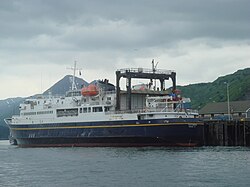
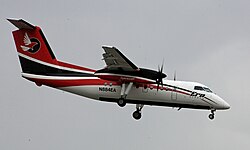
Due to the rugged terrain, transportation is diverse. The state utilizes a combination of the Alaska Railroad, a network of highways like the Sterling and Klondike, and an extensive ferry system (such as the MV Tustumena) to connect isolated coastal communities.
| Category | Detail |
|---|---|
| Total Area | 665,384 sq mi |
| Population (2025 est.) | 737,270 |
| Highest Point | Denali (20,310 ft) |
| Capital | Juneau |
| Largest City | Anchorage |
| Official Nickname | The Last Frontier |
Frequently Asked Questions
![Alaska has more acreage of public land owned by the federal government than any other state.[63]](/images/d9/46/d9464c49f7b590553ace80854c2738bdfdbdee9949c7c463133a3d79e4e3fc4f.webp)
![Largest alone or in any combination ethnic origin by county in Alaska, per the 2020 census [91]](/images/28/39/2839a8dcd7b8723c6fa1ffca4a5ba5e22a9737878a1fdd66fb13bf10dd2df2bc.jpg)


What is the largest city in Alaska?
Anchorage is the largest city in Alaska and serves as the state's primary urban and metropolitan center.
How did Alaska become a U.S. state?
Alaska was acquired from Russia via the Alaska Treaty in 1867 and later admitted to the Union as the 49th state on January 3, 1959.
What is the significance of the Trans-Alaska Pipeline?
The pipeline is essential for transporting oil from the North Slope to Valdez for export. It features specialized heat pipes to protect the permafrost from melting due to the heat of the oil.
Which mountain is the highest in Alaska?
Denali is the highest peak in Alaska and the highest point in all of North America, reaching an elevation of 20,310 feet.
What are the primary economic drivers of Alaska?
The economy is primarily driven by the energy sector (specifically oil and gas) and the commercial fishing industry, with halibut and king salmon being particularly important.