Werner Heisenberg: The Architect of Quantum Mechanics
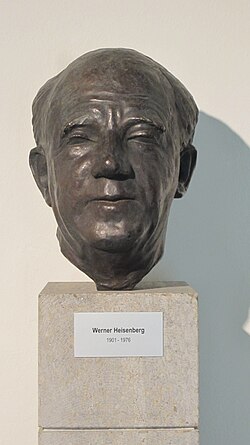
Werner Heisenberg was a titan of 20th-century physics whose work fundamentally altered our understanding of the universe. By challenging the classical notions of predictability and certainty, he helped birth quantum mechanics—the branch of physics dealing with the behavior of matter and light on the atomic and subatomic scale. From his early breakthroughs in matrix mechanics to his complex role in the German nuclear program, Heisenberg's legacy is one of both scientific brilliance and historical controversy.
Born in Würzburg, German Empire, Heisenberg pursued his education at the Ludwig-Maximilians-Universität München and the University of Göttingen. Under the guidance of mentors like Arnold Sommerfeld and Max Born, he developed the mathematical tools necessary to describe the quantum world, eventually earning the Nobel Prize in Physics in 1932.
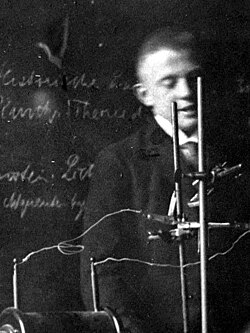
Key Facts
- Nobel Prize: Awarded the Nobel Prize in Physics in 1932 for the creation of quantum mechanics.
- The Uncertainty Principle: Established that certain pairs of physical properties, like position and momentum, cannot be known simultaneously with absolute precision.
- Matrix Mechanics: Developed the first complete logical formulation of quantum mechanics.
- Nuclear Research: Led the Uranprojekt (Uranium Club), the German effort to investigate nuclear energy and weapons during World War II.
- Academic Influence: Taught and mentored numerous physicists, including Edward Teller and Felix Bloch.
Foundations of Quantum Theory
Matrix Mechanics and the Nobel Prize
In the mid-1920s, Heisenberg revolutionized physics by introducing matrix mechanics. Unlike previous models that relied on visualizable orbits of electrons, Heisenberg argued that physics should only concern itself with observable quantities. This mathematical approach provided a rigorous way to calculate the energy levels of atoms and earned him the Nobel Prize in Physics in 1932.
The Uncertainty Principle
Perhaps his most famous contribution is the Uncertainty Principle. This concept posits a fundamental limit to the precision with which certain pairs of physical properties can be known. For example, the more accurately the position of a particle is determined, the less accurately its momentum can be known, and vice versa. This shifted the scientific paradigm from deterministic laws to probabilistic outcomes.
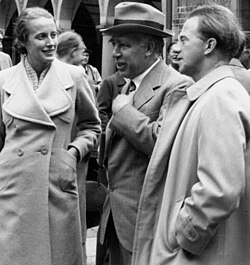
The Copenhagen Interpretation
Working closely with Niels Bohr, Heisenberg helped develop the Copenhagen interpretation of quantum mechanics. This framework suggests that physical systems do not have definite properties until they are measured, a concept closely linked to wave function collapse—the process by which a quantum system settles into a single state upon observation.
Nuclear Physics and the War Years
The Uranprojekt and Nuclear Fission
As the world entered World War II, Heisenberg became a central figure in the Uranprojekt, the German nuclear weapons program. His research focused on nuclear fission—the process where a heavy nucleus, such as uranium-235, splits into smaller nuclei after absorbing a neutron, releasing a massive amount of energy.
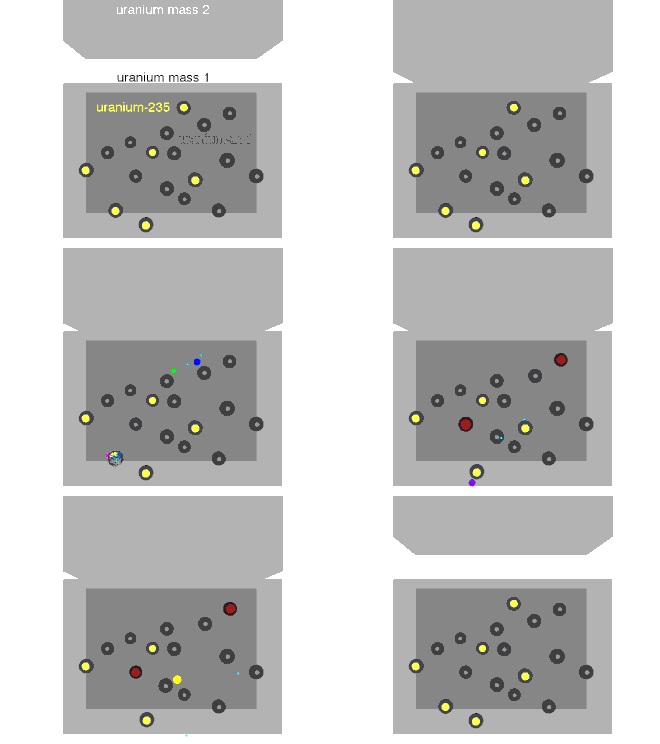
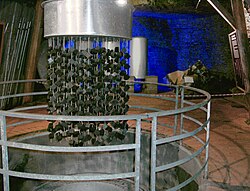
Heisenberg's work during this period included experiments with heavy water (D2O) and uranium layers to attempt the creation of a self-sustaining nuclear chain reaction. A replica of the experimental reactor used in these efforts was later captured at Haigerloch.
Post-War Career and Legacy
Following the war, Heisenberg was detained by the Allies during the Alsos Mission. After his release, he dedicated himself to the reconstruction of German science, holding executive positions at various research institutions and promoting international scientific cooperation. He continued to explore the intersections of physics and philosophy, reflecting on the nature of reality and the role of the observer.
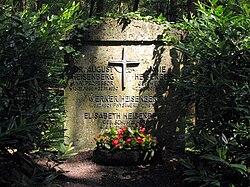
Heisenberg passed away on February 1, 1976, in Munich. He is buried at the Munich Waldfriedhof alongside his family.
Summary of Contributions
| Concept/Theory | Description | Impact |
|---|---|---|
| Matrix Mechanics | Mathematical formulation of quantum mechanics | First complete logical quantum theory |
| Uncertainty Principle | Limit on simultaneous knowledge of position and momentum | Ended classical determinism in physics |
| Copenhagen Interpretation | Probabilistic view of quantum states | Standard framework for quantum measurement |
| Isospin | Symmetry between protons and neutrons | Advanced the proton-neutron model of the nucleus |
| Uranprojekt | German nuclear energy research | Explored technical energy gain from fission |
Frequently Asked Questions
What is the Heisenberg Uncertainty Principle?
It is a fundamental limit in quantum physics stating that it is impossible to simultaneously measure the exact position and exact momentum of a particle. The more precisely one is known, the less precisely the other can be determined.
Why did Heisenberg win the Nobel Prize?
He was awarded the Nobel Prize in Physics in 1932 for the creation of quantum mechanics, specifically for his development of matrix mechanics.
What was Heisenberg's role in the German nuclear program?
Heisenberg was a leading scientist in the Uranprojekt, where he researched the possibility of extracting energy from uranium fission and attempted to build a nuclear reactor.
What is the Copenhagen interpretation?
Developed by Heisenberg and Niels Bohr, it is the view that physical systems do not have definite properties until they are measured, and that the act of observation causes the wave function to collapse into a single state.
Who were some of Heisenberg's notable students?
Heisenberg mentored many influential physicists, including Edward Teller, Felix Bloch, and Rudolf Peierls.