Nobel Prize in Physics: History, Selection, and Legacy
The Nobel Prize in Physics is widely regarded as the most prestigious honor a scientist can receive. Awarded annually to those who have made the most outstanding contributions to mankind in the field of physics, the prize celebrates breakthroughs that reshape our understanding of the universe. From the discovery of X-rays to the complexities of quantum mechanics, this award highlights the pinnacle of human intellectual achievement.
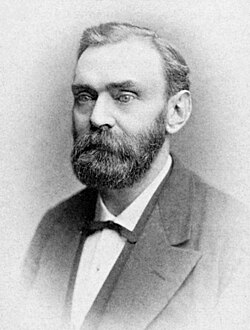
Established by the will of Alfred Nobel in 1895, the prize is one of five categories created to benefit humanity. Since its inception in 1901, it has recognized the work of 229 individuals as of 2025, cementing its status as a global benchmark for scientific excellence.
Key Facts
- Awarding Body: Royal Swedish Academy of Sciences.
- Location: Presented annually in Stockholm, Sweden.
- First Award: Given in 1901 to Wilhelm Röntgen for the discovery of X-rays.
- Reward (2023): 11 million Swedish kronor.
- Most Awards: John Bardeen is the only person to receive the physics prize twice.
- Ceremony Date: December 10, the anniversary of Alfred Nobel's death.
The Origins of the Prize
The prize was born from the last will and testament of Alfred Nobel, signed on November 27, 1895. Nobel bequeathed 94% of his assets—approximately 31 million Swedish kronor—to endow five prizes for those conferring the "greatest benefit on mankind" in physics, chemistry, physiology or medicine, literature, and peace.
The process of establishing the prizes faced initial skepticism, and the will was not approved by the Storting (Norwegian Parliament) until April 26, 1897. Following this, the Nobel Foundation was formed to manage the funds. The Royal Swedish Academy of Sciences was designated as the body responsible for selecting the laureates in physics.
Nomination and Selection Process
The selection process for the Nobel Prize in Physics is famously rigorous and confidential. A maximum of three laureates can be chosen for a single year, recognizing up to two different works.
The Nomination Phase
Every September, the Nobel Committee for Physics sends confidential nomination forms to approximately 3,000 eligible individuals, including university professors and previous Nobel Laureates in Physics and Chemistry. These nominations must be submitted by January 31 of the following year.
Evaluation and Final Vote
Experts scrutinize the nominees, narrowing the list to about fifteen candidates. The committee then submits a report to the Royal Swedish Academy of Sciences. The final selection is made by a majority vote within the Academy's Physics Class.
To maintain integrity, nomination records are sealed for fifty years. Furthermore, the prize follows a "tested by time" rule, meaning there is often a significant lag—sometimes 20 years or more—between a discovery and the award. This ensures the scientific impact of the work is fully realized and verified.
The Award: Medals, Diplomas, and Funding
Each laureate receives three distinct honors: a gold medal, a uniquely designed diploma, and a monetary award.
The Gold Medal
Designed by Erik Lindberg, the physics medal is identical to the chemistry medal. The reverse side depicts the Goddess of Nature (Isis) emerging from clouds, with the Genius of Science lifting her veil. It features the Latin inscription "Inventas vitam iuvat excoluisse per artes", meaning "It is beneficial to have improved (human) life through discovered arts."
Diplomas and Monetary Rewards
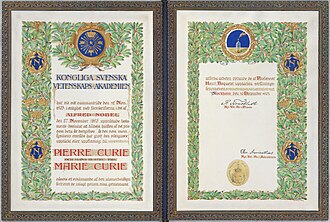
The King of Sweden personally presents the diplomas, which include a citation of the laureate's achievements. The cash prize varies annually based on the Nobel Foundation's funding. For instance, while the reward was 10 million SEK in 2009, it dropped to 8 million SEK in 2012 following the Great Recession.
Summary of the Nobel Prize in Physics
| Feature | Details |
|---|---|
| Established | 1895 (First awarded 1901) |
| Administered by | Nobel Foundation |
| Awarding Institution | Royal Swedish Academy of Sciences |
| Maximum Laureates | 3 per year |
| Key Requirement | Achievements must be "tested by time" |
| Ceremony Location | Stockholm Concert Hall, Sweden |
Frequently Asked Questions
Can a person win the Nobel Prize in Physics more than once?
Yes, although it is rare. John Bardeen is the only individual to have received the Nobel Prize in Physics twice.
Are posthumous awards allowed?
Generally, posthumous nominations are not permitted. However, if a laureate dies between the committee's decision in October and the ceremony in December, the award is still granted. Prior to 1974, awards were permitted if the candidate died after being nominated.
Why is there often a long delay between a discovery and the prize?
The committee requires that achievements be "tested by time" to ensure the discovery's lasting significance. This can result in a gap of 20 years or more, as seen with Subrahmanyan Chandrasekhar, who received the 1983 prize for work completed in the 1930s.
How is the prize money divided among multiple winners?
If there are two laureates, the grant is divided equally. If there are three, the committee may divide it equally or award half to one recipient and a quarter to each of the other two.
Who is eligible to nominate a candidate?
Nominations are solicited from a select group of about 3,000 people, including university professors and previous Nobel Laureates in Physics and Chemistry.