Wannsee Conference: The Coordination of the Holocaust
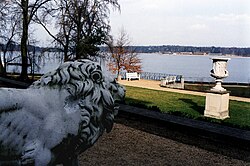
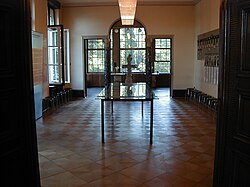
The Wannsee Conference, held on January 20, 1942, stands as one of the most chilling examples of bureaucratic efficiency applied to mass murder. While the persecution of Jews had begun years earlier, this meeting at a villa by the Großer Wannsee lake in Berlin served to coordinate the logistics of the "Final Solution"—the Nazi plan to systematically murder the Jewish population of Europe.
The conference was not where the decision to commit genocide was first made, but rather where the administrative machinery of the German state was synchronized to ensure the process was carried out with clinical precision.
Key Facts
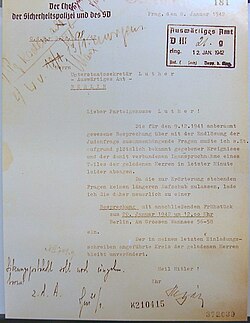
- Date: January 20, 1942.
- Location: A villa at Am Großen Wannsee 56–58, Berlin, Germany.
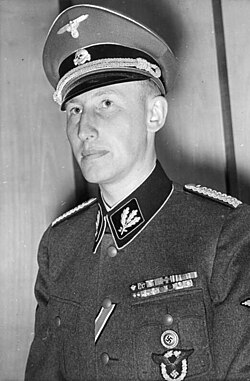
- Primary Organizer: Reinhard Heydrich, chief of the Reich Security Main Office.
- Objective: To coordinate the deportation and extermination of European Jews across various government ministries.
- Scope: Eichmann's list targeted approximately 11 million people across Europe.
The Path to Genocide: 1933–1941
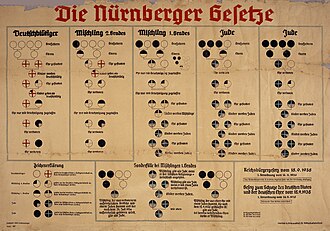
Discrimination against Jews began immediately after the Nazi seizure of power on January 30, 1933. The regime initially used economic pressure and violence to force Jews to emigrate. This systemic exclusion was codified in September 1935 with the Nuremberg Laws, which stripped Jews of German citizenship and prohibited marriages or sexual relations between Jews and people of Germanic extraction.
By the start of World War II in 1939, the strategy shifted from forced emigration to mass murder. Following the invasion of Poland, the Einsatzgruppen (special task forces) began executing Polish leadership, intelligentsia, and Jews. This violence accelerated after the invasion of the Soviet Union in June 1941 (Operation Barbarossa), where the Einsatzgruppen murdered hundreds of thousands of Jews, women, children, and the elderly.
Parallel to this was the Hunger Plan, devised by Herbert Backe. This policy aimed to reduce the population of conquered territories by 30 million people through deliberate mass starvation, diverting food supplies to the German army and civilians. Historian Timothy Snyder estimates that 4.2 million Soviet citizens died as a result of this plan between 1941 and 1944.
Planning the Conference
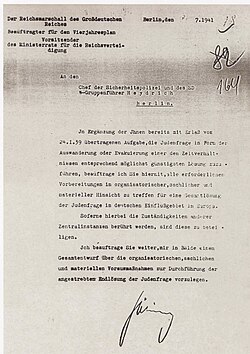
On July 31, 1941, Hermann Göring provided written authorization to Reinhard Heydrich to prepare a plan for the "total solution of the Jewish question" in territories under German control.
Heydrich initially scheduled the meeting for December 9, 1941. However, the geopolitical landscape shifted rapidly: the Red Army began a counter-offensive near Moscow, and Japan attacked Pearl Harbor on December 7, leading to the United States entering the war. These events caused Heydrich to postpone the meeting.
During this delay, Adolf Hitler's resolve shifted toward immediate extermination. On December 18, 1941, Heinrich Himmler noted in his calendar that the "Jewish question" was to be handled by destroying them as "partisans." The conference was rescheduled for January 20, 1942, at a villa purchased by the Sicherheitsdienst (SD, the SS security service).
Proceedings and the "Final Solution"
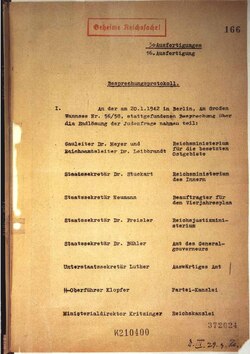
The conference was attended by high-ranking representatives from the Reich Chancellery, the Foreign Office, the Ministry of Justice, and the SS. Heydrich opened the meeting by reviewing anti-Jewish measures since 1933 and reporting that 537,000 Jews had already emigrated from Germany, Austria, and the Protectorate of Bohemia and Moravia.
The primary goal was to ensure that the deportation process was seamless. Heydrich emphasized that once deportations were complete, the fate of the victims would be an internal matter managed by the SS. A secondary objective was to finalize the legal definition of who was considered Jewish.
Eichmann's List
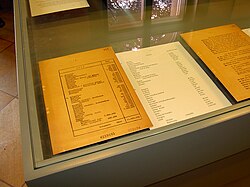
Adolf Eichmann presented a detailed list of the Jewish populations in Europe, divided into two categories: "A" countries (under direct German control) and "B" countries (allied, neutral, or at war with Germany). This list served as the blueprint for the logistics of the Holocaust.
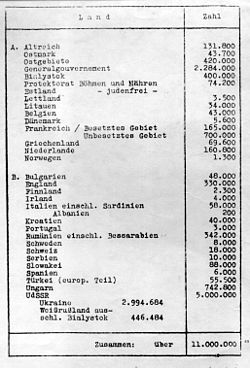
| Category/Region | Estimated Population |
|---|---|
| Category A (Direct Control) | Various |
| General Government (Poland) | 2,284,000 |
| Ostgebiete | 420,000 |
| Unoccupied France | 700,000 |
| Category B (Allied/Neutral/Enemy) | Various |
| Soviet Union (Total) | 5,000,000 |
| Hungary | 742,800 |
| Romania | 342,000 |
| England | 330,000 |
| Total Targeted | 11,000,000 |
Legacy and Memorialization
The villa where the meeting took place now serves as a memorial and museum. It houses facsimiles of the conference minutes and Eichmann's list, reminding visitors of the cold, administrative nature of the genocide.
Frequently Asked Questions
Was the decision to kill all Jews made at the Wannsee Conference?
No. Mass killings had already begun in the Soviet Union and Poland via the Einsatzgruppen before the conference. The meeting was intended to coordinate the logistics and ensure the cooperation of various government ministries in the execution of the "Final Solution."
Who was the primary organizer of the conference?
Reinhard Heydrich, the chief of the Reich Security Main Office, organized the conference under the authority granted to him by Hermann Göring.
What was the purpose of "Eichmann's List"?
The list provided a census of the Jewish populations across Europe, categorized by the level of German control over the territory, to facilitate the planning of mass deportations to extermination camps.
How did the Nuremberg Laws contribute to the Holocaust?
The Nuremberg Laws of 1935 provided the legal framework for persecution by stripping Jews of their citizenship and defining "Jewishness" based on ancestry, which allowed the state to systematically isolate and later target these populations.
What was the "Hunger Plan"?
The Hunger Plan was a Nazi policy to deliberately starve millions of people in occupied Soviet territories to divert food supplies to the German Wehrmacht and home population.