Walther Rathenau: The Industrialist and Statesman of the Weimar Republic
Walther Rathenau was a towering figure of early 20th-century Germany, embodying a rare intersection of industrial genius, intellectual depth, and political courage. As a leading industrialist, writer, and diplomat, he navigated the turbulent transition from the German Empire to the Weimar Republic—the democratic government established after World War I. His tenure as Foreign Minister was marked by bold diplomatic maneuvers and a commitment to national stability, which ultimately made him a target for the era's rising tide of ultra-nationalism.
Throughout his life, Rathenau sought to reconcile his Jewish heritage with his fierce German patriotism, advocating for the full assimilation of Jews into German society. His life was cut short by a political assassination that shocked the nation and briefly galvanized the republic's defense against extremism.
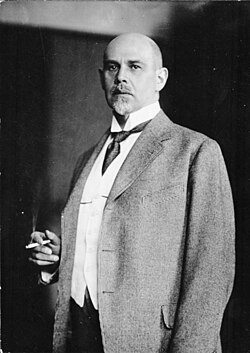
Key Facts
- Role: Served as the Foreign Minister of Germany from February 1 to June 24, 1922.
- Industrial Impact: A key leader at AEG and a primary organizer of the German war economy during WWI.
- Diplomatic Legacy: Negotiated the 1922 Treaty of Rapallo to normalize relations with Soviet Russia.
- Political Affiliation: Member of the German Democratic Party (DDP).
- Death: Assassinated on June 24, 1922, by members of the ultra-nationalist Organisation Consul.
Early Life, Education, and Industrial Rise
Born in Berlin on September 29, 1867, Rathenau was the son of Emil Rathenau. He pursued a rigorous academic path, studying physics, chemistry, and philosophy in Berlin and Strasbourg. In 1889, he earned a doctorate in physics under the guidance of August Kundt.
Rathenau's professional career began in the technical sector, working as an engineer in a Swiss aluminium factory and later managing an electro-chemical firm in Bitterfeld, where he focused on electrolysis (the process of using electric current to drive a non-spontaneous chemical reaction). By 1899, he joined the board of AEG, ascending to become one of the most influential industrialists in the German Empire. His global vision led to the establishment of power stations in Baku, Buenos Aires, and Manchester, as well as acquisitions in Madrid and East Africa.
Colonial Interests and Political Awakening
Rathenau's entry into politics was facilitated by his friendship with Bernhard Dernburg, Germany's first colonial secretary. Through Dernburg and Chancellor Bernhard von Bülow, Rathenau undertook official visits to German East Africa in 1907 and German Southwest Africa in 1908, funding these trips personally.
The Jewish Experience in Imperial Germany
Rathenau's identity as a German Jew placed him at the center of a societal conflict. During a period of escalating antisemitism, many nationalists claimed that Jews could not be truly loyal to Germany. Rathenau countered this in his 1918 writings, asserting that his patriotism was identical to that of any other German citizen.
He was a vocal proponent of radical assimilation, believing that German Jews should fully integrate into the national fabric. Despite his success and loyalty, he faced a ruling class—particularly within the Prussian Army—that was often openly antisemitic, a sentiment that would later be weaponized by the Nazi Party.
Political Career and Government Service
During World War I, Rathenau's organizational skills were utilized by the state; he headed the War Raw Materials Department from August 1914 to March 1915. Following the war, he transitioned into the politics of the Weimar Republic as a moderate liberal with the German Democratic Party (DDP).
Rathenau advocated for social equality and worker participation in company management, though he rejected the total state ownership of industry. His expertise led to several high-profile appointments:
- Socialisation Commission (1920): Examined ways to socialize parts of the economy.
- Minister of Reconstruction (1921): Appointed by Chancellor Joseph Wirth, he worked on reparations and concluded the Wiesbaden Agreement with France.
- Foreign Minister (1922): Tasked with navigating Germany's return to the international stage.
The Treaty of Rapallo and Diplomatic Tension
As Foreign Minister, Rathenau pursued a "fulfilment policy," arguing that Germany should make a good-faith effort to meet the obligations of the Treaty of Versailles to eventually negotiate better terms. However, his most controversial move was the 1922 Treaty of Rapallo. This agreement normalized relations and strengthened economic ties between Germany and Soviet Russia.
While the treaty helped Germany break its diplomatic isolation, it infuriated right-wing nationalists. These groups, including the early Nazi Party, accused Rathenau of being part of a "Jewish-communist conspiracy," labeling him an "Elder of Zion."
Assassination and the Struggle for Democracy
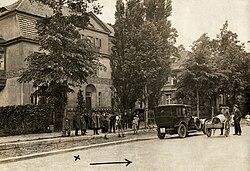
On June 24, 1922, while being driven to the Foreign Office in Berlin, Rathenau was ambushed by members of the Organisation Consul, an ultra-nationalist group. Erwin Kern opened fire with a submachine gun, and Hermann Fischer threw a hand grenade into the vehicle. Rathenau was killed almost instantly.
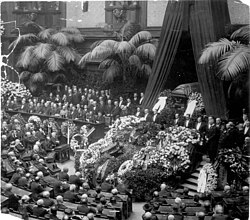
The assassination sparked national mourning and widespread protests against counter-revolutionary terrorism. In response, the government passed the Law for the Protection of the Republic on July 22, 1922, which created special courts for political violence and allowed the state to ban extremist organizations.
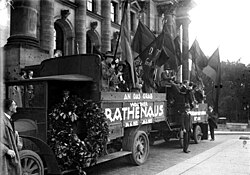
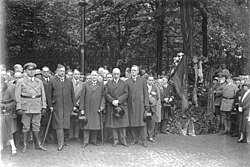
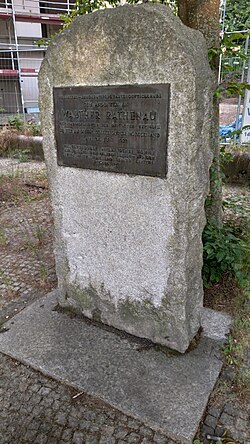
For a decade, Rathenau was revered as a martyr for democracy. However, this legacy was systematically erased after the Nazi seizure of power in 1933. The Nazis banned all commemorations, closed the Walther-Rathenau-Museum, and destroyed his monuments. In a cruel irony, the regime instead erected memorials to his assassins.
Summary of Walther Rathenau's Life
| Category | Details |
|---|---|
| Lifespan | September 29, 1867 – June 24, 1922 |
| Primary Professions | Industrialist (AEG), Politician, Writer |
| Key Government Roles | Foreign Minister, Minister of Reconstruction |
| Major Achievement | Treaty of Rapallo (1922) |
| Political Party | German Democratic Party (DDP) |
| Cause of Death | Assassination by Organisation Consul |
Frequently Asked Questions
What was the significance of the Treaty of Rapallo?
The Treaty of Rapallo (1922) normalized diplomatic and economic relations between Germany and Soviet Russia. It allowed Germany to return to the international diplomatic stage, although it simultaneously isolated Germany from Western powers.
Why was Walther Rathenau targeted by nationalists?
Nationalists targeted Rathenau due to his Jewish heritage and his political actions. His insistence on fulfilling the Treaty of Versailles and his agreement with Soviet Russia led right-wing groups to falsely brand him as part of a Jewish-communist conspiracy.
How did the Weimar Republic respond to his assassination?
The government responded by enacting the Law for the Protection of the Republic in July 1922, which established severe penalties for political murders and gave the government authority to ban extremist groups.
What happened to Rathenau's legacy after 1933?
After the Nazis came to power, all public commemorations of Rathenau were banned. His museum was closed, streets and schools named after him were renamed, and monuments to him were destroyed.
What was Rathenau's view on the role of Jews in Germany?
Rathenau was a strong advocate for the full and radical assimilation of German Jews into society, arguing that their patriotism and loyalty to Germany were equal to those of any other citizen.