German Democratic Party: The Rise and Fall of Weimar Liberalism
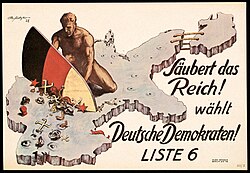
The German Democratic Party (Deutsche Demokratische Partei, or DDP) served as a cornerstone of political liberalism during the tumultuous years of the Weimar Republic. Positioned as a centrist to centre-left force, the DDP championed republicanism and social liberalism, attempting to bridge the gap between the conservative right and the socialist left in a newly democratic Germany.
Founded in the wake of the November Revolution of 1918, the party emerged from the remnants of the Progressive People's Party and the liberal wing of the National Liberal Party. Its mission was to stabilize the first pluralist-democratic state in German history, providing a voice for the educated middle class and professionals.
Key Facts
- Founded: November 20, 1918.
- Ideology: Social liberalism, republicanism, and German liberalism.
- Political Position: Centre to centre-left.
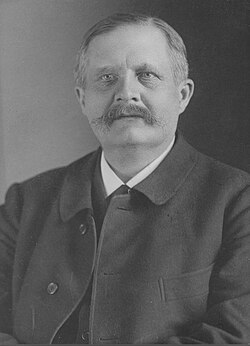
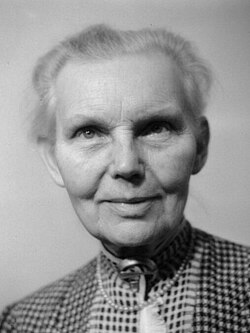
- Key Figures: Friedrich Naumann, Hugo Preuß, and Theodor Heuss.
- Fate: Merged into the German State Party (DStP) in 1930; dissolved by the Nazis in 1933.
- Support Base: Primarily educators, journalists, professionals, and Jewish Germans.
Founding and Early Success
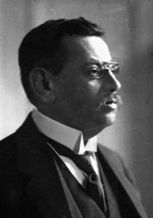
The DDP was born from a collaborative effort between intellectuals and journalists. Theodor Wolff, editor-in-chief of the Berliner Tageblatt, played a pivotal role in organizing the party and drafting its founding appeal. This appeal, published on November 16, 1918, was signed by 60 prominent figures, including the physicist Albert Einstein.
The party experienced a rapid ascent, attracting over one million members by January 1919. This growth was fueled by significant financial backing from commercial and industrial leaders, as well as organizations like the Hansabund. In the 1919 elections, the DDP secured 75 seats, becoming the third-largest party in the Weimar National Assembly.
The DDP in the Weimar Republic
Throughout the early years of the Republic, the DDP was an essential coalition partner, participating in nearly every cabinet from 1919 to 1932. Its strategic position between the Social Democratic Party (SPD) and the Centre Party helped stabilize the "Weimar Coalition," particularly within the state of Prussia.
One of the party's most significant contributions was its role as a reservoir of loyal, professionally trained civil servants. Unlike many officials inherited from the German Empire who remained monarchist or anti-democratic, DDP members provided the administrative expertise necessary to run a democratic state. For example, Wilhelm Abegg modernized the Prussian police force during his tenure as state secretary.
Decline and Internal Conflict
Despite its early influence, the DDP's popularity began to wane after 1920. Internal disagreements over the Versailles Peace Treaty led to a loss of voters to more right-wing liberal and national parties. Membership plummeted from roughly 800,000 shortly after its founding to just 117,000 by 1927.
The party also struggled with its public image. Although factually incorrect, a persistent prejudice labeled the DDP as the "party of big capital." This narrative was later weaponized by the Nazi Party, which used anti-Semitic tropes to defame the DDP as the "Jewish party," reflecting the party's strong support among Jewish Germans.
Transition to the German State Party
In July 1930, in a desperate bid to regain electoral strength, the DDP merged with the Volksnationale Reichsvereinigung (VNR), the political arm of the national liberal Young German Order. This merger caused a deep ideological rift. Left-wing members, including Ludwig Quidde and Hellmut von Gerlach, broke away to form the Radical Democratic Party.
The party formally reorganized as the German State Party (Deutsche Staatspartei, or DStP) on November 8, 1930. However, this change did not halt its decline. By the November 1932 election, the party's representation in the Reichstag had dwindled to just two seats.
The End of the Party
Following the Nazi seizure of power in 1933, the DStP became a target of Gleichschaltung (coordination)—the process by which the Nazi regime established totalitarian control over all aspects of society. After attempting to survive via a combined election list with the SPD, the party's deputies were removed from office on various charges.
The German State Party was forced into self-dissolution on June 28, 1933. Shortly thereafter, a law enacted on July 14 banned the formation of any new parties, codifying the one-party state of the Third Reich.
Summary of Electoral Performance
| Election Year | Votes | Percentage | Seats |
|---|---|---|---|
| 1919 | 5,641,825 | 18.6% | 75 |
| 1920 | 2,333,741 | 8.3% | 39 |
| May 1924 | 1,655,129 | 5.7% | 28 |
| Dec 1924 | 1,919,829 | 6.3% | 32 |
| 1928 | 1,479,374 | 4.8% | 25 |
| 1930 | 1,322,034 | 3.8% | 20 |
| July 1932 | 371,800 | 1.0% | 4 |
| Nov 1932 | 336,447 | 1.0% | 2 |
| 1933 | 334,242 | 0.9% | 5 |
Frequently Asked Questions
Who were the primary supporters of the DDP?
The party was largely supported by the educated middle class, including professionals, journalists, educators, and property owners. It also received the highest level of support from Jewish Germans compared to any other party of the era.
What was the difference between the DDP and the DVP?
While both were liberal, the DDP (German Democratic Party) was centrist to centre-left and focused on social liberalism and republicanism. The DVP (German People's Party) was right-liberal and generally more conservative.
Why did the DDP rename itself the German State Party?
The party merged with the Volksnationale Reichsvereinigung (VNR) in 1930 to attempt to broaden its electoral appeal before the Reichstag elections, leading to the formal reorganization as the Deutsche Staatspartei (DStP).
How did the Nazi regime eliminate the party?
Through the process of Gleichschaltung, the Nazis removed DStP deputies from office and pressured the party into self-dissolution on June 28, 1933, followed by a total ban on all other political parties in July 1933.
What happened to the party's youth wing?
The youth organization known as the Young Democrats (Jungdemokraten) managed to survive long after the parent party's dissolution, continuing to exist until 2018.