Robert Bosch: The Engineer Who Revolutionized Automotive Ignition
Robert Bosch was a visionary German business magnate, engineer, and inventor whose contributions to precision mechanics fundamentally altered the trajectory of the automotive industry. As the founder of Robert Bosch GmbH, he transitioned a small workshop into a global electronics powerhouse, leaving a legacy of technical innovation and complex social history.
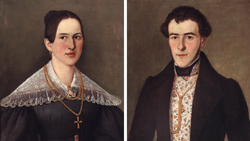
Born on September 23, 1861, in Albeck, Württemberg, Bosch grew up in the Swabian Highlands. He was one of twelve children born to Servatius Bosch, who operated a progressive farm and brewery, and Maria Margarita Dölle.
Early Education and International Experience
Bosch's journey into engineering began at the 'Realanstalt' in Ulm, where he completed an apprenticeship as a precision-instrument maker—a specialist in creating highly accurate measuring and mechanical tools. His early career was marked by a desire for diverse experience, leading him to work as a journeyman at C. & E. Fein and later at Schuckert & Co. after completing his military service in 1881.
Seeking global perspective, Bosch traveled to the United States in 1884, where he worked as an engineer under the legendary Thomas Edison and Sigmund Bergmann in New York. He later moved to London to work with Siemens Brothers before returning to Germany. On November 15, 1886, he established his own "Workshop for Precision Mechanics and Electrical Engineering" in Stuttgart.
The Breakthrough: Magneto Ignition
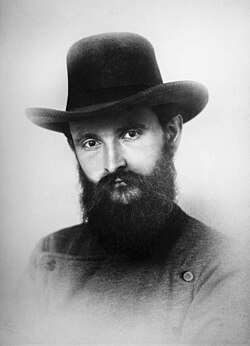
The turning point for Bosch's company came in 1887 when Gottlieb Daimler requested a device similar to the low-voltage magneto used by the Gasoline Engine Factory Deutz. A magneto is an electrical generator that produces a high-voltage spark to ignite the air-fuel mixture in an engine cylinder at the moment of maximum compression.
While Bosch initially produced these for stationary gas engines, a collaboration with Frederick Richard Simms in 1893 aimed to adapt this technology for motor vehicles. Working with Arnold Zähringer and Gottlob Honold, Bosch's team increased the device's power and spark frequency, raising the capacity from 250 rpm to 1800 rpm. Additionally, Young Rall improved the electrode by replacing enamel with an asbestos insulator.
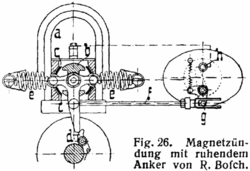
This patented innovation was successfully demonstrated on a Jules-Albert de Dion tricycle in 1898, leading to significant orders from Daimler. By 1900, Bosch's magneto ignition was powering the Daimler engines used in Zeppelins.
Global Expansion and Industrial Innovation
The success of the ignition system propelled Bosch into international markets. Through partnerships, the technology entered England as Simms-Bosch and France as the Automatic Magneto Electric Ignition Company, Ltd. By 1913, the company had established operations in America, Asia, Africa, and Australia, with 88% of its sales occurring outside of Germany.
Following World War I, Bosch continued to innovate, most notably introducing diesel fuel injection in 1927. Facing the global economic crisis of the 1920s, he implemented a rigorous program of modernization and diversification, evolving the firm from a specialized automotive supplier into a multinational electronics group.
Social Responsibility and Political Activity
Robert Bosch was a pioneer in corporate social responsibility. He was among the first German industrialists to implement the eight-hour workday and provide various social benefits to his employees. During World War I, he refused to profit from armaments contracts, instead donating millions of marks to charity, which eventually led to the founding of the Robert Bosch Hospital in 1940.
Politically, Bosch was a liberal who sought European peace. He invested significant time and money into fostering reconciliation between Germany and France, envisioning a unified European economic area to prevent future conflicts.
The Third Reich and Later Years
The rise of the Nazi regime complicated Bosch's legacy. While he had previously sought peace, the company accepted armaments contracts and utilized an estimated 20,000 forced laborers, including 1,200 concentration camp inmates who suffered brutal abuse at the Langenbielau plant. Bosch himself supported Adolf Hitler and benefited from Nazi policies, eventually being named "Pionier der Arbeit" (Pioneer of Labor) by Hitler on his 80th birthday.
In 1937, Bosch restructured his company as a private limited company. In his will, he stipulated that company earnings be allocated to charitable causes, a directive that shaped the corporate constitution still in use today. Robert Bosch died on March 12, 1942, in Stuttgart and was inducted into the Automotive Hall of Fame in 1984.
Key Facts
- Founded: Established his Stuttgart workshop on November 15, 1886.
- Major Invention: Developed the high-frequency magneto ignition for motor vehicles.
- Global Reach: By 1913, 88% of company sales were generated outside Germany.
- Technical Milestone: Introduced diesel fuel injection in 1927.
- Social Legacy: Early adopter of the eight-hour workday and founder of the Robert Bosch Hospital.
- Controversy: The company employed approximately 20,000 forced laborers during the Third Reich.
| Category | Details |
|---|---|
| Lifespan | September 23, 1861 – March 12, 1942 |
| Key Mentors | Thomas Edison, Sigmund Bergmann, Wilhelm Dietrich |
| Primary Innovation | Magneto Ignition System |
| Corporate Evolution | Automotive supplier to multinational electronics group |
| Philanthropy | Robert Bosch Hospital and charitable corporate earnings |
Frequently Asked Questions
What was Robert Bosch's most significant technical contribution?
His most significant contribution was the development and refinement of the magneto ignition system, which provided the necessary electric spark to ignite fuel in internal combustion engines, making them viable for motor vehicles and Zeppelins.
How did Robert Bosch approach employee welfare?
Bosch was a pioneer of social responsibility in German industry, introducing the eight-hour workday and other social benefits for his associates long before they became standard.
What was the company's role during World War II?
The company accepted armaments contracts from the Nazi regime and used approximately 20,000 forced laborers, including concentration camp inmates who were subjected to brutal conditions.
What happens to the profits of Robert Bosch GmbH today?
According to Robert Bosch's will and the subsequent corporate constitution of 1964, the earnings of the company are allocated to charitable causes.
Where did Robert Bosch gain his early engineering experience?
Beyond his apprenticeship in Ulm, he gained critical international experience working under Thomas Edison in New York and with Siemens Brothers in London.