Bosch: A Legacy of Engineering and Global Innovation
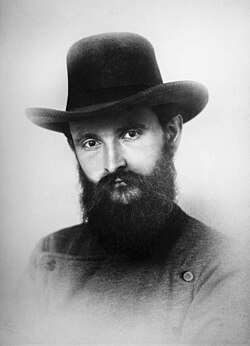
From its humble beginnings in the late 19th century to its current status as a global powerhouse, Bosch has remained at the forefront of technological advancement. Founded by Robert Bosch, the company has evolved from a specialized workshop into a diversified conglomerate, shaping the way the world moves, works, and lives through a relentless commitment to research and development.
Today, Bosch operates as a private conglomerate with a massive global footprint, specializing in everything from automotive components and power tools to cloud computing and the Internet of Things (IoT)—the network of physical objects embedded with sensors and software for data exchange.
Key Facts
- Founded: November 15, 1886, by Robert Bosch.
- Global Reach: Operates in over 60 countries with a network of 468+ subsidiaries.
- Financial Strength: Reported revenue of €90.34 billion in 2024.
- Workforce: Employs 417,859 people worldwide (2024).
- R&D Focus: Invests 9% of revenue into research and development, nearly double the industry average.
- Ownership: 94% owned by the Robert Bosch Stiftung (Foundation), with 5% held by the Bosch family.
The Evolution of an Engineering Giant
Early Foundations (1886–1920)
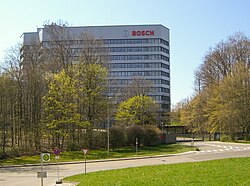
The company's growth was accelerated by the motorization of road traffic. After opening its first factory in Stuttgart in 1901, Bosch rapidly scaled its operations. By 1906, the company had produced its 100,000th magneto and demonstrated a commitment to worker welfare by introducing the eight-hour workday. The establishment of the Feuerbach plant in 1910 further expanded its capabilities, leading to the production of generators and headlights by 1914.
Diversification and Expansion (1921–1945)
During the 1920s, Bosch expanded into essential automotive technologies, introducing electric horns, windshield wipers, and direction indicators. A pivotal moment occurred in 1927 with the production of the diesel injection pump, a project personally led by Robert Bosch. The 1930s saw the company venture into consumer goods, developing its first electric drill, car radio, and electric refrigerator for private households.
Modern Business Divisions
Bosch organizes its vast portfolio into several strategic sectors to maintain agility and innovation across different markets.
Mobility and Industrial Technology
The Mobility sector remains a core pillar, though the company is currently navigating a transition in the automotive market. Meanwhile, the Industrial Technology sector, which generated roughly 7% of total sales in 2024, focuses on factory automation and plant construction. This includes the Connected Industry business unit, which specializes in Industry 4.0—the trend toward automation and data exchange in manufacturing technologies.
Consumer Goods and Energy
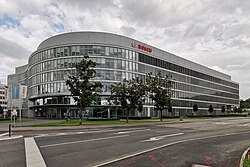
Bosch is a household name in home appliances and power tools. Through subsidiaries like BSH Hausgeräte and Bosch Thermotechnik, the company provides energy-efficient heating and cooling solutions and high-quality domestic electronics.
Healthcare and Specialized Solutions
Expanding beyond traditional engineering, Bosch Healthcare Solutions GmbH was established in 2015. This division focuses on medical technology, notably developing a rapid COVID-19 testing tool in March 2020 that provided point-of-care results within two and a half hours.
Global Presence and Future Strategy
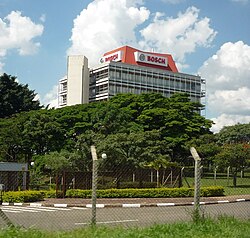
Bosch maintains a sophisticated global infrastructure, with significant operations in the Americas, Britain, and India. In China, the company employs 58,000 people and generates substantial sales, treating the region as both a critical market and a manufacturing hub.
Looking forward, Bosch is investing heavily in the future of computing. In 2022, the company announced a €3 billion investment into semiconductor chip production and R&D, including new facilities in Dresden and Reutlingen. This is complemented by the 2023 acquisition of TSI Semiconductors, a specialist in silicon carbide (SiC) power devices.
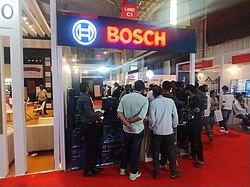
Financial and Corporate Overview
Bosch possesses a unique corporate structure. While the Robert Bosch Stiftung holds 94% of the shares, it possesses no voting rights. Instead, 93% of the voting rights are held by the Robert Bosch Industrietreuhand KG, ensuring the company is managed by industry experts and representatives of the founder's vision.
| Metric | Value |
|---|---|
| Revenue | €90.34 Billion |
| Operating Income | €2.796 Billion |
| Net Income | €1.332 Billion |
| Total Assets | €112.76 Billion |
| Total Equity | €49.99 Billion |
| Employee Count | 417,859 |
Frequently Asked Questions
Who owns the Bosch company?
The company has a unique ownership structure where the Robert Bosch Stiftung (Foundation) owns 94% of the shares but has no voting rights. The Robert Bosch Industrietreuhand KG holds 93% of the voting rights, and the descendants of Robert Bosch hold 5% of the shares and 7% of the voting rights.
What are Bosch's main product areas?
Bosch is a conglomerate producing automotive parts, power tools, security systems, home appliances, electronics, and cycling components, while also providing services in cloud computing and IoT.
How much does Bosch invest in research?
Bosch invests 9% of its total revenue into research and development, which is nearly double the industry average of 4.7%.
What is Bosch's current strategy regarding semiconductors?
Bosch is investing €3 billion into semiconductor chip production and R&D, which includes the opening of new manufacturing facilities in Germany and the acquisition of TSI Semiconductors to enhance its silicon carbide power device capabilities.
Has Bosch faced any legal challenges?
Yes, Bosch was involved in the "Dieselgate" emissions scandal. The company paid hundreds of millions of dollars in settlements and fines to US consumers and regulators for its role in developing emissions-cheating software.