Meillerwagen: The Mobile Launch System of the V-2 Rocket
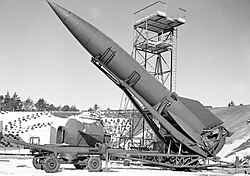
During World War II, the deployment of the V-2 rocket required more than just the missile itself; it demanded a sophisticated logistical chain to move, erect, and fuel the weapon in the field. The Meillerwagen (German for "Meiller vehicle") was the critical link in this chain. This specialized trailer served as a transport vehicle, a lifting gantry, and a service platform, allowing the V-2 to be launched from mobile positions rather than fixed, vulnerable bunkers.
Designed by the Peenemünde Army Research Center and assembled by Gollnow & Son, the Meillerwagen was a precursor to the modern transporter erector launchers (TELs) used in contemporary missile systems. Its development was part of a broader effort, codenamed Regenwurm ("Earthworm"), to transition V-2 operations from static sites to highly mobile batteries.
Key Facts
- Primary Role: Transported V-2 rockets from transloading points to launch sites and erected them vertically.
- Manufacturer: Assembled by Gollnow & Son using components from suppliers including Meiller-Kipper GmbH.
- Power Source: Used a 14 hp Volkswagen (KdF) petrol engine to drive the hydraulic lifting system.
- Mobility: Towed by a Hanomag SS-100 tractor at speeds up to 45 km/h.
- Survivors: Only three confirmed units remain today, located in Australia, the UK, and the USA.
The V-2 Launch Battery Operation
The Meillerwagen did not operate in isolation. It was part of a coordinated transport-launcher unit consisting of several specialized vehicles:
- Command Vehicles: The Sd.Kfz. 7/3 and the armored Sd.Kfz. 251 provided launch control and command.
- Tractor: A Hanomag SS-100 served as the primary towing vehicle for the Meillerwagen.
- Fuel Tankers: An Opel-Blitz T-Stoffwagen and a liquid oxygen (LOX) wagon-tanker provided the necessary propellants.
The process began at a transloading point, where a "strabo crane" transferred the rocket from a Vidalwagen (a long-distance transport trailer) to the Meillerwagen. The rocket was transported tail-first to the launch site.
Technical Setup and Erection
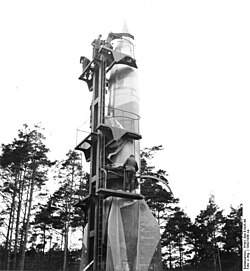
Once the Meillerwagen reached the Brennstand (firing stand), the crew removed the rocket's camouflage and rudder protection. To ensure stability during the lift, the trailer utilized two extendable A-frame outriggers with end-jacks to level the chassis.
The Hydraulic Lift System
The core of the Meillerwagen was its hydraulic lifting frame, constructed from two I-beams. This frame used a three-piston eccentric-cam pump powered by a 1,131 cc air-cooled flat-four Volkswagen engine. Two telescopic hydraulic pistons raised the rocket from a horizontal transport position to a vertical launch position.
Fueling and Service Gantry
The lifting frame doubled as a service gantry, featuring folding platforms and rungs that allowed technicians to access the rocket. It was equipped with complex piping to deliver four essential substances:
- A-Stoff: Liquid oxygen.
- B-Stoff: Ethyl alcohol.
- P-Stoff: Compressed nitrogen or air.
- T-Stoff: Hydrogen peroxide (stored in a 126-liter onboard tank).
Specifications and Design
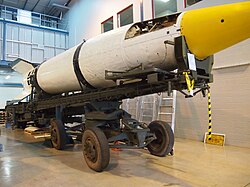
The Meillerwagen was a heavy-duty piece of engineering, utilizing a lattice frame of tubular members and a steerable front truck. Its pneumatic drum brakes were integrated with the towing vehicle's system, though it carried its own air reservoirs for precision maneuvering via hand winches at the launch site.
| Feature | Specification (Unladen) | Specification (Laden) |
|---|---|---|
| Total Length | 14.7 meters | 16.67 meters (with camouflage) |
| Total Width | 2.8 meters | 2.87 meters |
| Total Height | 3.27 meters | 4.2 meters |
| Curb Weight | 11,300 kg | 15,476 kg |
| Max Speed (Forward) | 45 km/h | 45 km/h |
| Hydraulic Engine | 14 hp Volkswagen (KdF) flat-four |
Frequently Asked Questions
Who manufactured the Meillerwagen?
While the Peenemünde Army Research Center designed the vehicle, it was assembled by the company Gollnow & Son. The name "Meillerwagen" comes from Meiller-Kipper GmbH, a Munich-based parts supplier.
How was the rocket raised to a vertical position?
The rocket was raised using a hydraulic lifting frame powered by a modified Volkswagen petrol engine. This system used telescopic pistons to transition the missile from horizontal to vertical.
What was the purpose of the outriggers?
The swing-out A-frame booms with screw jacks were used to stabilize the trailer and ensure it was perfectly level, preventing the vehicle from toppling during the erection of the heavy V-2 rocket.
How long did the launch preparation take?
According to official documents, a typical launch sequence took approximately 110 minutes, with the Meillerwagen involved in the initial dismount, the fueling of various propellants, and the final departure from the site.
Where can the Meillerwagen be seen today?
Three confirmed survivors exist: one at the Australian War Memorial (Canberra), one at the Royal Air Force Museum Cosford (UK), and one at the National Museum of the United States Air Force (Ohio).