Dwight D. EisenhowerWorld War II34th US PresidentSupreme Allied CommanderOperation Overlord

Dwight D. Eisenhower: From Five-Star General to 34th US President

Dwight D. Eisenhower: From Five-Star General to 34th US President Dwight D. Eisenhower, known affectionately as "Ike," stands as one of the most influential figures of the 20th century. H...

Dwight D. Eisenhower: From Five-Star General to 34th US President

Dwight D. Eisenhower, known affectionately as "Ike," stands as one of the most influential figures of the 20th century. His journey from a modest upbringing in Kansas to the highest ranks of the United States military and the presidency is a testament to his strategic brilliance and leadership. Whether orchestrating the liberation of Europe during World War II or navigating the complexities of the Cold War, Eisenhower's legacy is etched into the infrastructure and diplomacy of the modern world.
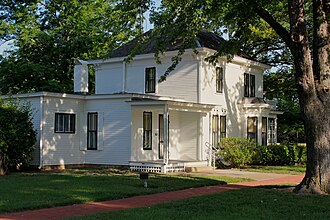
The Eisenhower family home in Abilene, Kansas

Key Facts

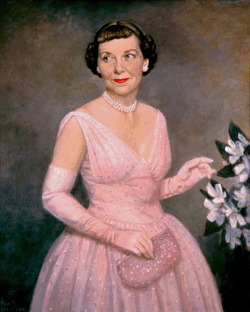
Mamie Eisenhower, painted in 1953 by Thomas E. Stephens
  • Military Rank: General of the Army.
  • War Leadership: Supreme Allied Commander during World War II and the first Supreme Allied Commander Europe (SACEUR).
  • Presidency: Served as the 34th U.S. President from 1953 to 1961.
  • Major Infrastructure: Established the Interstate Highway System.
  • Key Appointments: Appointed Earl Warren as Chief Justice of the Supreme Court.
  • Global Impact: Oversaw the creation of NASA and the "Atoms for Peace" initiative.

Early Life and Military Ascent
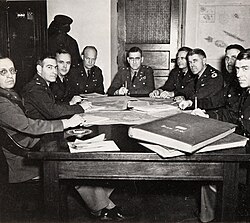
The meeting of War Plans Division, War Department General Staff in 1942

Born David Dwight Eisenhower on October 14, 1890, in Abilene, Kansas, Eisenhower's path was defined by discipline and education. He graduated from the United States Military Academy at West Point in 1915, beginning a military career that would span nearly four decades.
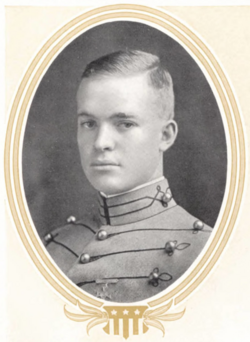
West Point yearbook photo, 1915

During the interwar period, Eisenhower served in various capacities, including a tenure in the Philippines from 1935 to 1939. His ability to manage complex logistics and coordinate between different military branches caught the attention of his superiors, setting the stage for his pivotal role in the Second World War.
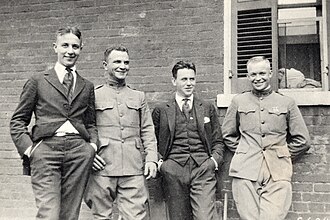
Eisenhower (far right) with friends William Stuhler, Major Brett, and Paul V. Robinson in 1919, four years after graduating from the United States Military Academy at West Point

World War II and the Liberation of Europe
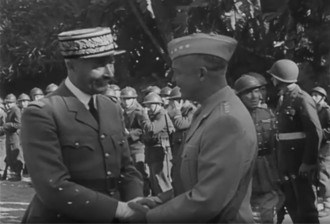
Eisenhower (right) after having been awarded the Légion d'honneur by French Civil and Military Commander-in-Chief Henri Giraud (left), May 1943

Eisenhower's rise during World War II was meteoric. He played critical roles in the North African campaign (Operation Torch) and the invasion of Italy (Operation Avalanche). By December 1943, he was appointed Supreme Commander of the Allied Expeditionary Force (SHAEF).
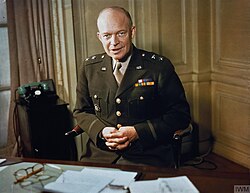
Eisenhower as a major general, 1942

His most defining achievement was the planning and execution of Operation Overlord, the Normandy landings on June 6, 1944. As the leader of the Allied forces, he coordinated the massive amphibious assault that opened the Western Front and led to the eventual liberation of Paris and the defeat of Nazi Germany.
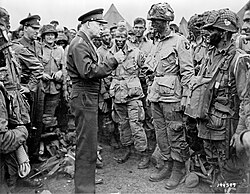
Eisenhower speaks with men of the 502nd Parachute Infantry Regiment (PIR), part of the 101st "Screaming Eagles" Airborne Division, on June 5, 1944, the day before the D-Day invasion. The officer Eisenhower is speaking to is First Lieutenant Wallace Strobel.

Following the German surrender, Eisenhower served as the military governor of the American-occupied zone of Germany from May to November 1945, where he witnessed the horrors of the Holocaust firsthand at camps such as Ohrdruf.
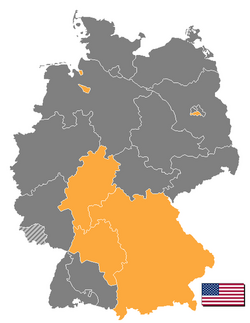
General Eisenhower served as military governor of the American zone (highlighted) in Allied-occupied Germany from May through November 1945.

Transition to Civilian Leadership

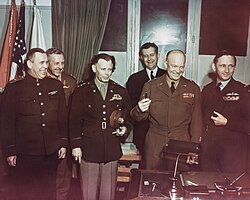
Eisenhower with Allied commanders following the signing of the German Instrument of Surrender at Reims

After the war, Eisenhower continued to serve in high-level roles, including 16th Chief of Staff of the Army and the 13th President of Columbia University. In 1951, he returned to military service as the first Supreme Allied Commander Europe (SACEUR) for NATO, the North Atlantic Treaty Organization, a military alliance formed to provide collective security against the Soviet Union.

ภาพประกอบบทความ
ภาพประกอบจากบทความต้นฉบับ

The Presidency (1953–1961)

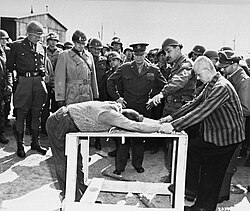
Survivors of the Ohrdruf concentration camp demonstrate torture methods used in the camp

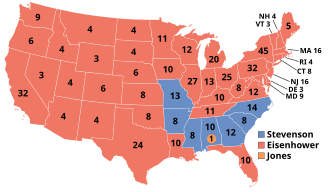
In 1952, Eisenhower entered politics as a Republican, winning the presidency in a landslide victory. His two terms were marked by a balance of domestic stability and cautious foreign policy during the early Cold War.
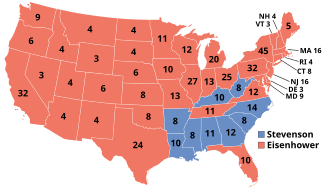
1952 electoral vote results

Domestic Achievements

Eisenhower's domestic legacy is perhaps most visible in the Interstate Highway System, a massive network of roads designed for both economic growth and national defense. He also navigated the early stages of the Civil Rights Movement, notably enforcing school integration in Little Rock.
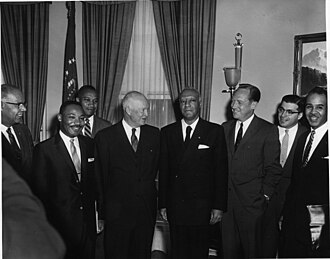
Eisenhower meets with civil rights leaders in the Oval Office, June 23, 1958Left to right: Lester Granger, Martin Luther King Jr., E. Frederic Morrow, Eisenhower, A. Philip Randolph, William P. Rogers, Rocco Siciliano, and Roy Wilkins.

Foreign Policy and the Space Race

On the global stage, Eisenhower implemented the "Eisenhower Doctrine" to protect the Middle East from communist influence. He also launched the "Atoms for Peace" program to promote the peaceful use of nuclear energy and oversaw the creation of NASA in response to the burgeoning Space Race.
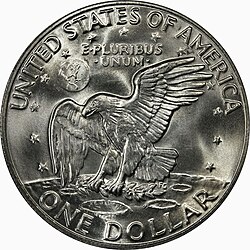
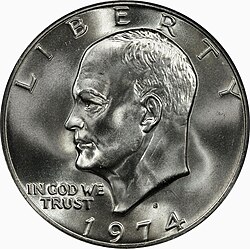
In the 1970s, the reverse of the Eisenhower dollar celebrated America's Moon landings, which began 11 years after NASA was created during Eisenhower's presidency.

Summary of Eisenhower's Career

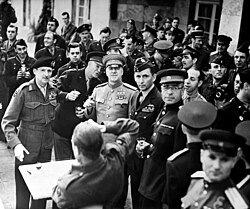
Eisenhower sharing a toast with Zhukov, Montgomery and other Allied officials, June 1945
Career Milestones of Dwight D. Eisenhower
Role Period Key Contribution/Event
Supreme Allied Commander 1943–1945 Led Operation Overlord (D-Day)
Chief of Staff of the Army 1945–1948 Post-war military reorganization
President of Columbia University 1948–1953 Academic leadership
34th US President 1953–1961 Interstate Highways, NASA, Cold War diplomacy

Final Years and Legacy

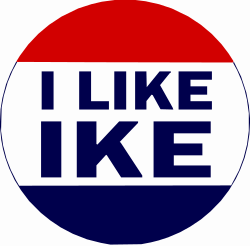
Eisenhower button from the 1952 campaign

After leaving the White House in 1961, Eisenhower retired to his home in Kansas. He passed away on March 28, 1969, at the age of 78. He is buried alongside his wife, Mamie Eisenhower, at the Dwight D. Eisenhower Presidential Library and Museum.
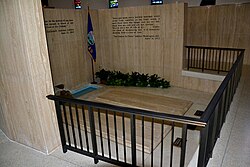
Graves of Dwight D. Eisenhower, Doud Dwight "Icky" Eisenhower and Mamie Eisenhower in Abilene, Kansas

Frequently Asked Questions
1956 electoral vote results
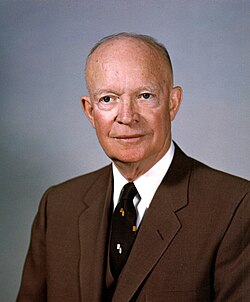
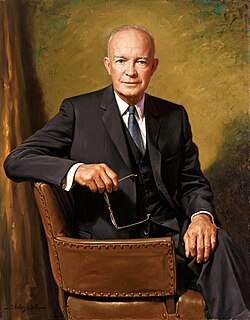
February 1959 White House portrait
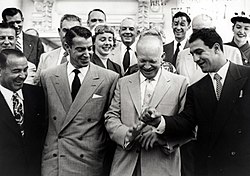
Eisenhower with heavywight champion Rocky Marciano and World Series champion Joe Dimaggio in 1953
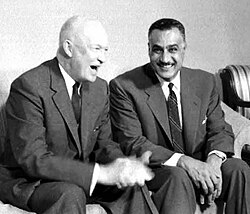
Eisenhower with Egyptian President Gamal Abdel Nasser during Nasser's visit to the United Nations in New York, September 1960
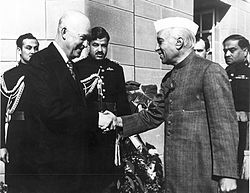
Eisenhower with Indian Prime Minister Jawaharlal Nehru
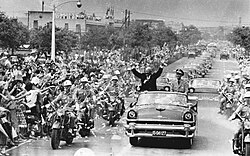
Eisenhower visits the Republic of China and its President Chiang Kai-shek in Taipei.
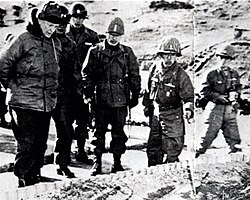
Eisenhower in Korea with General Chung Il-kwon, and Baik Seon-yup, 1952
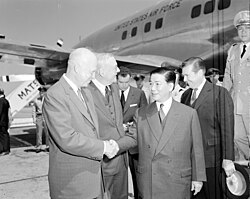
Eisenhower and Secretary of State John Foster Dulles with South Vietnamese President Ngo Dinh Diem, May 1957
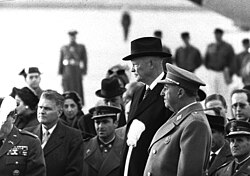
Spanish dictator Francisco Franco and Eisenhower in Madrid in 1959
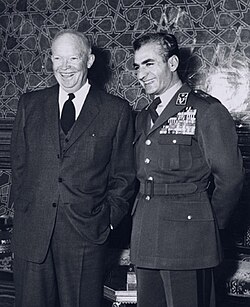
Eisenhower with the Shah of Iran, Mohammad Reza Pahlavi (1959)
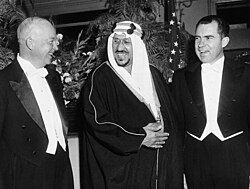
Eisenhower and Vice President Richard Nixon with King Saud of Saudi Arabia at the Mayflower Hotel in 1957
Official White House portrait of Eisenhower, c. 1960
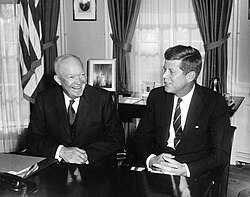
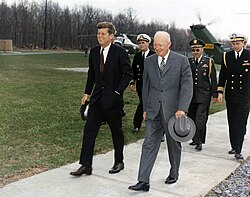
Eisenhower sharing a light moment with President-elect John F. Kennedy during their meeting in the Oval Office at White House
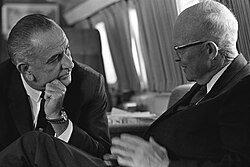
President Lyndon Johnson with Eisenhower aboard Air Force One in October 1965
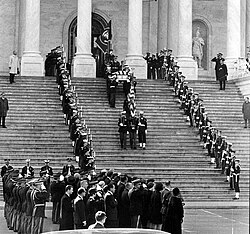
Eisenhower's funeral service
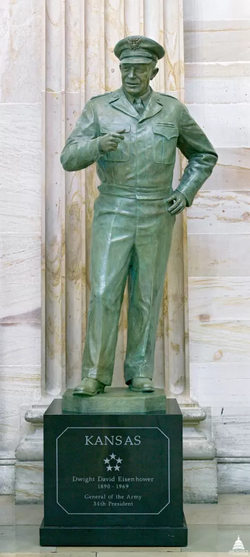
A statue of Dwight D. Eisenhower by Jim Brothers stands in the rotunda of the United States Capitol in Washington, D.C.
President John F. Kennedy meets with General Eisenhower at Camp David, April 22, 1961, three days after the failed Bay of Pigs Invasion.
The Eisenhower dollar was the official dollar coin from 1971 to 1978.
The star of the Soviet Order of Victory awarded to Eisenhower[327]
The coat of arms granted to Eisenhower upon his incorporation as a knight of the Danish Order of the Elephant in 1950.[328] The anvil represents the fact that his name is derived from the German for "iron hewer", making these an example of canting arms.

What was Eisenhower's role in World War II?

He served as the Supreme Allied Commander, overseeing the planning and execution of the D-Day invasion of Normandy and the subsequent liberation of Western Europe from Nazi control.

What is the Eisenhower Doctrine?

The Eisenhower Doctrine was a foreign policy strategy stating that a Middle Eastern country could request American economic assistance or aid from U.S. military forces if it was being threatened by armed aggression from another state.

Which major infrastructure project is he most known for?

He is most famous for establishing the Interstate Highway System, which revolutionized American travel and commerce.

Who did Eisenhower appoint as Chief Justice?

He appointed Earl Warren as Chief Justice of the Supreme Court in 1953.

How did Eisenhower contribute to the Space Race?

He oversaw the creation of NASA (National Aeronautics and Space Administration) to coordinate U.S. efforts in space exploration and research.

References

  1. For the 1946 United Nations condemnation[212] of the Francoist regime, see "Spanish Question"
  2. Redesignation to Fort Eisenhower was on October 27, 2023.[324]
  3. Ferrell, Robert H. (1990). "Eisenhower Was a Democrat" (PDF). Kansas History. 13: 134. Retrieved June 2, 2024.
  4. "The Eisenhowers". Dwight D. Eisenhower Presidential Library, Museum and Boyhood Home. Archived from the original on August 18, 2021. Retrieved October 1, 2021.
  5. "Post-presidential years". The Eisenhower Presidential Library and Museum. Archived from the original on October 23, 2013. Retrieved September 5, 2012.