Siemens: A Legacy of Global Engineering and Technological Innovation
Founded in 1847, Siemens has evolved from a small Berlin-based workshop into one of the world's most influential industrial conglomerates. For over 175 years, the company has been at the forefront of electrical engineering and digitalization, shaping the way the world communicates, moves, and manages energy. Today, headquartered in Munich, Germany, Siemens operates as a public company (traded as FWB: SIE) with a massive global footprint spanning approximately 190 countries.
Key Facts
- Founded: October 1, 1847, in Berlin, Kingdom of Prussia.
- Founder: Werner von Siemens.
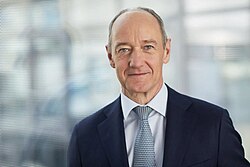
- Current CEO: Roland Busch (since 2021).
- 2024 Revenue: €75.93 billion.
- Global Workforce: 327,000 employees (2024).
- Core Divisions: Digital Industries, Smart Infrastructure, Mobility, and Healthineers.
The Evolution of an Industrial Giant
Foundations and Early Breakthroughs (1847–1933)
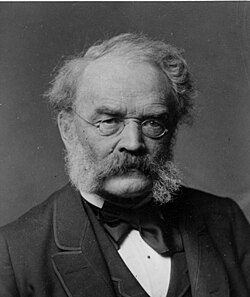
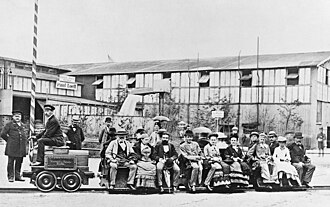
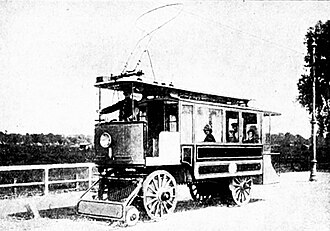
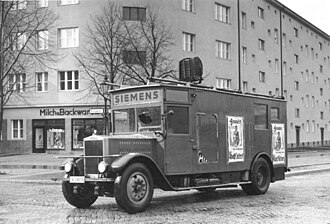
The company began with the vision of Werner von Siemens, who laid the groundwork for modern electrical engineering. Early milestones included the development of the first electric locomotive in 1879 and the creation of the Siemens & Halske Omnibus in 1899, which reached speeds of 28 km/h.
War, Conflict, and Controversy (1933–1945)
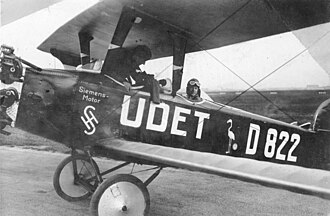
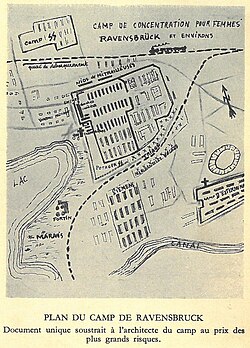
During the mid-20th century, Siemens' operations were deeply entwined with the political climate of Germany. The company produced aircraft during World War I and later, during the Nazi era, utilized forced labor. Historical records indicate the use of prisoners at the KZ Bobrek subcamp of Auschwitz and the Ravensbrück concentration camp.
![Prisoners around 1944 working at a Siemens factory in KZ Bobrek, a subcamp of Auschwitz concentration camp[21]](/images/17/80/178034f2e26829ccda56030f1a5a501790070a9fb33621f340d0b5d4669922df.jpg)
Modernization and Global Expansion (1945–Present)
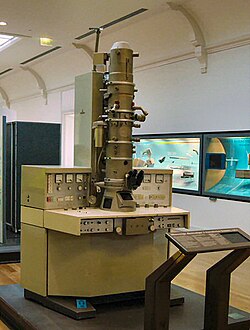
Post-war, Siemens shifted its focus toward diversified technology and global infrastructure. The company expanded into medical imaging, high-speed rail, and industrial software. While the company faced a significant worldwide bribery scandal starting in 2005, it has since restructured its corporate governance and pivoted toward a "digital-first" strategy, integrating generative AI and industrial software to enhance productivity.

Core Business Operations
Siemens operates through several specialized divisions, each targeting a critical sector of the modern economy. The company has strategically spun off certain units, such as Siemens Energy (2020) and Siemens Healthineers (2017), to allow for more focused growth.
Digital Industries and Smart Infrastructure
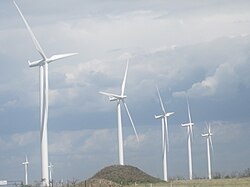
Digital Industries focuses on industrial automation and software, while Smart Infrastructure manages the intersection of energy systems and buildings. These divisions utilize high-voltage transformers, steam turbine rotors, and wind power generators to modernize global energy grids.
Siemens Mobility
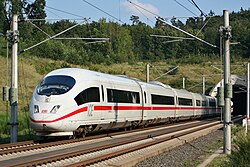
The Mobility division is a leader in transport solutions, producing everything from the Velaro high-speed trains used in Germany to the Bangkok Skytrain and diesel-electric locomotives for Amtrak.
Siemens Healthineers
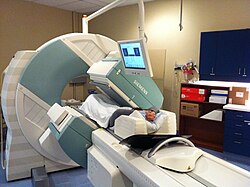
As a publicly listed company (with Siemens retaining a 75% majority stake as of 2022), Healthineers specializes in medical technology, including advanced SPECT/CT scanners and diagnostic imaging.
Financial Performance and Global Reach
Siemens maintains a diversified revenue stream, with a strong presence in Europe, the United States, and Asia. The following table summarizes the company's financial trajectory over the last decade.
| Year | Revenue (€ billion) | Net Income (€ billion) | Total Assets (€ billion) | Employees |
|---|---|---|---|---|
| 2013 | 75.8 | 4.2 | 101 | 362,000 |
| 2017 | 83.0 | 6.0 | 133 | 372,000 |
| 2020 | 57.1 | 4.0 | 123 | 293,000 |
| 2024 | 75.9 | 9.0 | 148 | 327,000 |
| 2025 (Est) | 78.9 | 9.6 | 166 | 318,000 |
The company's leadership is currently headed by CEO Roland Busch, who has guided the firm's transition toward industrial AI and software-driven productivity.
Frequently Asked Questions
Who founded Siemens and when?
Siemens was founded by Werner von Siemens on October 1, 1847, in Berlin, Kingdom of Prussia.
What are the main divisions of Siemens today?
The primary divisions are Siemens Digital Industries, Siemens Smart Infrastructure, Siemens Mobility, and Siemens Financial Services, alongside the majority-owned Siemens Healthineers.
What is the relationship between Siemens and Siemens Healthineers?
Siemens Healthineers AG was spun off as a publicly listed company in 2017, though Siemens continues to hold a 75% majority stake as of 2022.
Which regions contribute most to Siemens' business?
The largest shares of business come from Europe, CIS, Africa, and the Middle East (29.7%), followed by the United States (24.5%) and Asia/Australia (22.1%).
Has Siemens ever exited any major business lines?
Yes, Siemens has divested several operations over time, including Siemens Mobile (2005), Osram (2013), and Siemens Energy (2020).