W. C. Handy: The Father of the Blues
William Christopher Handy was more than just a musician; he was a pivotal figure in American music history. Known widely as the Father of the Blues, Handy did not invent the blues genre, but he was the first to transcribe and publish it. By doing so, he transformed the blues from a regional folk style—specifically the Delta blues of the Mississippi Delta—into a globally recognized musical form.
A prolific composer, bandleader, and trumpet player, Handy's work bridged the gap between oral tradition and formal notation, allowing the soulful sounds of the American South to reach a massive international audience.

Key Facts
- Full Name: William Christopher Handy
- Known As: Father of the Blues
- Primary Instrument: Trumpet
- Key Contributions: First to publish music in the blues form; popularized the 12-bar blues structure.
- Famous Works: "The Memphis Blues" and "Saint Louis Blues."
- Active Years: 1893–1948
Early Life and Musical Foundations
Born on November 16, 1873, in Florence, Alabama, W. C. Handy was the son of Charles Barnard Handy, a pastor, and Elizabeth Brewer. He grew up in a log cabin built by his grandfather, William Wise Handy, who had become an African Methodist Episcopal minister following the Emancipation Proclamation.
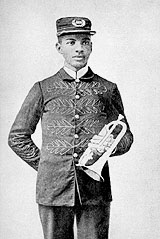
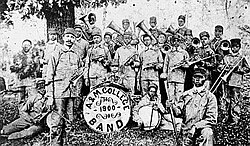
Handy's early career was marked by a tension between formal music education and the raw, expressive sounds of the street. In 1900, he joined the faculty of the State Agricultural and Mechanical College for Negroes (now Alabama A&M University) in Huntsville. However, he found the college's strict emphasis on European classical music stifling and felt underpaid, eventually returning to the more lucrative world of touring with minstrel groups.
The Evolution of the Blues Style
The turning point in Handy's musical development occurred in 1903 while he was the director of a black band in Clarksdale, Mississippi. While waiting for a train in Tutwiler, Mississippi, Handy encountered a man playing a steel guitar using a knife as a slide (a technique where an object is slid across the strings to create a gliding pitch). This experience, along with other formative encounters in the Delta, deeply influenced his compositional style.
The Rise of "The Memphis Blues"
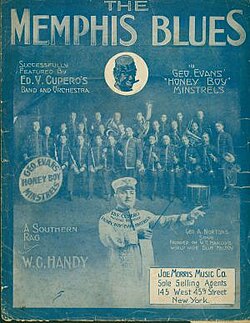
In 1909, Handy moved his band to Memphis, Tennessee, where they became staples of the legendary Beale Street music scene. During this time, he wrote a campaign song for mayoral candidate Edward Crump. He later refined this tune into "The Memphis Blues," published in 1912. This piece introduced the 12-bar blues—a standard musical structure consisting of 12 measures—to a wide audience and is credited as an inspiration for the foxtrot dance.
Global Success and "Saint Louis Blues"
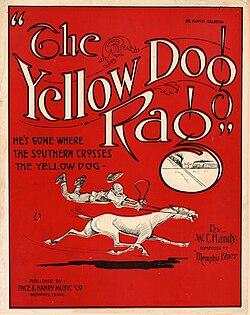
Handy's popularity soared with the 1914 release of "Saint Louis Blues," a composition so influential it was dubbed "the jazzman's Hamlet." His success continued through the 1920s; in 1919, a recording of "Yellow Dog Blues" by Joe Smith became a massive hit, selling hundreds of thousands of copies.
Business Ventures and Later Years
Beyond composing, Handy was a savvy entrepreneur. He operated a family-owned publishing company that released his own works—including over 150 sacred compositions and 60 blues pieces—as well as works by other Black composers. He also founded the Handy Record Company in New York City.
In 1929, Handy collaborated with director Dudley Murphy on an RCA motion picture based on "Saint Louis Blues," starring the legendary singer Bessie Smith. He also sought to document the genre's history, publishing Blues: An Anthology in 1926, which analyzed the blues as an integral part of American history.
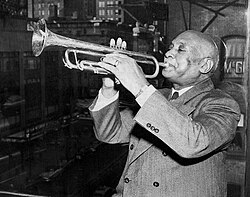
Handy's later years were marked by personal challenges. An accidental fall from a subway platform in 1943 left him blind. He eventually moved to Yonkers, New York, where he was supported by his second wife, Irma Louise Logan. He suffered a stroke in 1955 and began using a wheelchair, but remained a celebrated figure until his death from bronchial pneumonia on March 28, 1958.
Legacy and Honors
W. C. Handy's impact on music is immortalized in several ways. In Memphis, Handy Park was opened in 1931 on Beale Street, later featuring a bronze statue of the composer.
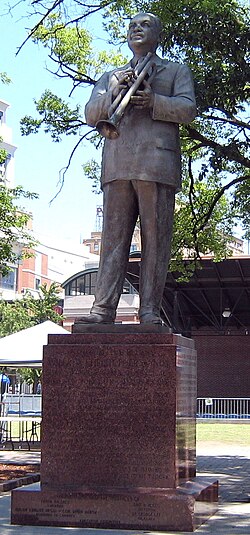
He was inducted into both the Alabama Jazz Hall of Fame (1985) and the Alabama Music Hall of Fame (1993). In 2003, the United States Senate declared the "Year of the Blues" to commemorate the centennial of Handy's early blues compositions.
| Category | Details |
|---|---|
| Birth/Death | Nov 16, 1873 – March 28, 1958 |
| Key Locations | Florence (AL), Clarksdale (MS), Memphis (TN), New York City (NY) |
| Major Works | "The Memphis Blues", "Saint Louis Blues", "Yellow Dog Blues" |
| Musical Legacy | Standardized the 12-bar blues; published early blues music |
| Honors | Alabama Music Hall of Fame, US Senate "Year of the Blues" (2003) |
Frequently Asked Questions
Did W. C. Handy invent the blues?
No, Handy did not create the blues genre. He encountered the style as a regional folk music (Delta blues) and was one of the first to transcribe and publish it, which brought the music to a wider, mainstream audience.
What is the 12-bar blues?
The 12-bar blues is a musical structure consisting of 12 measures (bars) that forms the foundation of most blues and early jazz music. Handy's publication of "The Memphis Blues" helped popularize this specific form.
What was the significance of Beale Street in Handy's career?
Beale Street in Memphis, Tennessee, was the hub where Handy and his band performed in clubs, and it served as the inspiration and setting for some of his most famous compositions, including "The Memphis Blues."
How did Handy contribute to the documentation of the blues?
Handy wrote several books, including his autobiography Father of the Blues and Blues: An Anthology, which attempted to record, analyze, and describe the blues as a vital part of the history of the American South.
What happened to W. C. Handy in his later years?
Handy became blind following a subway accident in 1943 and suffered a stroke in 1955. He spent his final years in Yonkers, New York, where he remained a highly respected figure in the music community until his death in 1958.