Blues Music: History, Evolution, and Global Influence
The blues is more than just a musical genre; it is a profound expression of the human experience. Emerging from the deep South of the United States, it blends the sorrow of oppression with the resilience of the human spirit. While often associated with misery, the blues also embraces humor, raunchiness, and an irrepressible drive for improvisation.
From its roots in work songs and spirituals to its massive influence on rock and roll and hip-hop, the blues has shaped the landscape of modern global music. By blending traditional African rhythms with Western harmonic structures, it created a universal language of emotion.
Key Facts
- Origins: Developed around 1890 from African-American work songs, spirituals, and folk music.
- Core Structure: While early forms were flexible, the 12-bar blues became the commercial standard.
- Key Elements: Characterized by the use of blue notes (flattened notes) and a call-and-response pattern.
- Global Reach: Influenced nearly every major modern genre, including jazz, R&B, soul, and rock.
- Cultural Impact: Once stigmatized as "the devil's music," it is now celebrated as a cornerstone of American art.
The Origins and Evolution of the Blues
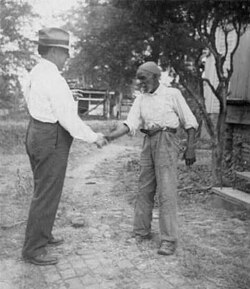
The blues emerged in the late 19th century, likely around 1890. Because of systemic racial discrimination and low literacy rates among rural African Americans at the time, the earliest years of the genre were poorly documented. It grew organically from a mixture of spirituals, folk music, and the rhythmic work songs used in fields and labor camps.
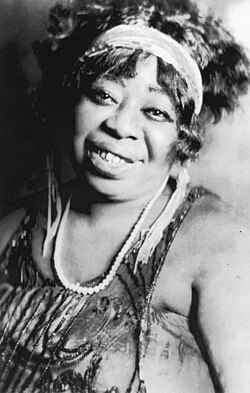
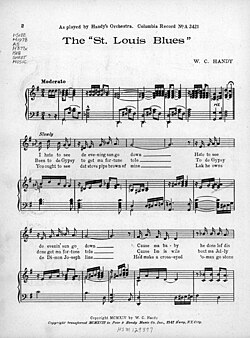
By the early 20th century, the music began to move from oral tradition to published form. Hart Wand's "Dallas Blues" and W.C. Handy's "The Memphis Blues" were both published in 1912. The transition to recording began in 1920 when Mamie Smith recorded Perry Bradford's "Crazy Blues," marking the first recording by an African-American singer.
From Folk to Standardized Form
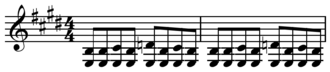
Early blues was not governed by a strict set of rules. Folklorists like Howard W. Odum noted that songs from 1908–1910 featured flexible stanzaic forms and freely repeated verses. However, as the music entered the commercial recording era, it became more standardized, leading to the widespread adoption of the 12-bar blues chord progression (typically utilizing the I, IV, and V chords).

Regional Styles and Subgenres
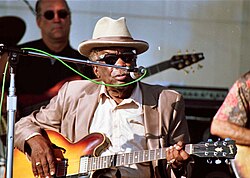
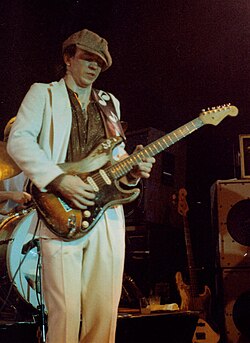
The blues is a diverse tapestry of regional sounds, each reflecting the environment and culture of its birthplace. The Delta blues of Mississippi is perhaps the most famous, characterized by raw, acoustic guitar and intense vocals. As musicians migrated to cities, this evolved into Chicago blues, which introduced electric amplification to cut through the noise of urban clubs.

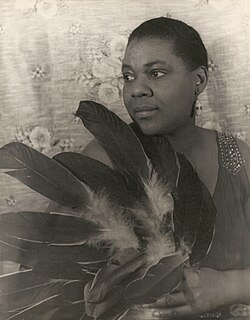
Other notable regional scenes include the Piedmont blues of the East Coast, the Texas blues known for its distinct guitar style, and the swamp blues of Louisiana. These regional variations branched into numerous subgenres, including boogie-woogie, jump blues, and the classic female blues of the 1920s.

The Influence of Blues on Modern Music
The blues served as the foundational DNA for a vast array of musical styles. In the 1930s, the influence of spiritual singing and early country blues helped popularize Gospel music. By the 1950s, artists like Ray Charles and Sam Cooke merged gospel and blues to create soul music.
The trajectory of the blues can be traced through the following derivative forms:
- Jazz and Ragtime: Early intersections of blues harmony and syncopation.
- Rock and Roll: A direct descendant of electric blues and jump blues.
- R&B and Hip-Hop: Funk music of the 1970s, influenced by soul and blues, acted as a precursor to contemporary R&B and hip-hop.
- Psychedelic and Acid Rock: Experimental 1960s rock that heavily utilized blues scales.
![Koko Taylor, known as the "Queen of the Blues,"[134][135] was well known for her raspy, strong vocals.[136][137][138]](/images/60/f6/60f66901d1e15a4af96ee99a433730029ea88597b13995614ef68cef6cac6b65.jpg)
Blues in Popular Culture and the Modern Era
For decades, the blues faced social stigma. In the early 20th century, it was often dismissed as disreputable or even labeled "the devil's music." This association was sometimes reinforced by lyrics and the folklore surrounding figures like Robert Johnson, who legend says sold his soul at a crossroads.
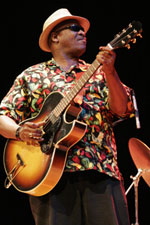
The 1960s and 70s saw a major blues revival. Artists like Taj Mahal brought acoustic blues back into the spotlight, notably through the 1972 film Sounder. In the 1980s and 90s, the genre expanded further with the rise of blues societies and international festivals.
![Italian singer Zucchero is credited as the "Father of Italian Blues", and is among the few European blues artists who still enjoy international success.[147]](/images/c5/fb/c5fba789bdbeeeeb600aa7233c8a3ae1e7d6b0365823fa276f1d836ca158a15a.jpg)
![Duke Ellington straddled the big band and bebop genres. Ellington extensively used the blues form.[159]](/images/be/90/be903fc21c9f95838da520518b30954bf8799d4a89ef4b25e87761d3409b1da4.jpg)
![1982 photograph of Dan Aykroyd, writer and cast member of The Blues Brothers film.[167]](/images/5d/4a/5d4ab6dd232c6883c3a615af2a446b598b80a65ff2985e8d19ffeb15c1e898ce.jpg)
Despite its longevity, the digital age brought new challenges. The rise of multi-track recording and high-cost video production in the 1990s sometimes clashed with the spontaneity and improvisation that define the heart of the blues.
Summary of Blues Evolution
| Era/Origin | Primary Influence/Style | Resulting Genres |
|---|---|---|
| Late 19th Century | Work songs, Spirituals, Folk | Country Blues, Delta Blues |
| Early 20th Century | Commercial Recording, Vaudeville | Classic Female Blues, Ragtime |
| Mid 20th Century | Electric Amplification, Urban Migration | Chicago Blues, Jump Blues, Rock and Roll |
| Late 20th Century | Soul, Funk, Psychedelia | Soul Blues, Hip-Hop, Contemporary R&B |
Frequently Asked Questions
What are "blue notes"?
Blue notes are notes that are sung or played at a slightly lower pitch than that of the major scale for expressive purposes, typically the flattened third, fifth, or seventh.
What is the 12-bar blues?
The 12-bar blues is a standardized musical structure consisting of 12 measures (bars) that follow a specific chord progression, usually involving the I, IV, and V chords of the key.
Why was the blues called "the devil's music"?
Due to its association with marginalized communities, its often raunchy or rebellious lyrics, and folklore regarding deals with the devil, the genre was viewed as disreputable by some conservative audiences in the early 20th century.
How did the blues influence rock and roll?
Rock and roll evolved directly from the fusion of electric blues, jump blues, and gospel, adopting the blues' rhythmic drive, chord structures, and emphasis on the electric guitar.
Who are some of the most influential blues artists?
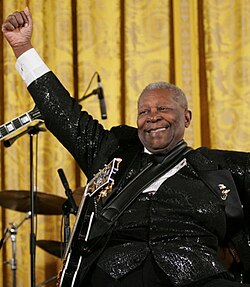
Key figures include early pioneers like Ma Rainey and Bessie Smith, guitar legends such as B.B. King and Robert Johnson, and modern revivalists like Taj Mahal.