Contemporary Folk Music: The Evolution of the Second Folk Revival
While the first wave of folk music was deeply rooted in Romantic nationalism and art music, the second folk revival of the later 20th century transformed the genre into a powerhouse of popular music. This era moved folk from traditional preservation into the mainstream, utilizing concerts, professional recordings, and broadcasting to reach global audiences. This movement birthed the "contemporary folk music" we recognize today—a genre that balances traditional roots with modern innovation.
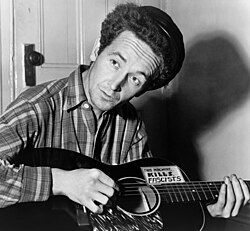
Key Facts
- Origins: Emerged from American, English, Appalachian, and Celtic traditions.
- Core Era: The second revival gained significant momentum from the 1940s through the 1960s.
- Key Figures: Woody Guthrie, Pete Seeger, Bob Dylan, and Joan Baez.
- Evolution: Transitioned from pure traditionalism to fusion genres like folk rock and country folk.
- Global Impact: Spurred major musical waves in the UK and Canada.
The Pioneers of the Revival
The foundations of the contemporary folk movement were laid in the 1930s and 1940s. Woody Guthrie was a seminal figure, performing traditional songs while composing his own original works. He was closely followed by Pete Seeger, a collector and performer who became a central pillar of the movement.
As the 1950s progressed, the genre saw increasing commercialization. Artists like Jimmie Rodgers, Burl Ives, and Harry Belafonte gained popularity, followed by the massive success of the Kingston Trio. By 1958, the hit "Tom Dooley" signaled a new era of commercial folk. The movement was further supported by media such as the Hootenanny television series and specialized magazines like Sing Out! and Broadside.
The British and Canadian Waves
The revival was not confined to the United States. In the UK, the meeting of American folklorist Alan Lomax with British musicians A. L. 'Bert' Lloyd and Ewan MacColl helped inaugurate the second British folk revival. This era produced legendary acts such as Fairport Convention and Pentangle.
Canada experienced its own profound folk wave, producing internationally renowned artists like Neil Young, Joni Mitchell, Leonard Cohen, and Gordon Lightfoot. The transition from rural country-folk to urban folk clubs was bridged by influential programs like Don Messer's Jubilee, which helped launch the careers of singers like Stompin' Tom Connors.
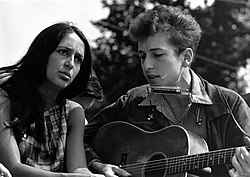
The 1960s: Expansion and Protest Music
The mid-1960s through the early 1970s marked a period of rapid diversification. Driven by massive political and counterculture shifts, folk music became synonymous with protest music—songs characterized by topical political themes. This era saw the rise of the "singer-songwriter" and the emergence of fusion genres.
Greenwich Village in New York served as a creative crucible. A pivotal moment in musical history occurred when Bob Dylan integrated electric instruments, effectively inaugurating folk rock and country rock. During this time, established performers like Joan Baez, Judy Collins, and Peter, Paul and Mary continued to evolve, while new artists like Joni Mitchell and Neil Young redefined the genre's boundaries.
Specialized Subgenres and Modern Iterations
As folk music matured, it branched into numerous specialized styles:
- Country Folk: A genre that re-introduced instruments like the mandolin, banjo, and fiddle into a contemplative, lyric-focused setting.
- Folktronica: An electronic fusion that blends traditional instruments like the violin and harmonica with techno and house elements.
- Folk Metal: A heavy metal subgenre that incorporates folk interludes.
- Indie Folk and Folk Rock: Modern evolutions that continue to blend acoustic sensibilities with contemporary production.
Summary of Folk Music Evolution
| Era | Primary Characteristics | Key Artists/Influences |
|---|---|---|
| 1930s–1940s | Traditional songs and original compositions | Woody Guthrie, Pete Seeger |
| 1950s | Commercialization and folk clubs | The Kingston Trio, Harry Belafonte |
| 1960s–Early 1970s | Protest music and folk-rock fusion | Bob Dylan, Joan Baez, Joni Mitchell |
| 1970s–Present | Singer-songwriter era and diverse subgenres | John Prine, Mumford & Sons, Brandi Carlile |
Frequently Asked Questions
What is the difference between the first and second folk revivals?
The first revival was primarily focused on Romantic nationalism and its influence on art music. The second revival, occurring in the later 20th century, created a new genre of popular music marketed through mass media like recordings and broadcasting.
What defines "protest music" in the folk genre?
Protest music refers to folk songs that feature topical political themes, often used to reflect the social and political changes of the 1960s and 1970s.
How did folk rock originate?
Folk rock emerged from the evolution of established folk performers, most notably through Bob Dylan's use of electric instruments, which helped bridge the gap between folk and rock music.
What instruments are typical in country folk?
Country folk often utilizes a mix of acoustic and traditional instruments, including the guitar, mandolin, banjo, fiddle, harmonica, and pedal steel guitar.
What is folktronica?
Folktronica is a fusion genre that incorporates traditional instruments, such as the violin, with electronic elements like techno and house music.