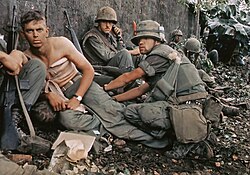
Vietnam WarCold WarNorth VietnamSouth VietnamViet Cong

Vietnam War: A Comprehensive History of Conflict and Reunification

Vietnam War: A Comprehensive History of Conflict and Reunification The Vietnam War was a pivotal conflict of the Cold War era, spanning roughly from 1955 to April 30, 1975. What began as ...

Vietnam War: A Comprehensive History of Conflict and Reunification

The Vietnam War was a pivotal conflict of the Cold War era, spanning roughly from 1955 to April 30, 1975. What began as a struggle for independence and a civil war between the communist North and the anti-communist South evolved into a global geopolitical flashpoint, drawing in superpowers and their allies in a brutal war of attrition.

The conflict was characterized by a clash of ideologies, guerrilla warfare, and massive aerial bombardments, ultimately resulting in the reunification of the country under a socialist government.
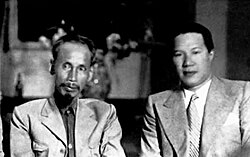
Bảo Đại (right) as the "supreme advisor" to the government of the Democratic Republic of Vietnam led by president Ho Chi Minh (left), September 1945.

Key Facts

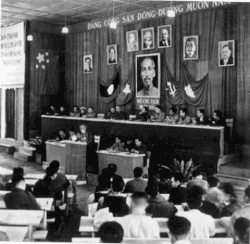
Second Congress of the ICP, 1951
  • Duration: Approximately 1955 to April 30, 1975.
  • Outcome: North Vietnamese victory and the reunification of Vietnam into the Socialist Republic of Vietnam in 1976.
  • Primary Belligerents: North Vietnam (supported by the Soviet Union, China, and North Korea) vs. South Vietnam (supported by the United States, South Korea, Australia, and others).
  • Total Estimated Deaths: Between 1.3 million and 3.4 million people.
  • US Financial Cost: Approximately $135 billion (roughly $1 trillion in 2015 dollars).

Origins and the Path to War
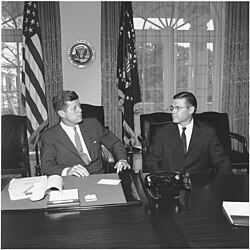
President Kennedy meeting with Secretary of Defense McNamara, in June 1962

The roots of the conflict lie in the First Indochina War and the Japanese occupation during World War II. Following the defeat of the French at the Battle of Dien Bien Phu, the 1954 Geneva Conference attempted to settle the region's future.
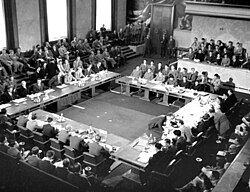
The 1954 Geneva Conference

The conference resulted in a temporary division of the country. North Vietnam, led by Hồ Chí Minh, established a communist state, while the South became the Republic of Vietnam, initially led by Ngô Đình Diệm. This division was viewed by many as a temporary measure, but it soon became a permanent ideological frontier.
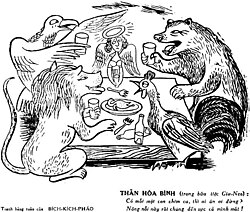
Caricature in a periodical criticizing the division of Vietnam by foreign powers at Geneva

The Diệm Era and Early Insurgency (1954–1963)

Under President Ngô Đình Diệm, South Vietnam faced growing internal instability. An insurgency grew in the South, supported by North Vietnamese involvement and the formation of the Viet Cong (the National Liberation Front), a guerrilla force dedicated to overthrowing the Saigon government.
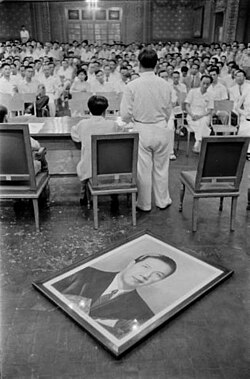
Anti-Bảo Đại revolutionists of the State of Vietnam at city hall, Saigon, May 1955.

The United States, fearing the "domino theory"—the idea that if one country fell to communism, others would follow—began escalating its support. President John F. Kennedy increased military aid and advisors to stabilize the Diệm regime, but internal unrest eventually led to Diệm's ousting and assassination in 1963.
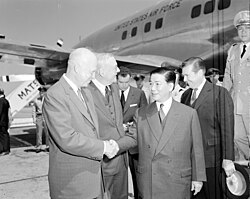
President Dwight D. Eisenhower and Secretary of State John Foster Dulles greet President Ngô Đình Diệm of South Vietnam in Washington, 8 May 1957

US Escalation and the Ground War

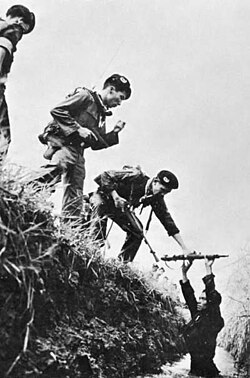
ARVN forces capture a Viet Cong

Following the Gulf of Tonkin incident, President Lyndon B. Johnson significantly expanded US military involvement. This period saw the transition from an advisory role to a full-scale American ground war.
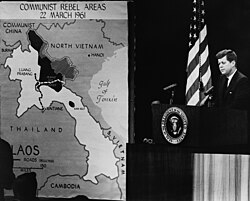
President Kennedy's news conference of 23 March 1961

The US employed a strategy of "search and destroy" missions and massive aerial campaigns, such as Operation Rolling Thunder, which dropped thousands of tons of bombs on North Vietnam.
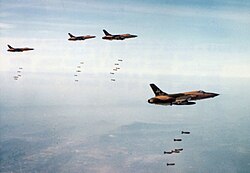
Republic F-105D fighter-bombers of the US Air Force drop 750 pound bombs during Operation Rolling Thunder

The Tet Offensive and Turning Points

In 1968, the North Vietnamese and Viet Cong launched the Tet Offensive, a massive coordinated surprise attack on cities across South Vietnam. While a military failure for the communists, it was a psychological victory, as it revealed to the American public that the war was far from over, leading to a collapse in domestic morale.
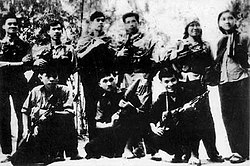
Viet Cong before departing to participate in the Tet Offensive around Saigon-Gia Dinh

In response, President Richard Nixon introduced Vietnamization, a policy aimed at transferring the burden of combat to the South Vietnamese Army (ARVN) while gradually withdrawing US troops.
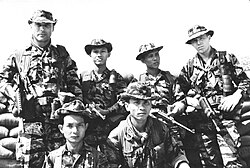
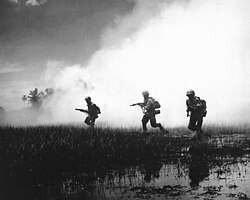
ARVN and US Special Forces, 1968

Warfare, Atrocities, and Human Cost

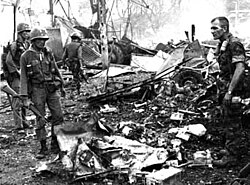
ARVN Forces and a US Advisor inspect a downed helicopter, Battle of Dong Xoai, June 1965

The war was fought with a mix of conventional battles and guerrilla tactics. The North utilized the Ho Chi Minh Trail, a complex network of paths through Laos and Cambodia, to transport supplies and troops.
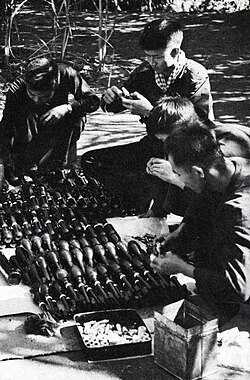
Guerrillas assemble shells and rockets delivered along the Ho Chi Minh Trail.

The conflict was marked by severe human suffering. The US used chemical defoliants, including Agent Orange, to strip forest cover and destroy crops, leading to long-term health crises and birth defects.
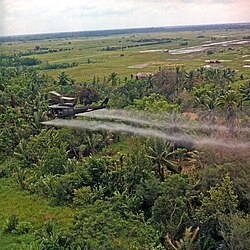
US helicopter spraying chemical defoliants in the Mekong Delta, South Vietnam, 1969

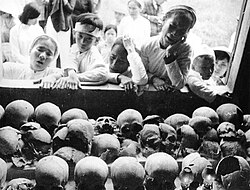
Both sides were accused of war crimes. Notable atrocities included the My Lai massacre by US troops and the Huế massacre by communist forces.
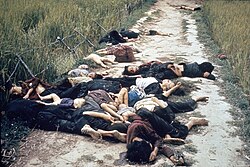
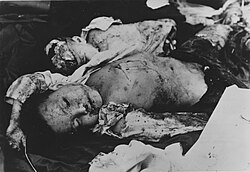
Victims of the My Lai massacre

Mourning the remains of victims discovered at Đá Mài Creek in 1969, one year after the Huế massacre

The Final Campaigns and Fall of Saigon
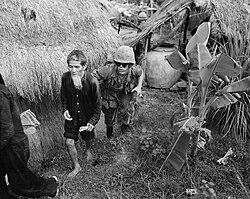
A Marine from 1st Battalion, 3rd Marines, moves a suspected Viet Cong during a search and clear operation held by the battalion 15 miles (24 km) west of Da Nang Air Base, 1965.

Despite the 1972 Easter Offensive and the subsequent Paris Peace Accords, fighting continued. By 1975, the US had fully withdrawn its combat forces, leaving the ARVN to defend the South.
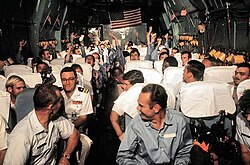
American POWs recently released from North Vietnamese prison camps, 1973

The North launched a final, massive offensive in early 1975. After the capture of Hue and the battle of Xuân Lộc, the North Vietnamese People's Army (PAVN) entered Saigon on April 30, 1975.
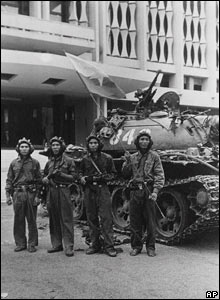
Victorious PAVN troops at the Presidential Palace, Saigon

The fall of the city marked the end of the war and the beginning of the process to unify the North and South into a single socialist state.

Summary of Conflict Data
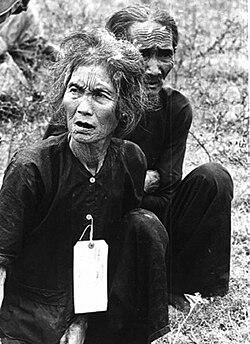
Peasants suspected of being Viet Cong under detention of US Army, 1966
Vietnam War Statistical Overview
Category North Vietnam / Viet Cong / Allies South Vietnam / US / Allies
Peak Military Strength ~860,000 (1967) ~1,420,000 (1968)
Military Deaths ~1,100,000 (Total) ~392,369 (Non-Indochinese) + 313,000 (SVN)
Civilian Deaths 30,000 – 182,000 (North) 195,000 – 430,000 (South)
Key Leaders Hồ Chí Minh, Lê Duẩn Ngô Đình Diệm, Lyndon B. Johnson

Frequently Asked Questions
ARVN forces assault a stronghold in the Mekong Delta
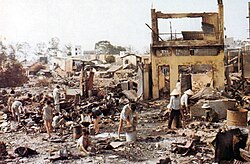
The ruins of a section of Saigon, in the Cholon neighborhood, following fierce fighting between ARVN forces and Viet Cong Main Force battalions
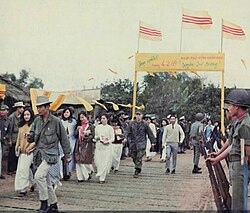
A chiêu hồi ('open arms') center for defectors from communist forces to the Republic of Vietnam, 1969.
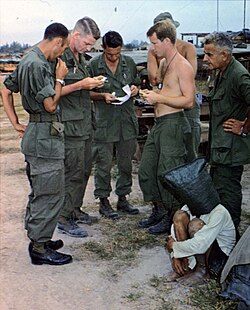
An alleged Viet Cong captured during an attack on an American outpost near the Cambodian border is interrogated.
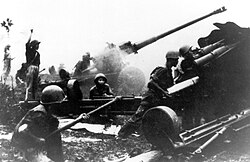
PAVN artillery bombards ARVN positions near Kon Tum. 1972.
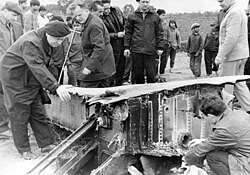
Soviet advisers inspecting the debris of a B-52 downed in the vicinity of Hanoi
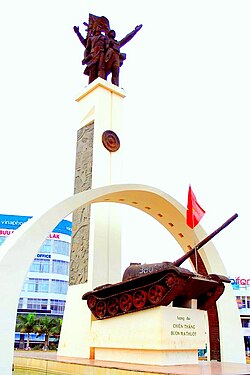
Memorial commemorating the 1974 Buon Me Thuot campaign, depicting a Montagnard of the Central Highlands, a NVA soldier and a T-54 tank
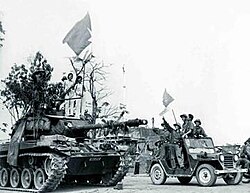
The capture of Hue, March 1975
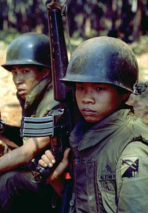
South Vietnamese soldiers during the battle of Xuân Lộc, April 1975
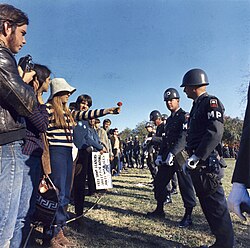
The 1967 March on the Pentagon, an antiwar demonstration organized by the National Mobilization Committee to End the War in Vietnam
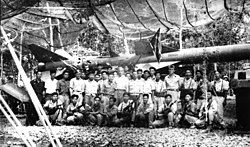
Soviet air defense instructors and North Vietnamese crewmen in the spring of 1965 at an air defense training center in Vietnam
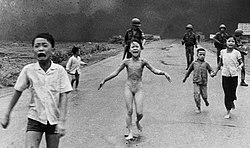
"The Terror of War" by Nick Ut, which won the 1973 Pulitzer Prize for Spot News Photography, showing a nine-year-old girl running down a road after being severely burned by napalm.
Victims killed in a Viet Cong mine explosion in Phú Yên, 1965
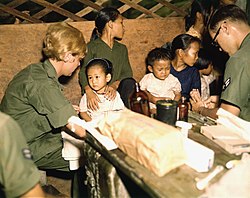
A nurse treats a Vietnamese child, 1967
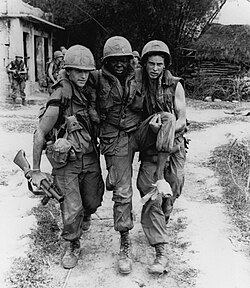
A wounded Black American soldier being evacuated during the My Lai Massacre
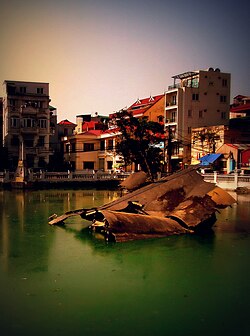
B-52 wreckage in Huu Tiep Lake, Hanoi. Downed during Operation Linebacker II, its remains have been turned into a war monument.
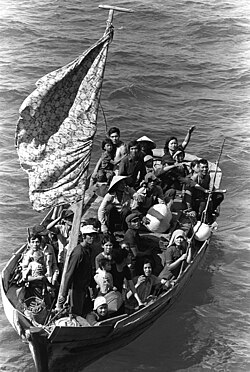
Vietnamese refugees fleeing Vietnam, 1984
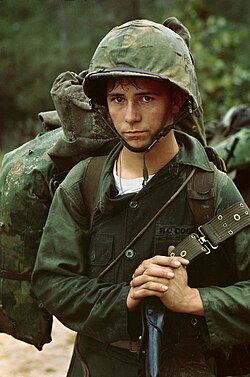
A young Marine private waits on the beach during the Marine landing, Da Nang, 3 August 1965
A marine gets his wounds treated during operations in Huế City, in 1968
Handicapped children in Vietnam, most of them victims of Agent Orange, 2004
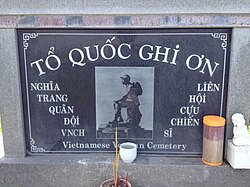
Stone plaque with photo of the Thương tiếc ("Mourning Soldier") statue, originally, installed at the Republic of Vietnam National Military Cemetery. The original statue was demolished after April 1975.

What was the primary goal of the North Vietnamese?

The primary goal of the North Vietnamese government and the Viet Cong was to overthrow the government of South Vietnam and reunify the country under a single communist administration.

What was the "domino theory"?

The domino theory was a US foreign policy belief that if one country in a region fell to communism, neighboring countries would inevitably follow, like a row of falling dominoes.

What was the significance of the Tet Offensive?

While the North suffered heavy military losses, the Tet Offensive was a strategic victory because it shifted US public opinion against the war and proved that the enemy was still capable of large-scale attacks.

What was Agent Orange?

Agent Orange was a chemical defoliant used by the US military to remove forest cover and crops, making it harder for guerrilla forces to hide and operate. It caused severe long-term health issues for both soldiers and civilians.

How did the war officially end?

The war ended on April 30, 1975, when the North Vietnamese Army captured Saigon, the capital of South Vietnam, leading to the total collapse of the South Vietnamese government.