Vernon Downs: The History and Evolution of a New York Racing Landmark
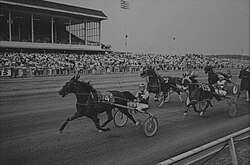
Established in 1953 near Syracuse, New York, Vernon Downs quickly rose to prominence as one of the most popular harness racing tracks in the United States. Harness racing, a sport where horses pull a two-wheeled cart called a sulky, found a dedicated home at this facility, which became a center for athletic achievement and regional entertainment for decades.
One of the most legendary moments in the track's history occurred in 1955, when the horse Adios Harry completed a "miracle mile" in 1:55. This extraordinary feat set a record that remained unbeaten for 18 years, cementing the track's reputation in the sporting world.
The Shift Toward the Racino Model
As the 20th century drew to a close, Vernon Downs faced significant challenges. Changing public tastes and stiff competition from venues like the Meadowlands Racetrack—which offered larger purses (the prize money awarded to winning racers)—led to a decline in popularity. Simultaneously, the rise of Native American gaming casinos and bingo halls in the 1980s created new competition for the region's gambling revenue.
By 2001, the track was in a precarious position. Attendance had plummeted from a peak of over 4,000 spectators in the 1960s and 1970s to fewer than 1,000. The number of race dates also dropped significantly, falling from a high of 162 to just 70 by the 2018 season.
To survive, the facility evolved into a racino—a hybrid of a racetrack and a casino. Following the legalization of video lottery terminals (VLTs) in New York as a means to stimulate the economy after September 11, Vernon Downs integrated video gaming and simulcast harness racing (where bets are placed on races happening at other tracks). Owner Jeff Gural has credited the addition of VLTs as the primary factor that saved the racing operations.
Financial Struggles and Tax Battles
Despite the transition to a racino, financial viability remained a struggle due to a complex tax environment. Ownership frequently argued that they were at a disadvantage compared to the Turning Stone Casino and Resort of the Oneida Indian Nation. Because Turning Stone operates on sovereign land, it does not pay state taxes, although it does contribute a portion of its revenue to the state via a gaming compact and provides regional donations.
This tension reached a breaking point on February 11, 2008, when the casino closed after the New York State Assembly's Racing and Wagering Committee failed to pass a bill reducing taxes for racinos. The closure was brief; legislation was passed quickly, and the facility reopened three days later.
Modern Competition and Adaptation
The landscape grew even more competitive in 2017 with the emergence of "Las Vegas style" casinos, including Del Lago Resort & Casino, Rivers Casino & Resort, and Tioga Downs. These additions, along with the Yellow Brick Road Casino, led to further delays in the racing season and threats of closure.
However, a combination of new tax legislation regarding state fees and the 2016 full gaming license acquisition by Tioga Downs (which shares the same parent company as Vernon Downs) provided stability. As of April 2018, the racino continued to operate with over 750 slot machines.
Key Facts
- Founded: 1953 near Syracuse, New York.
- Historic Record: Adios Harry's 1:55 "miracle mile" in 1955 stood for 18 years.
- Attendance Trend: Dropped from 4,000+ (1960s/70s) to under 1,000 by 2001.
- Operational Shift: Transitioned to a racino model incorporating VLTs and simulcast racing.
- Seasonality: Horse racing runs from April to November; casino elements operate year-round.
- Gaming Capacity: Operated more than 750 slot machines as of April 2018.
| Metric/Feature | Peak Era (1960s-70s) | Modern Era (c. 2018) |
|---|---|---|
| Average Attendance | 4,000+ | Under 1,000 (pre-casino) |
| Annual Race Dates | 162 (High) | 70 |
| Primary Revenue Source | Harness Racing | VLTs and Simulcasting |
| Facility Type | Race Track | Racino with Hotel |
Frequently Asked Questions
What is a racino?
A racino is a facility that combines a racetrack (usually for horse or greyhound racing) with a casino offering gambling games such as slot machines.
Who is Adios Harry?
Adios Harry was a famous harness racing horse who set a long-standing record at Vernon Downs in 1955 by running a mile in 1:55.
Why did Vernon Downs struggle with taxes?
The owners argued that they faced unfair competition from casinos on Native American sovereign land, which are not subject to the same state taxes as commercial racinos.
When is the racing season at Vernon Downs?
The horse racing season typically runs from April through November, although the casino and hotel facilities are open throughout the year.
What saved the racing operations at Vernon Downs?
Owner Jeff Gural attributes the survival of the racing operations to the addition of Video Lottery Terminals (VLTs), which provided the necessary revenue to maintain the track.