Horse Racing: A Global Legacy of Speed, Sport, and Economic Impact
From the ancient arenas of history to the high-tech racetracks of the modern era, horse racing has remained one of the world's most enduring spectacles. It is a sport defined by diverse disciplines, specialized breeds, and a massive global economic footprint. Whether it is the thunderous gallop of a Thoroughbred on a dirt track or the rhythmic trot of a Standardbred in harness racing, the connection between human and equine athleticism continues to captivate audiences worldwide.
Key Facts
- Global Regulation: Managed by regional bodies and the International Federation of Horseracing Authorities.
- Economic Power: The global gambling market associated with horse racing was valued at approximately US$115 billion in 2019 and is projected to reach US$512.4 billion by 2034.
- Diverse Disciplines: Includes flat racing, jump racing, harness racing, saddle trot, and endurance racing.
- Primary Breeds: Thoroughbred, Standardbred, Arabian, and Quarter Horse.
- Global Presence: Practiced on every continent, with major hubs in North America, Europe, Australia, and Asia.
The Diverse Disciplines of Equine Racing
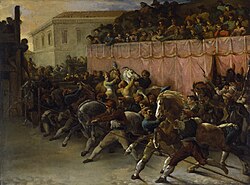
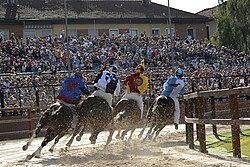
Horse racing is far from a monolithic sport. It is categorized into several distinct types, each requiring different training, equipment, and surfaces such as turf (grass), dirt, or synthetic tracks.
Flat and Jump Racing
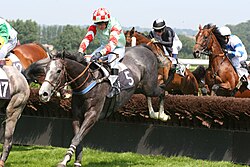
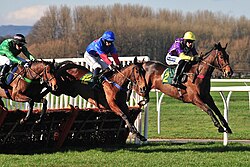
Flat racing is perhaps the most common form, where horses gallop on level tracks without obstacles. In contrast, jump racing involves horses navigating hurdles or fences. A famous example is the Grand National, known for its treacherous fences and distance of over four miles.
![1890 engraving of horses jumping the Becher's Brook fence in the Grand National. With treacherous fences combined with the distance (over 4 miles), the race has been called "the ultimate test of horse and rider".[65]](/images/57/04/570408040c7d1918f11b94e264bbce8f73b9107ebf1e3e305f9485e2e7e36c38.jpg)
Harness and Saddle Trot Racing
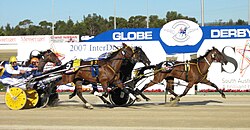
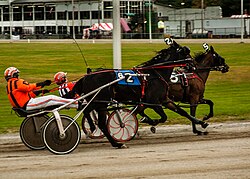
In harness racing, horses pull a driver in a lightweight two-wheeled vehicle called a sulky. Saddle trot racing is a variation where the horse must trot from a starting point to a finish line while under saddle.
Endurance Racing
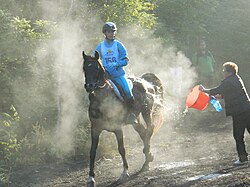
Endurance racing tests the extreme stamina of the horse. These races cover vast distances, typically ranging from 25 to 100 miles (40 to 161 km). Any distance shorter than 25 miles is classified as a limited distance ride (LD).
Global Racing Landscapes
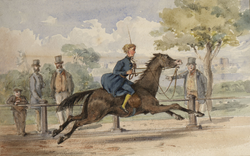
The sport is a worldwide phenomenon, with unique traditions and regulatory structures in every region.
North America
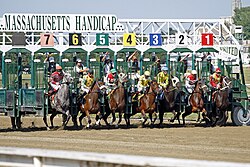
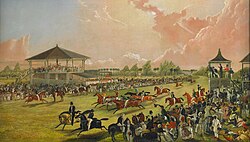
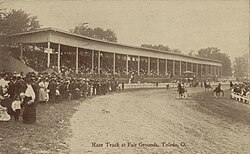
In the United States, organized racing gained momentum with the establishment of the American Stud Book in 1868. American racing features a variety of surfaces and breeds, including Thoroughbreds, Quarter Horses, and Standardbreds. Major tracks like the Meadowlands Racetrack in New Jersey serve as significant hubs for both Thoroughbred and harness racing.
Oceania and Asia
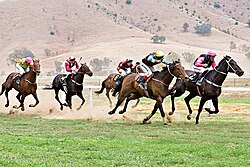
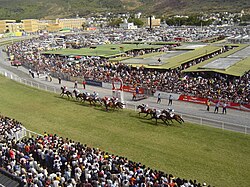
Australia is recognized as one of the world's top three Thoroughbred racing nations, home to the legendary Melbourne Cup. In New Zealand, the bloodstock industry is a vital economic driver, with horse exports generating over $120 million annually. In Asia, racing has seen significant shifts; while Hong Kong remains a major hub, racing in Macau was discontinued in 2024.

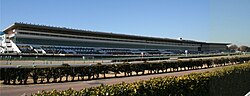

Europe and Beyond
Europe boasts a deep history of racing, from the steeplechases in the Czech Republic to the long-standing traditions in France and Great Britain. In Turkey, the industry saw rapid acceleration following the establishment of the Republic in 1923, supported by the Jockey Club of Turkey.

Economic and Statistical Milestones
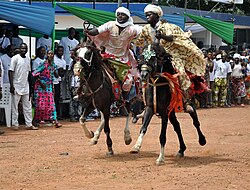
The economic impact of horse racing is heavily driven by the gambling industry. This market is projected to experience massive growth, nearly doubling from its 2019 value to reach an estimated US$235 billion by 2025.
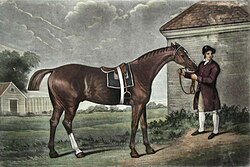
Beyond finance, the sport is defined by legendary performers. The Thoroughbred Secretariat remains a benchmark, holding the fastest times in all three Triple Crown races from his 1973 victories. In terms of individual success, jockey Russell Baze has achieved a record 12,842 victories, while the horse Romantic Warrior has earned career earnings exceeding $27 million.
| Type | Primary Surface | Key Feature |
|---|---|---|
| Flat Racing | Turf, Dirt, or Synthetic | Speed on level ground |
| Jump Racing | Turf | Navigating obstacles/fences |
| Harness Racing | Dirt or Synthetic | Pulling a sulky |
| Endurance Racing | Varies | Distances of 25–100 miles |
| Saddle Trot | Varies | Trot under saddle |
Frequently Asked Questions

What are the most common horse breeds used in racing?
The most prominent breeds include the Thoroughbred, Standardbred, Arabian, and Quarter Horse, each suited to different racing styles and distances.
How much is the horse racing gambling market worth?
In 2019, the worldwide market was worth approximately US$115 billion. It is projected to grow to US$512.4 billion by 2034.
What is the difference between flat racing and jump racing?
Flat racing occurs on level tracks without obstacles, whereas jump racing requires horses to clear hurdles or fences during the race.
What defines endurance racing?
Endurance racing involves traveling extreme distances, generally between 25 and 100 miles. Distances under 25 miles are considered limited distance rides.
Is horse racing an Olympic sport?
No, horse racing is not an Olympic sport.
What are the common racing surfaces?
Racetracks typically use turf (grass), dirt, or synthetic surfaces to accommodate different breeds and racing types.