Vereinsthaler: The Standard Silver Coin of the German Confederation
Before the unification of Germany, the monetary landscape was a complex patchwork of regional currencies. The Vereinsthaler (meaning "union thaler") emerged as a pivotal solution to this fragmentation. Introduced in 1857, this standard silver coin served as a unifying currency across most German states and the Austrian Empire, streamlining trade and commerce in the years leading up to the formation of the German Empire.
The Vereinsthaler was designed to replace various versions of the North German thaler. While the earlier Prussian Thaler weighed 16.704 grams (1/14th of a Cologne mark of fine silver), the Vereinsthaler was slightly lighter, containing 16 + 2/3 grams of silver. This precise weight was denoted on the coins as one-thirtieth of a metric pound (Pfund), which equaled 500 grams.
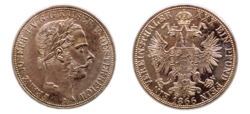
Key Facts
- Introduced: 1857 to standardize silver coinage across German states.
- Silver Content: 16 + 2/3 grams (1/30th of a metric pound).
- Prussian Production: Over 90 million coins struck between 1859 and 1867.
- Conversion: Later valued at 3 Goldmarks after German unification.
- Legal Tender: Remained legal tender without limit until October 1, 1907.
Regional Distribution and Currency Variations
The Vereinsthaler acted as a base for several different regional currencies, though its adoption was not universal. The Hanseatic city-states of Hamburg, Bremen, and Lübeck opted out of the Vienna Monetary Treaty of 1857 and the Dresden Coinage Convention of 1838 due to their extensive international trade ties. Consequently, these cities never minted their own Vereinsthalers, although the coins continued to circulate there under later imperial laws.
Northern German States
In Prussia and several northern states, the Vereinsthaler was the primary unit of account. It was typically divided into 30 Silbergroschen, with each Silbergroschen further divided into 12 Pfennig. Other states adapted this system; for example, Saxony used the Neugroschen (equal to the Silbergroschen but divided into 10 Pfennig), while Hanover used the term Groschen for its 12-Pfennig coin.
Southern German States
Southern states, including Bavaria, utilized the South German gulden as their standard unit. The exchange rate was set at 1.75 Gulden to 1 Vereinsthaler. The Gulden was subdivided into 60 Kreuzer, and each Kreuzer was worth either 4 Pfennig or 8 Heller. These regions issued Vereinsmünze (union coinage) in denominations of 1 and 2 Vereinsthalers.
The Austrian Empire
In the Austrian (and later Austro-Hungarian) Empire, the unit of account was the florin (known as the Gulden in German or forint in Hungarian). The conversion rate here differed from the south German states, with 1.5 florins equaling 1 Vereinsthaler. The Austrian florin was divided into 100 kreuzers.
| Region | Unit of Account | Conversion to Vereinsthaler | Subdivisions |
|---|---|---|---|
| Prussia / North Germany | Vereinsthaler | 1:1 | 30 Silbergroschen (12 Pfennig each) |
| Saxony | Vereinsthaler | 1:1 | 30 Neugroschen (10 Pfennig each) |
| Southern Germany | South German Gulden | 1.75 Gulden = 1 Thaler | 60 Kreuzer |
| Austrian Empire | Florin / Gulden | 1.5 Florins = 1 Thaler | 100 Kreuzers |
The Transition to the Goldmark and Withdrawal
Following the unification of Germany in 1871, the monetary system shifted toward the gold standard. The Goldmark was introduced in 1873, with an exchange rate of 3 marks per 1 Vereinsthaler. This transition explains why the 10 pfennig coin of the new era became colloquially known as the "Groschen," as it was equivalent to the old northern German Groschen.
Interestingly, while new subsidiary silver coins had a legal-tender limit of 20 marks, the Vereinsthaler remained legal tender without any limit. This made the coin a vital bridge between the old silver-based systems and the new gold-based imperial currency. The Vereinsthaler finally lost its legal tender status on October 1, 1907, though treasuries continued to redeem them until September 30, 1908. A subsequent law in May 1908 introduced a smaller 3-mark coin to replace the function of the Thaler, a name that persisted in common usage until the 1930s.
In Austria-Hungary, the issuance of Vereinsthalers ceased in 1867 after the Austro-Prussian War. However, coins issued by Austria and Liechtenstein remained legal tender within the treaty area even after those states exited the monetary union in 1866.
Frequently Asked Questions
What was the silver content of a Vereinsthaler?
The Vereinsthaler contained 16 + 2/3 grams of fine silver, which was equivalent to one-thirtieth of a metric pound (500 grams).
Why did Hamburg, Bremen, and Lübeck not mint their own Vereinsthalers?
These Hanseatic city-states had strong trade ties beyond Germany's borders, leading them to stay out of the Dresden Coinage Convention of 1838 and the Vienna Monetary Treaty of 1857.
How did the Vereinsthaler relate to the Goldmark?
After the 1873 Coinage Act, the Vereinsthaler was valued at 3 Goldmarks. It remained legal tender without limit until 1907, serving as a link between silver and gold currencies.
What was the difference between the Prussian and Saxon subdivisions?
While both used a system based on the thaler, the Prussian Silbergroschen was divided into 12 Pfennig, whereas the Saxon Neugroschen was divided into 10 Pfennig.
When did the Vereinsthaler officially cease to be legal tender?
The Vereinsthaler officially lost its legal tender status on October 1, 1907, although it could be redeemed by treasuries until September 30, 1908.