Venkatraman Ramakrishnan: Pioneering the Atomic Structure of the Ribosome
Venkatraman Ramakrishnan is a world-renowned structural biologist whose work has fundamentally changed our understanding of how cells build proteins. By determining the atomic structure of the ribosome—the cellular machinery responsible for protein synthesis—Ramakrishnan provided the scientific community with a blueprint of one of life's most essential processes.
Key Facts
- Nobel Prize: Awarded the Nobel Prize in Chemistry in 2009.
- Major Discovery: Determined the atomic structure of the 30S ribosomal subunit.
- Leadership: Served as President of the Royal Society from 2015 to 2020.
- Key Technique: Utilized X-ray crystallography and later Cryogenic electron microscopy (Cryo-EM).
- Honors: Recipient of the Padma Vibhushan and knighted in 2012.
Academic Journey and Early Career
Ramakrishnan's specialization in ribosomes began during his time as a postdoctoral fellow under Peter Moore at Yale University. Despite his early promise, his path to a faculty position was not immediate; he applied to approximately 50 universities in the United States without success.
Undeterred, he spent over a decade as a staff scientist at the Brookhaven National Laboratory from 1983 to 1995. His career later progressed to a professorship in biochemistry at the University of Utah in 1995, before he moved to the Medical Research Council Laboratory of Molecular Biology in Cambridge, England, in 1999. He had previously visited the Cambridge laboratory during a 1991–92 sabbatical funded by a Guggenheim Fellowship.
Breakthroughs in Ribosomal Research
The turn of the millennium marked a period of rapid discovery for Ramakrishnan's laboratory. In 1999, his team published a 5.5 angstrom resolution structure of the 30S subunit (the smaller of the two subunits that make up a ribosome). By the following year, they had determined the complete molecular structure of the 30S subunit and its complexes with various antibiotics.
These findings provided critical structural insights into the fidelity of protein biosynthesis—the process by which cells create proteins based on genetic instructions. In 2007, the laboratory achieved a major milestone by determining the atomic structure of the entire ribosome in complex with its mRNA and tRNA ligands.
Since 2013, Ramakrishnan has shifted his focus toward eukaryotic and mitochondrial translation using Cryogenic electron microscopy (a technique that freezes samples at extremely low temperatures to preserve their natural state for high-resolution imaging). Beyond ribosomes, he is also recognized for his research on chromatin (the complex of DNA and proteins) and histone structure.
Leadership at the Royal Society
From 2015 to 2020, Ramakrishnan served as the President of the Royal Society. His tenure coincided with two major global events: Brexit and the COVID-19 pandemic. Ramakrishnan was a vocal critic of the UK's departure from the European Union, arguing that it damaged Britain's reputation as a premier destination for scientific research.
He emphasized that global challenges—such as food security, human disease, and climate change—cannot be solved in isolation. He specifically advocated for the UK to remain engaged with Euratom and Galileo, noting that a "no-deal" Brexit would be detrimental to the scientific community and the broader interests of Europe.
Awards, Honors, and Recognition
Ramakrishnan's contributions to science have been recognized with the highest honors globally. In 2009, he shared the Nobel Prize in Chemistry with Ada Yonath and Thomas A. Steitz. His contributions to molecular biology also earned him a knighthood in 2012, though he typically does not use the title "Sir".
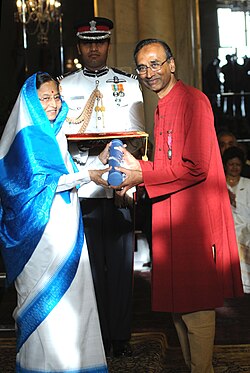
His international recognition extends to India, where he received the Padma Vibhushan in 2010 and was named one of the 25 Greatest Global Living Indians by NDTV in 2013.
| Year | Achievement / Honor | Organization/Entity |
|---|---|---|
| 1999 | Published 5.5 Å structure of 30S subunit | MRC Laboratory of Molecular Biology |
| 2003 | Fellow of the Royal Society (FRS) | The Royal Society |
| 2009 | Nobel Prize in Chemistry | Nobel Assembly |
| 2010 | Padma Vibhushan | Government of India |
| 2012 | Knighted for services to molecular biology | UK Government |
| 2015-2020 | President | The Royal Society |
| 2022 | Member of the Order of Merit (OM) | UK Government |
Frequently Asked Questions
What was Venkatraman Ramakrishnan's primary scientific contribution?
He is internationally recognized for determining the atomic structure of the 30S ribosomal subunit, which helped explain how the ribosome decodes genetic information and how certain antibiotics function.
Which imaging techniques has he used in his research?
He utilized X-ray crystallography and neutron diffraction for his early ribosomal work and has used Cryogenic electron microscopy since 2013 to study eukaryotic and mitochondrial translation.
What is the significance of the "wobble" base in his research?
His work provided an atomic description of codon:anti-codon recognition, showing that the "wobble" base remains free to accommodate certain non-Watson/Crick basepairs during the decoding process.
How did he view the impact of Brexit on science?
Ramakrishnan believed that Brexit hurt Britain's reputation as a scientific hub and argued that isolating the UK from EU collaborators would hinder the ability to tackle global problems like climate change and disease.
What other biological structures has he studied besides ribosomes?
He has made substantial contributions to the understanding of chromatin organization, specifically the structure of linker histones and their role in higher-order folding.