Uranium: Properties, Applications, and Nuclear Significance
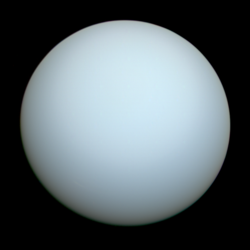
Uranium is a heavy, silvery-gray metallic element known primarily for its role in nuclear energy and weaponry. Named after the planet Uranus, which was in turn named after the Greek god of the sky, this element sits in the f-block of the periodic table. While it occurs naturally in the Earth's crust, its unique ability to undergo nuclear fission—the splitting of an atomic nucleus—has made it one of the most strategically important elements in modern history.
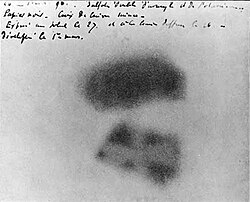
In its pure form, uranium is a dense metal that corrodes over time, forming a spalling black oxide coat when exposed to air. Its discovery by Martin Heinrich Klaproth in 1789 and subsequent isolation by Eugène-Melchior Péligot in 1841 paved the way for the discovery of radioactivity by Henri Becquerel in 1896.
Key Facts

- Atomic Number: 92
- Standard Atomic Weight: 238.02891
- Primary Isotopes: Uranium-238 (99.3%) and Uranium-235 (0.72%)
- Main Ore: Uraninite (also known as pitchblende)
- Key Property: Fissile nature of U-235 allows for massive energy release
- Major Producers: Kazakhstan, Canada, and Namibia
Physical and Chemical Properties
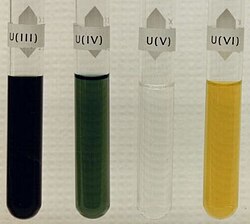
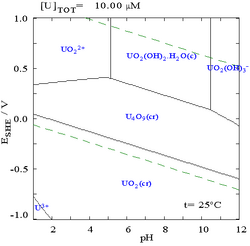
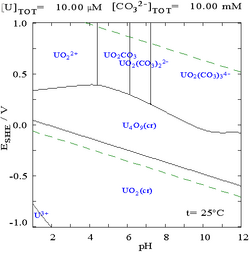
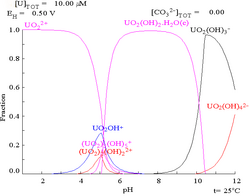
Uranium is characterized by its extreme density (19.050 g/cm³ at 20°C) and high melting point of 1132.2°C. It exists in several oxidation states, most commonly +6, but can also appear as +1, +2, +3, +4, and +5. This chemical versatility allows it to form a wide variety of compounds, including oxides, halides, and carbonates.
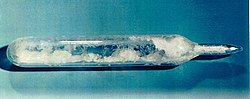
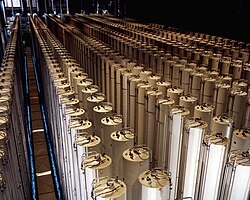
One of the most critical compounds in the nuclear fuel cycle is uranium hexafluoride (UF&sub6;), which is used as a feedstock to separate the fissile isotope uranium-235 from the more abundant uranium-238. This process, known as enrichment, often utilizes cascades of gas centrifuges to concentrate the desired isotopes.
Isotopes and Nuclear Fission
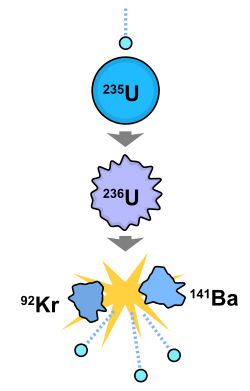
Natural uranium consists primarily of two isotopes: Uranium-238 and Uranium-235. While U-238 is the most abundant, U-235 is the isotope capable of sustaining a nuclear chain reaction. When a neutron strikes a U-235 nucleus, it can trigger a fission event, releasing a tremendous amount of energy and additional neutrons.
The energy density of uranium is staggering. Theoretically, one kilogram of uranium-235 can produce approximately 20 terajoules of energy, which is equivalent to the energy found in 1.5 million kilograms (1,500 metric tonnes) of coal.
Applications of Uranium
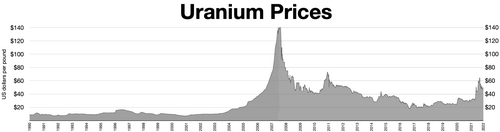
![Monthly uranium spot price in US$ per pound. The 2007 price peak is clearly visible.[98]](/images/43/cf/43cfe1f9c007cb6e342f02f847faad8776a79e4bcf2e0f55c8c6759a3cea19f5.png)
Civilian Energy
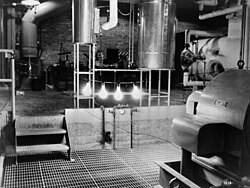
The primary civilian use of uranium is as fuel for nuclear power plants. Most commercial reactors require fuel enriched to approximately 3% uranium-235. However, certain designs, such as the CANDU and Magnox reactors, are capable of using unenriched natural uranium. Additionally, breeder reactors can convert uranium-238 into plutonium-239, extending the available fuel supply.
Military and Industrial Use
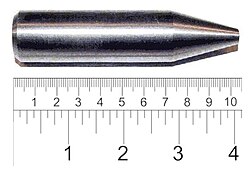
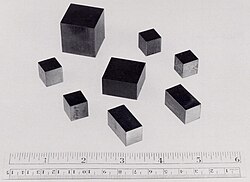
Beyond energy, uranium is used in military applications. Depleted uranium (uranium with most of its U-235 removed) is utilized as high-density penetrators in armor-piercing munitions due to its extreme density.
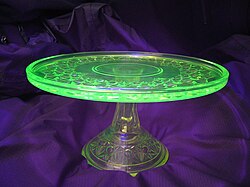
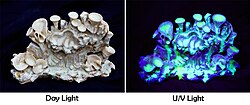
Historically, uranium was also used in the production of glass and ceramic glazes. Uranium glass is easily identified by its characteristic glow under ultraviolet (UV) light.
Occurrence and Production

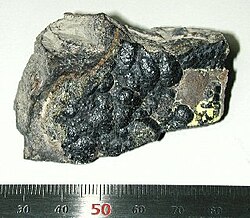
Uranium is a primordial element found in various minerals. The most common ore is uraninite (pitchblende), but it is also found in carnotite, autunite, and torbernite. In 2024, global production reached 60,213 tonnes, with Kazakhstan leading as the largest producer.
| Country | Production (Tonnes) | Percentage of Global Total |
|---|---|---|
| Kazakhstan | 23,270 | 39% |
| Canada | 14,309 | ~24% |
| Namibia | 7,333 | ~12% |
| Australia | 4,598 | ~8% |
| Uzbekistan | 4,000 | ~7% |
| Russia | 2,738 | ~5% |
Historical Context and Legacy
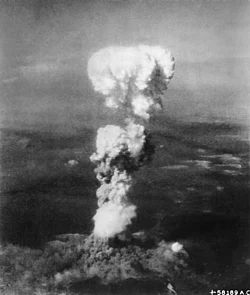
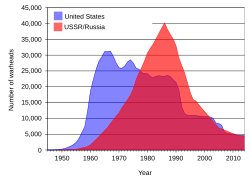
The development of uranium technology led to the Manhattan Project and the creation of the first nuclear weapons, including the 'Little Boy' bomb used over Hiroshima. The subsequent Cold War era saw a massive buildup of nuclear stockpiles by the U.S. and the USSR.
The legacy of this era includes environmental contamination from above-ground nuclear tests conducted by the Soviet Union, the United States, and France, as well as fallout from various nuclear accidents.
Frequently Asked Questions
What is the difference between natural and enriched uranium?
Natural uranium contains only about 0.72% of the fissile isotope uranium-235. Enriched uranium has a higher percentage of U-235, typically around 3% for commercial power plants, to allow for a sustained nuclear chain reaction.
What is depleted uranium?
Depleted uranium is the byproduct of the enrichment process. It consists mostly of uranium-238 and has a much lower concentration of U-235 than natural uranium. Because of its high density, it is often used in military armor-piercing projectiles.
How much energy can uranium produce compared to coal?
Uranium is incredibly energy-dense; one kilogram of uranium-235 can theoretically produce as much energy as 1.5 million kilograms (1,500 metric tonnes) of coal.
Where is most of the world's uranium mined?
As of 2024, Kazakhstan is the world's leading producer, accounting for 39% of global production, followed by Canada and Namibia.
What is uraninite?
Uraninite, also known as pitchblende, is the most common mineral ore from which uranium is extracted. It primarily consists of uranium dioxide (UO&sub2;).