Kaiser Wilhelm Society: The Precursor to the Max Planck Society
Established in 1911 within the German Empire, the Kaiser Wilhelm Society for the Advancement of Science (Kaiser-Wilhelm-Gesellschaft zur Förderung der Wissenschaften) served as a powerhouse of scientific innovation. Designed as an umbrella organization, it managed a vast network of research units, testing stations, and institutes that operated outside the traditional university system.
The society was created to bridge the gap between theoretical knowledge and practical application, specifically to advance the interests of the German state and industrial capital through research relevant to military and industrial use. Its legacy is complex, spanning a golden age of discovery, a dark period of political complicity, and an eventual rebirth as the world-renowned Max Planck Society.
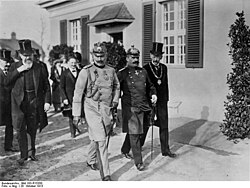
Key Facts
- Founded: 1911 in the German Empire.
- Purpose: To conduct scientific research for industrial and military application outside of universities.
- Notable Directors: Included Albert Einstein, Max Planck, Fritz Haber, and Otto Hahn.
- Transition: Dissolved by Allied forces after WWII and succeeded by the Max Planck Society in 1946/1948.
- Major Contribution: The detection of nuclear fission occurred at its chemistry institute in Berlin.
Institutional Structure and Early Growth
The Kaiser Wilhelm Society (KWG) began its operations with an inaugural meeting on January 11, 1911. To ensure high-level scientific output, the society appointed prominent directors to lead its constituent institutes. These leaders were among the most influential scientists of the era, including physicists and chemists such as Walther Bothe, Peter Debye, Albert Einstein, Fritz Haber, and Otto Hahn.
The organization grew rapidly, establishing specialized institutes for a wide array of disciplines, from biochemistry and brain research to iron and coal research. This structure allowed for focused, long-term research projects that were often too large or specialized for university settings.
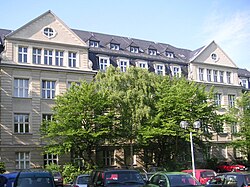
The Nazi Era and World War II
The rise of the National Socialist regime in 1933 brought a period of turmoil and ethical compromise. Following the Law for the Restoration of the Professional Civil Service, the KWG dismissed its Jewish employees. While most directors complied, Fritz Haber was the sole institute director to resign in protest against the instructions of General Secretary Friedrich Glum.
During this time, KWG President Max Planck worked to maintain international funding, successfully convincing the Rockefeller Foundation to continue supporting the Kaiser Wilhelm Institute for Physics (KWIP) in Berlin. In 1937, Planck stepped down as president, handing the leadership to Carl Bosch, the founder of IG Farben, to further strengthen the society's ties to German industry.
The Nuclear Program and the Uranverein
As World War II began, the KWG became deeply entwined with the German military effort. In 1939, the Heereswaffenamt (HWA)—the Army Ordnance Office—requisitioned the Institute for Physics for military use. This led to the forced leave of Dutch director Peter Debye and the appointment of Werner Heisenberg and Otto Hahn to oversee research into nuclear fission (the splitting of an atomic nucleus).
The society's involvement continued through the Uranverein (Uranium Club), the secret project to develop nuclear energy. Walther Bothe, based at the Institute for Medical Research in Heidelberg, worked on the first German cyclotron (a type of particle accelerator). During this period, Chinese physicist He Zehui also contributed significant work, discovering the phenomenon of elastic electron–positron collision and photographing Bhabha scattering.
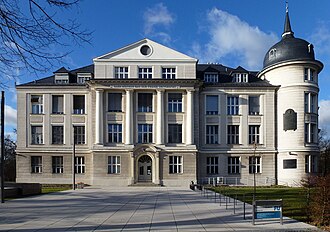
Post-War Transition and the Birth of the Max Planck Society
By 1945, the KWG was in ruins, with its Berlin headquarters lost and its leadership fractured. President Albert Vögler committed suicide in April 1945, leading to a temporary leadership period under Ernst Telschow and later Max Planck.
The Allied forces initially viewed the KWG with suspicion due to its Nazi ties. On July 11, 1946, the Office of Military Government, United States (OMGUS) resolved to dissolve the society. However, British officials, including Howard Percy Robertson and Colonel Bertie Blount, advocated for the preservation of the research infrastructure. Following a suggestion from Sir Henry Hallett Dale, the society was renamed to remove the association with Kaiser Wilhelm.
On September 11, 1946, the Max Planck Society (Max Planck Gesellschaft) was founded in the British Zone, eventually expanding to the American and French zones by 1948. This transition allowed the scientific legacy of the institutes to continue under a new, non-political identity.
Summary of Key Institutes and Their Evolution
| Original KWI Name | Founded | Modern Successor / Status |
|---|---|---|
| KWI for Chemistry | 1911 | Max Planck Institute for Chemistry (Otto Hahn Institute) |
| KWI for Physics | 1917 | Max Planck Institute for Physics (Werner Heisenberg Institute) |
| KWI for Biology | 1912 | Max Planck Institute for Biology (until 2005) |
| KWI for Brain Research | 1914 | Max Planck Institute for Brain Research |
| KWI for Physical Chemistry and Electrochemistry | 1911 | Fritz Haber Institute of the MPG |
| KWI for Medical Research | 1927 | Max Planck Institute for Medical Research |
Frequently Asked Questions
What was the primary goal of the Kaiser Wilhelm Society?
The society was established to advance scientific knowledge that could be applied to industrial and military purposes, operating as a research body independent of the university system.
How did the society react to the Nazi regime?
The society largely complied with Nazi directives, including the dismissal of Jewish employees in 1933. Only one director, Fritz Haber, resigned in protest of these instructions.
What role did the KWG play in the development of nuclear weapons?
The KWG's Institute for Physics was requisitioned by the military to research nuclear fission. Scientists like Werner Heisenberg and Walther Bothe were central to the Uranverein, the German nuclear program.
Why was the society renamed the Max Planck Society?
After WWII, the name "Kaiser Wilhelm" carried negative connotations for the Allied forces. To preserve the scientific work while distancing the organization from its imperial and Nazi-era associations, it was renamed after the physicist Max Planck.
Which famous scientists were associated with the KWG?
The society featured some of the 20th century's most renowned scientists, including Albert Einstein, Max Planck, Otto Hahn, and Fritz Haber.