United States Senate: Structure, Functions, and Governance
The United States Senate serves as the upper house of the U.S. Congress, acting as a critical deliberative body in the American federal government. First convened in 1789, the Senate was modeled after the ancient Roman Senate; its name is derived from the Latin senatus (council of elders) and senex (old man). Designed to provide stability and represent the interests of the states, the Senate operates under the rules established by the United States Constitution and its own Standing Rules.
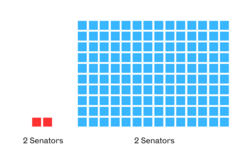
Since 1959, following the admission of the 50th state, the Senate has consisted of 100 members. Each state is guaranteed two senators regardless of population size, a provision protected by Article Five of the Constitution, which prevents any state from being deprived of its equal suffrage without its consent.

Key Facts

- Total Seats: 100 senators (two per state).
- Term Length: 6 years, with staggered elections.
- Current Session: 119th United States Congress (started January 3, 2025).
- Leadership: Led by the Majority Leader and Minority Leader, with the Vice President serving as President of the Senate.
- Voting Systems: Plurality voting in 46 states; instant-runoff (Alaska, Maine) or two-round systems (Georgia, Louisiana) in others.
Senate Structure and Leadership
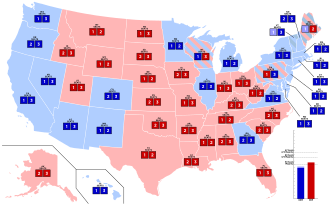
The Senate is organized by political party, with the party holding the most seats designated as the Majority. For the 119th Congress, the Republican Party holds the majority with 53 seats, while the Democratic Party and Independents comprise the minority with 47 seats (45 Democrats and 2 Independents).
Current Leadership (119th Congress)
- President: JD Vance (R)
- President pro tempore: Chuck Grassley (R)
- Majority Leader: John Thune (R)
- Minority Leader: Chuck Schumer (D)
- Majority Whip: John Barrasso (R)
- Minority Whip: Dick Durbin (D)
Core Functions and Powers

The Senate possesses several unique powers that distinguish it from the House of Representatives, focusing heavily on oversight, diplomacy, and judicial checks.
Legislation and Procedure
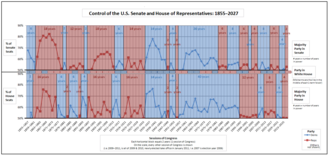
While the Senate shares legislative duties with the House, it is known for its deliberative nature. A defining feature of Senate procedure is the filibuster, a tactic used to delay or block a vote on a piece of legislation. To end a filibuster, the Senate must invoke cloture, which currently requires a supermajority of 60 votes. Since 1975, only three filibuster-proof majorities have existed.
![There have only been three filibuster-proof majorities since 1975, when cloture was reduced to 60 votes.[82]](/images/05/34/05349446ab1e6e3962af904153719b8618cfcb6d27b852a959cee4a4df28a788.png)
Constitutional Responsibilities
- Appointment Confirmations: The Senate provides "advice and consent" for presidential appointments, including Cabinet members and federal judges.
- Treaty Ratification: The Senate must approve international treaties.
- Impeachment Trials: While the House impeaches, the Senate conducts the trial to determine if an official should be removed from office.
- Election of the Vice President: In specific circumstances, the Senate participates in the election of the Vice President.

Membership and Elections
Senators are elected to six-year terms. To ensure continuity, these terms are staggered, meaning only a portion of the Senate is up for election every two years.
Election Process and Vacancies
Most states use plurality voting, though some have adopted alternative systems like instant-runoff or two-round voting. When a vacancy occurs, the process for filling the seat varies by state law; some allow gubernatorial appointments, while others require special elections.
Compensation and Seniority
Senators receive a set salary and benefits, with seniority playing a role in committee assignments and prestige. They are addressed as "The Honorable" and operate from dedicated office buildings and the Senate Chamber in the U.S. Capitol.

Senate Summary Table
| Feature | Details |
|---|---|
| Total Membership | 100 Senators |
| Term Length | 6 Years |
| Representation | 2 Senators per State |
| Cloture Requirement | 60 Votes |
| Meeting Place | Senate Chamber, U.S. Capitol |
| Constitutional Basis | U.S. Constitution, Article I |

Frequently Asked Questions
How many senators does each state have?
Every state is guaranteed exactly two senators, regardless of the state's population size. This ensures equal representation for all states in the upper house.
What is a filibuster?
A filibuster is a procedural tactic used by a senator or group of senators to delay or prevent a vote on a proposal by speaking for an extended period. It can only be stopped by a cloture vote of 60 senators.
How long is a senator's term?
Senators are elected to six-year terms. These terms are staggered so that approximately one-third of the Senate is elected every two years.
Who leads the Senate?
The Vice President of the United States serves as the President of the Senate. However, the day-to-day legislative agenda is managed by the Majority Leader, while the President pro tempore handles presiding duties in the Vice President's absence.
What is the role of the Senate in impeachment?
The Senate acts as the court for impeachment trials. After the House of Representatives brings formal charges (impeachment), the Senate hears the evidence and votes on whether to convict and remove the official from office.