United States Militia: From Colonial Defense to the National Guard
The concept of the citizen soldier has been central to American military identity since the colonial era. Originally designed as a grassroots system for local defense, the militia of the United States has evolved from a compulsory requirement for all able-bodied men into a sophisticated dual-state and federal reserve system. This evolution reflects the ongoing tension between state sovereignty and federal authority in the United States.
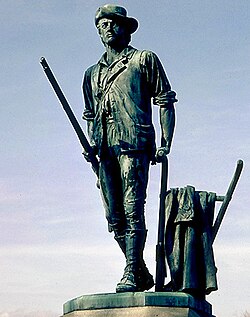
In the earliest days of colonial America, militia membership was a civic duty. Depending on the colony's specific rules, most able-bodied men within a certain age range were required to serve. These local independent militias provided the primary line of defense for individual towns against external threats.
Key Facts
- Modern Definition: Under the Militia Act of 1903, the militia is divided into organized (National Guard and Naval Militia) and unorganized classes.
- Constitutional Basis: The U.S. Constitution empowers Congress to organize, arm, and discipline the militia while leaving significant control to state governments.
- Composition: Legally, the militia consists of all able-bodied males (17–45) and female citizens who are members of the National Guard.
- Federal Authority: The Supreme Court ruled in Perpich v. Department of Defense (1990) that the federal government has plenary power over the National Guard.
The Evolution of the Militia System
Colonial Era and the Revolutionary War
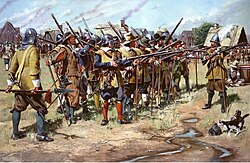
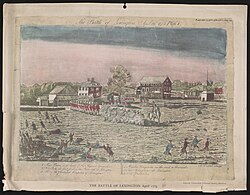
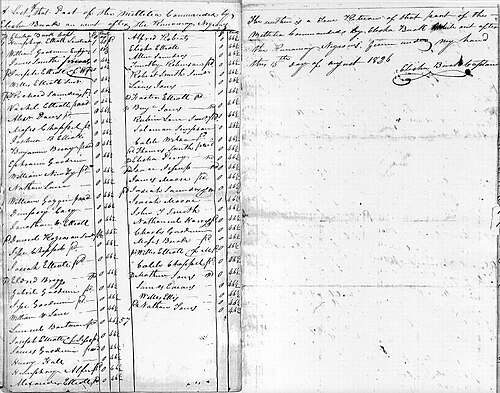
During the early colonial period (1565–1754), militias were the backbone of security. This system was tested during the French and Indian War and later became the primary force for resistance during the American Revolutionary War (1775–1783). The Founding Fathers' vision, detailed in the Federalist Papers in 1787, sought a balance where the federal government could coordinate national defense without maintaining a massive standing army that might threaten civilian liberty.
The War of 1812: A Mixed Legacy
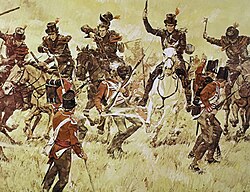
The War of 1812 highlighted the strengths and weaknesses of the militia. While 458,000 of the 528,000 American troops were militiamen, their performance was inconsistent. Some units were viewed as unreliable, unwilling to serve beyond their terms or outside their home states. This was most evident at the 1814 Battle of Bladensburg, where militia units fled British forces, leading to the capture and burning of Washington.
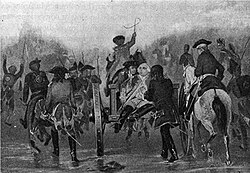
However, the militia also achieved significant successes at the battles of the Thames, North Point, Plattsburgh, and New Orleans. Despite their flaws, they were essential in preserving American independence when regular army forces were insufficient.
The Antebellum Period and the Civil War
By the mid-19th century, the militia system had declined. However, sectional tensions in the 1850s sparked a revival. In Arkansas, for example, the militia grew to 62 regiments by 1860. During the American Civil War, these forces split along political lines. In Arkansas, volunteer militia companies were initially used to seize federal installations before being transferred into the Confederate Army.
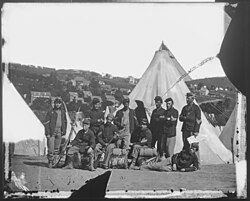
On the Union side, the Home Guard in St. Louis was mustered into federal service. These units, along with the Missouri State Militia, played a critical role in maintaining Union control during the Missouri Secession Crisis.
Transition to the Modern Era
The Great Railroad Strike and Professionalization
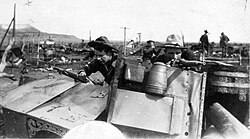
The Great Railroad Strike of 1877 served as a turning point. When West Virginia called up militia units to suppress the strike, the shortcomings of the state-based system became apparent. This event accelerated the transformation of state militias into the more professionalized National Guard.
The National Guard and State Defense Forces
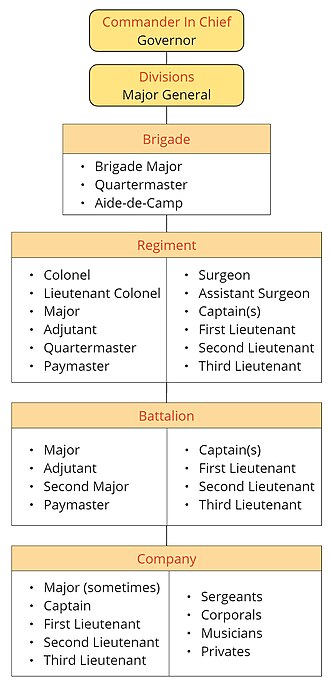
Today, the organized militia primarily consists of the National Guard. Under the Total Force Policy of 1973, the Guard was effectively integrated with federal Reserve Components, allowing them to be deployed overseas as regular troops. To ensure states still have internal security when the Guard is deployed, some states maintain separate state guards or naval militias under the governor's direct control.
The unorganized militia consists of all able-bodied males aged 17 to 45 who are not in the organized militia and are citizens or have declared their intent to become citizens.
![Maryville, Tennessee all female Home Guard flag[60]](/images/47/40/4740e440169f581c77ed5aa39deb331c5e99d7713e77048db210a1e4d9440199.png)
Private Militias
Since 1992, various private paramilitary organizations have emerged. Unlike the official state and federal militias, these groups operate without government sanction. Legal scholars, such as Barbara MacQuade, argue that these private militias are unconstitutional.
![Flag carried by Philadelphia's Home Guard[60]](/images/ce/b0/ceb0809a2b17ad66785e640ee55e2404dba5559307949df2561dfa83b532bc35.png)
Militia Composition Summary
| Class | Composition | Control/Authority | Primary Role |
|---|---|---|---|
| Organized Militia | National Guard, Naval Militia | Dual State/Federal (President/Governor) | Federal reserve and state emergency response |
| Unorganized Militia | Able-bodied males (17-45) not in Guard | Statutory (10 USC) | Potential reserve pool |
| State Defense Forces | State-specific guards | State Governor | Internal state security |
| Private Militias | Unsanctioned private citizens | None (Unofficial) | Varies (often controversial/unconstitutional) |
Frequently Asked Questions
What is the difference between the organized and unorganized militia?
The organized militia consists of trained, official forces like the National Guard and Naval Militia. The unorganized militia consists of all eligible citizens (specifically males 17-45) who are not currently members of the organized forces.
Who has the final authority over the National Guard?
While the National Guard has a dual role, the U.S. Supreme Court ruled in Perpich v. Department of Defense that the federal government holds plenary power, meaning the President can call them to active duty regardless of state consent.
Are private militia groups legal?
Private paramilitary groups operate without official state sanction or licensing. Many legal experts argue that these organizations are unconstitutional, as they lack the legal authority granted to state and federal military forces.
How did the War of 1812 affect the perception of the militia?
The war created a mixed reputation. While the militia was essential for defending the nation's independence, failures like the "Bladensburg Races" led military commanders to prefer regular soldiers and volunteers over traditional militiamen.
What is the age requirement for the militia today?
According to the U.S. Code, the militia generally consists of able-bodied males between 17 and 45 years of age, though those with prior military experience may be eligible up to age 64.