War of 1812: The Conflict That Shaped North America
The War of 1812 was a pivotal struggle fought between June 18, 1812, and February 17, 1815. Spanning the North American continent and the Atlantic and Pacific Oceans, this conflict pitted the United States and its allies against the United Kingdom and a diverse coalition of Indigenous nations. While the war is often viewed as inconclusive in its immediate results, it left a lasting imprint on the geopolitical landscape of the Americas.
The conflict involved a complex array of belligerents. The United States fought alongside various Indigenous groups, including the Cherokee, Chickasaw, Choctaw, and Tuscarora. Opposing them were the British Empire, Tecumseh's confederacy, the Red Sticks, the Menominee, and the Six Nations of the Grand River, with Spanish garrison troops also playing a role in West Florida between 1813 and 1814.
Key Facts
- Duration: June 18, 1812 – February 17, 1815.
- Primary Belligerents: United States vs. United Kingdom and Indigenous allies.
- Outcome: Formally ended by the Treaty of Ghent; generally considered inconclusive.
- Major Naval Victory: The USS Constitution's defeat of HMS Guerriere.
- Significant Event: The burning of Washington and the subsequent defense of Fort McHenry.
- Indigenous Impact: Heavy casualties among Indigenous warriors and civilians, totaling approximately 10,000 deaths.
The Theatres of War
War in the West and Northwest
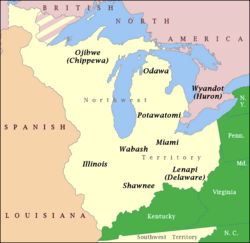
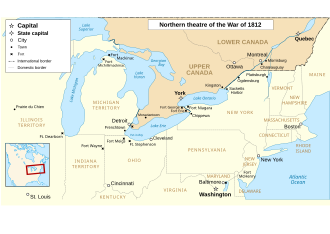
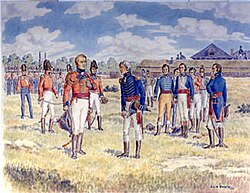
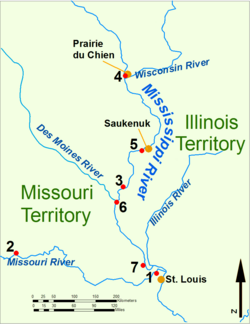
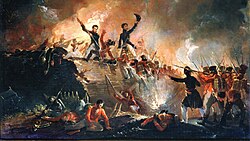
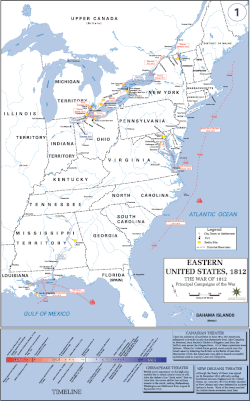
The conflict in the West was characterized by American attempts to invade Canada and struggles for control of the Northwest Territory. Early American efforts were hampered by unpreparedness, leading to significant setbacks such as the surrender of Detroit in August 1812.
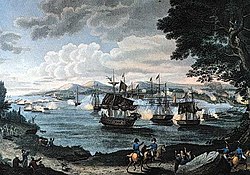
The region saw the rise of Tecumseh, a Shawnee leader who formed a powerful confederacy of Indigenous nations to resist American expansion. However, the tide shifted with naval victories on the Great Lakes, most notably at the Battle of Lake Erie, where Oliver Hazard Perry famously reported, "We have met the enemy and they are ours."
![Oliver Hazard Perry's message to William Henry Harrison after the Battle of Lake Erie began thus: "We have met the enemy and they are ours".[108]](/images/f8/23/f823c240e8dcb4d02e979b4491d3ec879b9e7ee8386225b3fe1860c5eb142d0d.jpg)
The Northeast and the Chesapeake
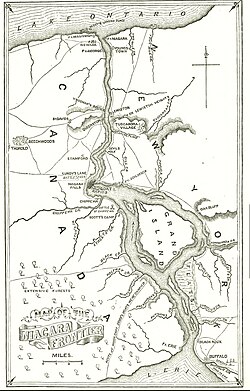
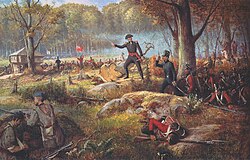
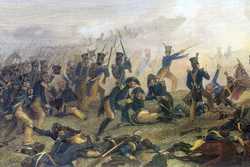
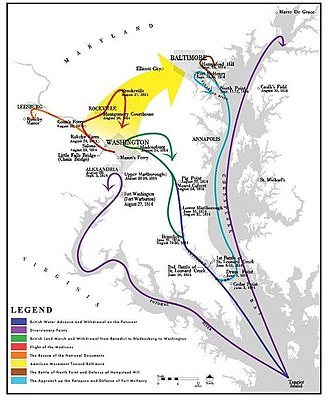
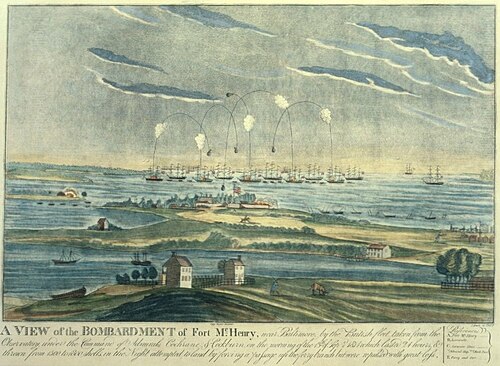
The Niagara frontier became a focal point of intense fighting, involving numerous forts and battles across the peninsula. In 1814, the conflict escalated with the British Chesapeake campaign, which saw the burning of Washington and the siege of Fort McHenry. The bombardment of Fort McHenry inspired Francis Scott Key to write the poem that would eventually become "The Star-Spangled Banner."
The Southern Theatre and the Creek War
In the South, the United States engaged in the Creek War. A turning point occurred after Creek warriors attacked Fort Mims, killing 400 to 500 people, which galvanized American resolve. The conflict in this region effectively ended with the American victory at the Battle of Horseshoe Bend.
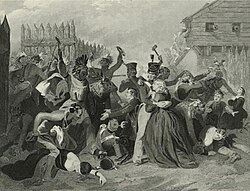
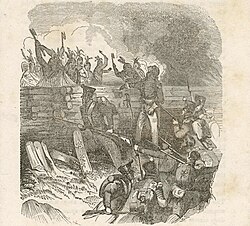
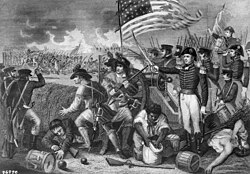
The war's final major engagement took place in January 1815 at the Battle of New Orleans. American forces repelled a British assault in a decisive victory, though the battle occurred after a peace treaty had already been signed in Europe but before the news had reached the United States.
Naval Warfare and Strategy
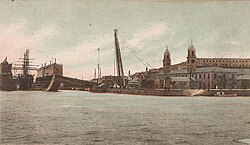
The Royal Navy utilized its superior strength, based in Halifax and Bermuda, to enforce a strict naval blockade of the United States. Their strategy focused on protecting British shipping and strangling American trade.
![The Royal Navy's North American squadron was based in Halifax, Nova Scotia and Bermuda. At the start of the war, the squadron had one ship of the line, seven frigates, nine sloops as well as brigs and schooners.[219]](/images/29/ff/29ffd25644c15671806ce6bdbcc903c59a03c75acb0285dc731e28a5bf4c6c81.jpg)
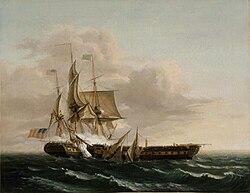
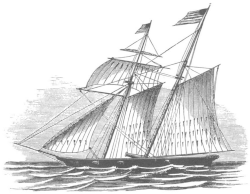
The United States relied on a smaller number of frigates and the use of privateers—privately owned armed ships authorized by the government to attack enemy shipping. The "Baltimore Clippers" were particularly effective in this role. Despite the blockade, the U.S. achieved morale-boosting victories in single-ship engagements, such as the USS Constitution's victory over HMS Guerriere.
The naval war also had a social dimension; the British recruited and freed enslaved African Americans, many of whom escaped aboard British ships to settle in Trinidad or Nova Scotia, Canada.
![The only known photograph of a Black Refugee, c. 1890. During the war, a number of African Americans slaves escaped aboard British ships, settling in Canada (mainly in Nova Scotia)[270] or Trinidad.](/images/dc/0e/dc0ec635b629f07586a0e44352b355d4d4665e6bf551b33bd9c18f5f744e6412.png)
Casualties and Conclusion
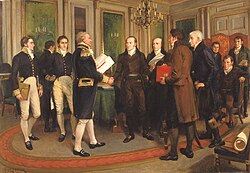
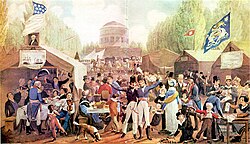
The war ended formally with the signing of the Treaty of Ghent. While the territorial boundaries remained largely unchanged, the war had a profound psychological impact. In the U.S., it led to the "Era of Good Feelings," a period of rising nationalism and unity.
The human cost was significant, particularly for Indigenous populations and those who succumbed to disease during the campaigns.
| Category | United States | United Kingdom & Canada | Indigenous Nations |
|---|---|---|---|
| Troops (End of War) | 35,800 (plus 458,463 militia) | 48,160 (plus 4,000 militia) | 10,000–15,000 allies |
| Killed in Action | 2,260 | ~2,700 | ~1,500 |
| Died of Disease/Accident | ~13,000 | ~8,000 | ~8,500 |
| Captured | 20,000 | 15,500 | Unknown |
Frequently Asked Questions
Who won the War of 1812?
The result is generally considered inconclusive. The Treaty of Ghent restored the status quo ante bellum, meaning boundaries returned to where they were before the war.
What was the significance of the Battle of New Orleans?
It was a major American victory that boosted national pride, although it had little impact on the war's outcome since the peace treaty had already been signed.
How did the war affect Indigenous peoples?
Indigenous nations suffered devastating losses, with approximately 10,000 warriors and civilians dead from all causes, and the collapse of Tecumseh's confederacy weakened their resistance to expansion.
What was the role of the USS Constitution?
The USS Constitution provided critical morale boosts for the United States through successful single-ship engagements, most notably defeating the HMS Guerriere.
What was the "Era of Good Feelings"?
This was the period in the United States following the war, characterized by a surge in nationalism and a strong desire for national unity.