Jean Lafitte: The Terror of the Gulf and the Privateer of New Orleans
In the early 19th century, the Gulf of Mexico was a frontier of lawlessness, trade, and geopolitical tension. At the center of this chaos was Jean Lafitte, a man whose life blurred the lines between a criminal pirate, a strategic privateer, and a political spy. Known as "The Terror of the Gulf," Lafitte built a smuggling empire that challenged the United States government and played a pivotal role in the defense of New Orleans.
While history often remembers him as a romanticized rogue, Lafitte was a calculating businessman and naval officer who navigated the shifting alliances of France, Spain, and the United States to carve out a kingdom of his own.
Key Facts
- Active Years: 1810–1823.
- Primary Bases: Barataria Bay, Louisiana, and Galveston Island, Texas.
- Roles: Privateer, spy, slave trader, and naval artillery officer.
- Major Conflict: Played a significant role during the War of 1812 and the Battle of New Orleans.
- Legacy: A legendary figure in Gulf Coast folklore, appearing in everything from historical texts to Disneyland attractions.
Mysterious Origins and Early Life
The early years of Jean Lafitte remain a subject of historical debate. Two primary theories exist regarding his birth around 1780. Some historians suggest he was born in the French colony of Saint-Domingue (modern-day Haiti), migrating to New Orleans in the 1780s with his widowed mother and older brother, Pierre. Others, including biographer William C. Davis, argue he was born near Pauillac, France, and received a basic Catholic education before spending his youth at sea on his father's trading ships.
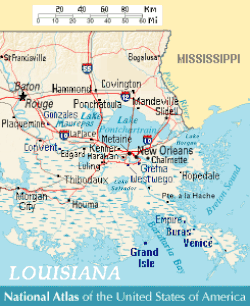
Regardless of his birthplace, by 1805, Jean was established in New Orleans, operating a warehouse to distribute smuggled goods for Pierre. The brothers' fortunes shifted dramatically with the Embargo Act of 1807, a U.S. law prohibiting trade with foreign ports to pressure the United Kingdom. This legislation created a lucrative vacuum for smugglers, prompting the Lafittes to move their operations to the secluded waters of Barataria Bay.
The Rise of the Baratarian Empire
In Barataria Bay, the Lafittes transformed a smuggling outpost into a sophisticated port. By 1810, they had expanded from mere brokerage to active piracy. In 1812, they purchased a schooner and hired Captain Trey Cook; since the vessel lacked a formal government commission (a letter of marque), it was legally classified as a pirate ship.
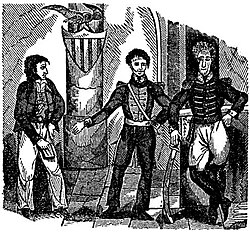
Their first major success came in January 1813, when they captured a British brig carrying 77 enslaved people. The sale of the captives and cargo netted a profit of $18,000. However, this success drew the ire of the U.S. government. In November 1812, District Attorney John R. Grymes charged Lafitte with violating revenue laws, leading to a military ambush that captured several smugglers and confiscated thousands of dollars in contraband.
War of 1812 and the Battle of New Orleans
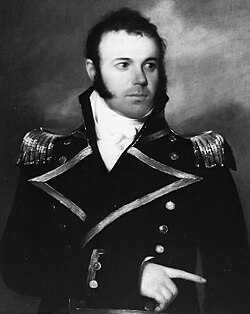
The War of 1812 provided Lafitte with a strategic opportunity. As the British Navy established a base at Pensacola, Lafitte began communicating with British officers. However, the U.S. government viewed him as a threat. In September 1814, Commodore Daniel Patterson led a fleet of gunboats to destroy the Barataria colony. While the Americans seized six schooners, a brig, and goods worth $500,000, Lafitte managed to escape.
Lafitte's fortunes shifted again during the Battle of New Orleans. Despite his history of piracy, his knowledge of the terrain and his network of men became invaluable to the American defense. This alliance allowed him to secure a level of legitimacy and pardon that would have been unthinkable just years prior.
The Galveston Colony and Spanish Espionage
Following the war, the Lafitte brothers entered a complex arrangement as spies for Spain, known collectively as "Number thirteen." Jean was dispatched to Galveston Island in Spanish Texas. By 1817, he had established a thriving base there, which served as a hub for revolutionaries seeking to liberate Mexico from Spanish rule.
During this period, Lafitte flew the flag of the United Provinces of New Granada, signaling his alignment with South American independence movements.

Lafitte's time at Galveston was marked by the construction of the Maison Rouge, a fortress and settlement. However, the U.S. Navy eventually intervened after one of Lafitte's captains attacked an American merchant ship. On May 7, 1821, Lafitte agreed to leave Galveston peacefully, burning his settlement and departing with a vast treasure.
Personal Life and Final Years
Lafitte's personal life was intertwined with Catherine (Catiche) Villard, a free woman of color. Together they had a son, Jean Pierre, born in 1815. Catiche remained his companion through his final ventures in the Gulf.
Lafitte's end is shrouded in mystery. After escaping from jail in February 1822, he continued to target Spanish ships. Most historians believe he died around February 5, 1823, in the Gulf of Honduras. However, legends persisted for decades, including a baseless rumor that he had rescued Napoleon Bonaparte from exile on Saint Helena and lived out his days in Louisiana.

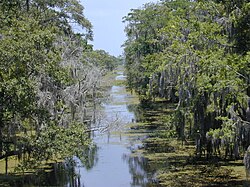
Today, the remnants of his legacy are preserved in places like the Barataria Preserve, where the wild landscape mirrors the environment that once sheltered the "Terror of the Gulf."
Summary of Jean Lafitte's Career
| Category | Details |
|---|---|
| Primary Bases | Barataria Bay (Louisiana), Galveston Island (Texas) |
| Key Allies/Employers | Spain (as a spy), U.S. Army (Battle of New Orleans) |
| Major Assets | Schooners, Maison Rouge fortress, smuggling networks |
| Legal Status | Pirate, Privateer, Smuggler |
| Estimated Death | c. February 5, 1823 |
Frequently Asked Questions
Was Jean Lafitte a pirate or a privateer?
He operated as both. While he often acted as a pirate (operating without a government commission), he also functioned as a privateer and spy, occasionally aligning himself with national interests, such as those of Spain or the United States, to gain legal protection or political leverage.
Did Jean Lafitte really rescue Napoleon?
No. While a popular rumor claimed that Lafitte rescued Napoleon from Saint Helena and brought him to Louisiana, there is no historical evidence to support this claim.
What was the significance of the Maison Rouge?
The Maison Rouge was the fortress and headquarters Lafitte established on Galveston Island. It served as the center of his trading and piratical operations in Spanish Texas until he burned it down upon his departure in 1821.
How did Lafitte help in the Battle of New Orleans?
Lafitte provided critical intelligence and manpower to the American forces. His knowledge of the bayous and the support of his men helped General Andrew Jackson defend the city against the British.
Where is Jean Lafitte buried?
His exact burial place is unknown. Most accounts suggest he died at sea or on an island in the Gulf of Honduras around 1823, though some theories suggest he died of fever on Isla Mujeres.