United States of Africa: The Vision of a Unified Continent
The concept of a United States of Africa—a single, multinational state encompassing the African continent—is a recurring theme in the pursuit of political and economic autonomy. This vision draws inspiration from the grandeur of medieval African empires, such as the Ethiopian, Ghana, Mali, Songhai, Benin, and Kanem empires, as well as other historic nation-states. These precursors serve as a blueprint for the idea that African unity is not a modern invention, but a return to historical strengths.
During the late 19th and early 20th centuries, the landscape of the continent shifted drastically as European empires seized control. At its peak, the British Empire alone controlled approximately 30 percent of the African population. In response to this colonization, the intellectual seeds of unification were sown. The term "United States of Africa" first appeared in 1924 within the poem Hail, United States of Africa by Marcus Garvey. Garvey's organizational systems and ideologies profoundly influenced subsequent African leaders and the eventual rebirth of the African Union.
Key Facts
- First Mention: The term was coined by Marcus Garvey in a 1924 poem.
- Early Advocacy: Kwame Nkrumah of Ghana pushed for a common African government between 1957 and 1966.
- Gaddafi's Proposal: Proposed a single currency, single passport, and a unified military force in 2009.
- AU Goal: The African Union aims for a "united and integrated" Africa by 2025.
- Historical Precedents: The vision is compared to ancient empires like Mali, Songhai, and Ghana.
The Kwame Nkrumah Era
Between 1957 and 1966, Kwame Nkrumah, the first President of Ghana, became the most prominent advocate for a Union of African States. Driven by Pan-Africanism—the movement to strengthen the bonds of solidarity between all indigenous and diaspora ethnic groups of African descent—Nkrumah argued that political and economic unification was the only way for Africa to achieve true independence and sustainable development.
A landmark moment occurred in 1958 with the All-African Peoples Conference in Accra, Ghana. Organized by Nkrumah and George Padmore, a Trinidadian activist and Advisor on African Affairs, this was the first event of its kind held on African soil. It brought together representatives from across the continent and the diaspora, providing Nkrumah a platform to formally present his vision for a United States of Africa.
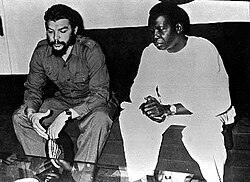
Despite the passion behind the movement, Nkrumah's proposal met significant resistance. Many African leaders feared the loss of their newly won national sovereignty (the authority of a state to govern itself), while Western powers opposed the union to protect their own strategic and economic interests.
Modern Proposals and the African Union
The conversation regarding a unified state resurfaced prominently in February 2009. Upon being elected chairman of the 53-nation African Union (AU) in Ethiopia, Muammar Gaddafi urged sovereign countries to work toward the realization of the United States of Africa. His specific proposals included the implementation of a single African currency, a single passport to allow free movement across borders, and a unified African military force.
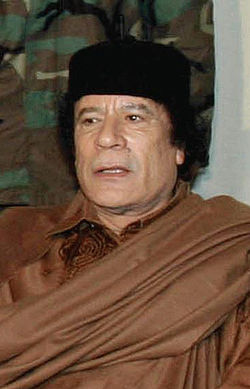
Gaddafi's vision was expansive, suggesting that the federation could extend to the Caribbean, inviting nations with large African diasporas—such as Haiti, Jamaica, the Bahamas, and the Dominican Republic—to join. While some leaders, such as former Senegalese President Abdoulaye Wade, suggested such a union could exist as early as 2017, others remained skeptical.
The African Union has adopted a more gradual approach, focusing on regional subdivisions. An example of this is the proposed East African Federation. The AU's official objective is to achieve a "united and integrated" Africa by 2025.
Controversy and Decline
Gaddafi's efforts were often overshadowed by criticism. South African President Jacob Zuma later expressed that Gaddafi had used intimidation to influence other heads of state. Following Gaddafi's death during the Battle of Sirte in October 2011, the momentum for a unitary government slowed. Although Robert Mugabe expressed interest in reviving the project, he resigned following the 2017 Zimbabwean coup d'état and passed away in September 2019.
Summary of Unification Efforts
| Proponent | Key Period | Primary Goals/Proposals | Outcome/Status |
|---|---|---|---|
| Marcus Garvey | 1920s | Conceptualized the "United States of Africa" | Influenced future leaders |
| Kwame Nkrumah | 1957–1966 | Common African government and political union | Resisted by sovereign states and West |
| Muammar Gaddafi | 2009–2011 | Single currency, passport, and military force | Lacked broad support; ended with his death |
| African Union | Present | Integrated and united Africa by 2025 | Ongoing through regional blocs |
Frequently Asked Questions
Who first used the term "United States of Africa"?
The term was first mentioned by Marcus Garvey in his 1924 poem titled "Hail, United States of Africa."
What were Kwame Nkrumah's main goals for Africa?
Nkrumah advocated for a Union of African States with a common government, believing that political and economic unity was essential for the continent's true independence and development.
What specific measures did Muammar Gaddafi propose for unification?
Gaddafi proposed the creation of a single African currency, a single passport for free movement across the continent, and a unified African military force.
How does the African Union's current goal differ from a single state?
While some leaders pushed for a unitary government, the African Union focuses on a more gradual process of integration, aiming for a "united and integrated" Africa by 2025, often through regional subdivisions like the East African Federation.
Why did many African leaders oppose the idea of a unified state?
The primary reason for opposition was the fear of losing national sovereignty, as leaders were reluctant to give up control of their individual countries to a central African government.